
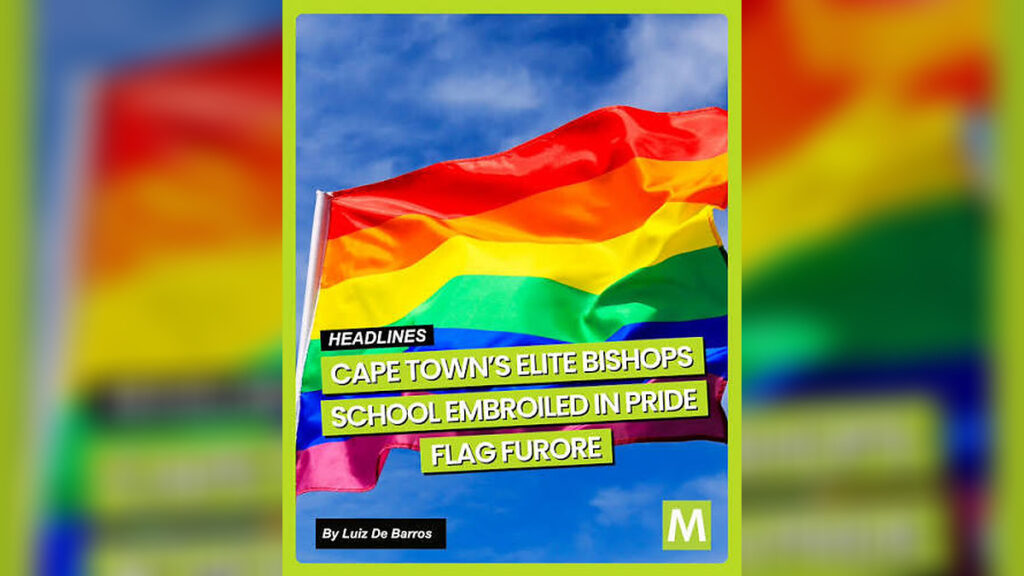
A growing number of former students of Bishops Diocesan College have publicly defended the school’s decision to display the Pride flag during Pride Month, pushing back against criticism from an alumni committee that wants the gesture scrapped.
The Cape Town boys’ school has found itself at the centre of a heated debate over inclusion, with supporters arguing that the flag represents acceptance and safety for LGBTQ+ students, while critics believe the school should remain politically neutral.
Alumni Committee Calls for Neutral Symbol
The controversy began after the Old Diocesan Committee (ODC), the representative body for the school’s alumni, wrote to the governing body requesting that the Pride flag no longer be flown.
Instead, the committee proposed replacing it with what it described as a neutral emblem, suggesting the Saint George’s flag of England as a more appropriate alternative.
The Pride flag has traditionally been displayed for only two days during Pride Month each June.
Former Student Leads Public Opposition
Actor and comedian Anton Taylor, who attended Bishops, has emerged as one of the strongest critics of the committee’s position.
Taylor accused the ODC of failing to reflect the values of many former pupils and threatened to publicly identify committee members involved in the decision.
He has also called for those responsible to step down from their positions.
His social media posts quickly gained traction, attracting widespread support from fellow alumni and members of the public.
High-Profile Voices Join the Debate
Among those backing Taylor is puppeteer and satirist Conrad Koch, best known for creating the popular puppet character Chester Missing.




Koch said he supported calls for change within the alumni committee, adding that he had personally experienced feeling judged at the school because of interests that did not fit traditional expectations.
His comments added momentum to an online campaign defending the school’s decision to fly the Pride flag.
Former Pupils Reject Committee’s Position
Many Bishops alumni have also distanced themselves from the ODC’s stance, arguing that it does not represent the broader former student community.
Several supporters shared messages expressing disappointment with the committee’s position, with one parent of a gay son saying that displaying the Pride flag for just two days each year could make an enormous difference to young people seeking acceptance.
Others questioned why attention was being focused on a symbolic gesture when far more pressing global issues continue to demand concern.
New Advocacy Group Forms in Support of School
As the debate intensified, a new campaign known as Supporting a Progressive Bishops was launched to publicly endorse the school’s approach.
The independent group consists of alumni, friends of the school, current staff members and students who believe Bishops should continue demonstrating support for LGBTQ+ members of its community.
According to the group, more than 300 people have already signed in support, including 17 staff members and 16 current students who chose to remain anonymous.
Supporters Say Pride Flag Sends Important Message
Members of the advocacy group argue that the annual display is not a political statement but a simple gesture aimed at reassuring LGBTQ+ students that they are welcomed and valued within the school community.
They said the Pride flag has been flown for several years without issue and represents the school’s commitment to creating a safe environment where every student feels respected.
Supporters also stressed that they believe the school should retain the freedom to continue displaying the flag during Pride Month.
Debate Reflects Wider Conversation on Inclusion
The disagreement has evolved beyond a dispute over a flag, becoming part of a broader discussion about diversity, inclusion and the role schools should play in supporting different communities.
While the Old Diocesan Committee continues to advocate for what it calls a neutral position, a growing number of former pupils and supporters argue that visible gestures of inclusion remain meaningful, particularly for students who may otherwise feel isolated.
As both sides continue to make their case, the debate has become one of the most closely watched discussions surrounding school identity and LGBTQ+ representation in South Africa.

