
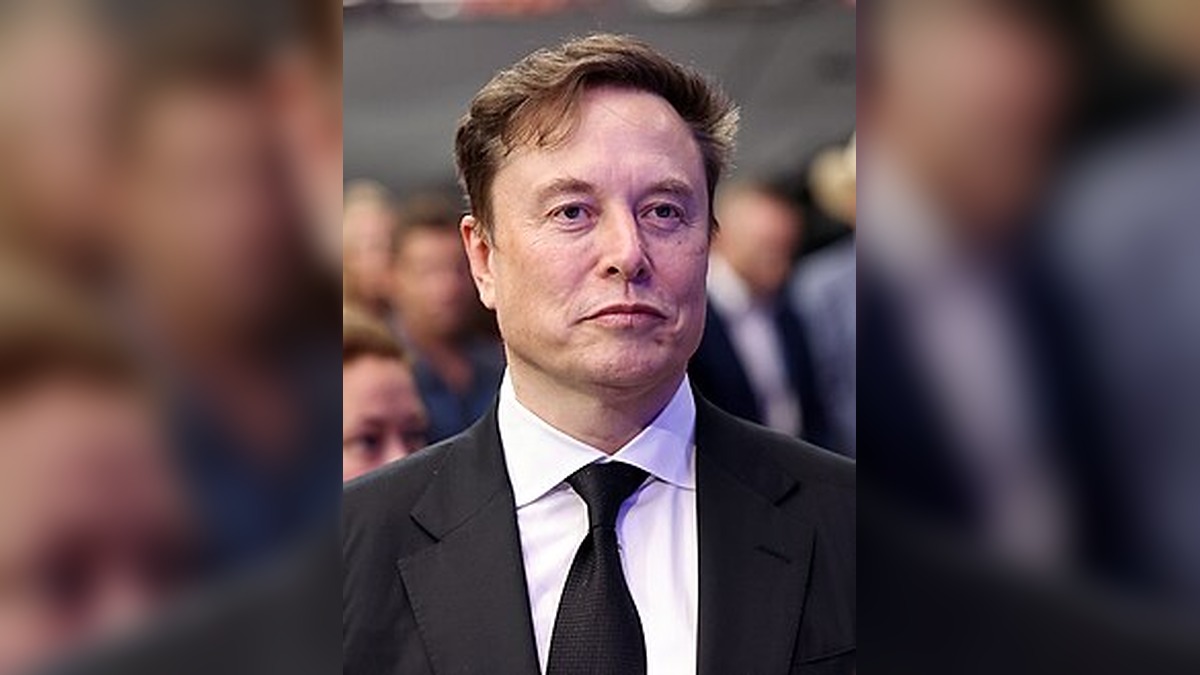
The South African government has made another public push to resolve the regulatory dispute preventing Starlink from launching commercially in the country, with Deputy Communications and Digital Technologies Minister Mondli Gungubele directly appealing to Elon Musk to find common ground.
Speaking at a Bloomberg-hosted event near Cape Town on Monday, Gungubele called on the billionaire and SpaceX to work with Pretoria on the issue rather than remain at an impasse.
His appeal comes after years of uncertainty over Starlink’s proposed entry into the South African market.
Gungubele asks Musk to work with Pretoria
Gungubele used the public platform to make a direct appeal to Musk, asking whether the entrepreneur could work with the South African government to help address inequality.
“Can you get along with us? Work with us in this journey of minimising inequality?” he asked.
The deputy minister later added that he hoped Musk was listening, signalling that Pretoria remains interested in reaching an agreement that would allow Starlink to operate in South Africa.
Ownership rules remain at centre of dispute
The main obstacle is South Africa’s regulatory framework for telecommunications licences.
Under the country’s licensing requirements, individual telecommunications licensees are expected to have at least 30% equity ownership by historically disadvantaged individuals.
The requirement forms part of South Africa’s broader economic-transformation policies, which seek to address inequalities created during apartheid.
Starlink has not yet secured a commercial licence in South Africa, with the ownership requirement remaining one of the key issues surrounding its proposed entry.
Musk has openly criticised the requirement
Musk has previously expressed strong opposition to the ownership rules.
In a post on X in April, the Pretoria-born billionaire claimed that Starlink was being prevented from obtaining a South African operating licence because of his race.




He also alleged that he had been presented with opportunities to circumvent the requirement through arrangements that would give the appearance of Black ownership, an allegation that has added to the controversy surrounding the licensing dispute.
Musk has maintained that he does not want to use such an arrangement to obtain a licence.
Minister argues Starlink could still benefit
Gungubele sought to challenge the idea that meeting the ownership requirement would significantly undermine Musk or SpaceX’s potential returns from the South African market.
He questioned what a 30% share would mean when compared with the potential value and profits that could be generated from the remaining 70%.
The minister also highlighted Musk’s South African origins, suggesting that his connection to the country could provide another reason for him to invest in its economy.
Alternative investment options remain part of talks
The disagreement has prompted discussion about whether alternative mechanisms could satisfy South Africa’s economic-transformation objectives without requiring Starlink to follow a conventional local-equity model.
Starlink has previously pointed towards equity-equivalent investment programmes as a possible solution, arguing that its international corporate structure makes traditional ownership arrangements difficult.
South African authorities have also explored policy options that could allow foreign technology companies to make alternative contributions while still advancing the country’s transformation goals.
The discussions have yet to produce a final agreement that would clear Starlink for commercial operations.
Why Starlink remains attractive to South Africa
Starlink’s proposed arrival has generated significant interest because its satellite network could provide an additional source of internet connectivity.
The service uses low-Earth-orbit satellites to deliver broadband without depending entirely on traditional fixed-line or terrestrial mobile infrastructure.
That could be particularly useful in communities where conventional telecommunications infrastructure is limited, unreliable or expensive to deploy.
However, despite the potential benefits, South Africans cannot currently access Starlink as a commercially launched service in the country.
Musk and government still face a difficult compromise
Gungubele’s latest intervention suggests that Pretoria has not abandoned efforts to reach an agreement with Musk and SpaceX.
The government continues to defend its transformation requirements, while Starlink faces the challenge of finding a structure that fits South Africa’s licensing framework without compromising its own corporate model.
For now, neither side appears to have found a solution to the central ownership dispute.
The question is whether Musk and the South African government can compromise on the issue sufficiently to finally bring Starlink to a market where demand for alternative internet connectivity remains significant.
- Truecaller Tells Nigerians: You Can Remove Your Number From Our Database at Any Time
- Nigeria’s Rice Crisis: Government Reveals Production Cost Has Hit ₦2.3m Per Hectare
- South Africa Beats Global Markets as Investors Bet Big on Bonds, Rand and Recovery
- Pastor Mboro’s Company Pocketed R6.5 Million From Rand Water in Four Months as Contracts Face Investigation
- EFCC Recovers N1.233 Trillion in 34 Months as Olukoyede Records More Than 10,000 Convictions
- US and China Extend Trade Truce Until January as Trump Administration Pushes for Bigger Deal With Beijing

