
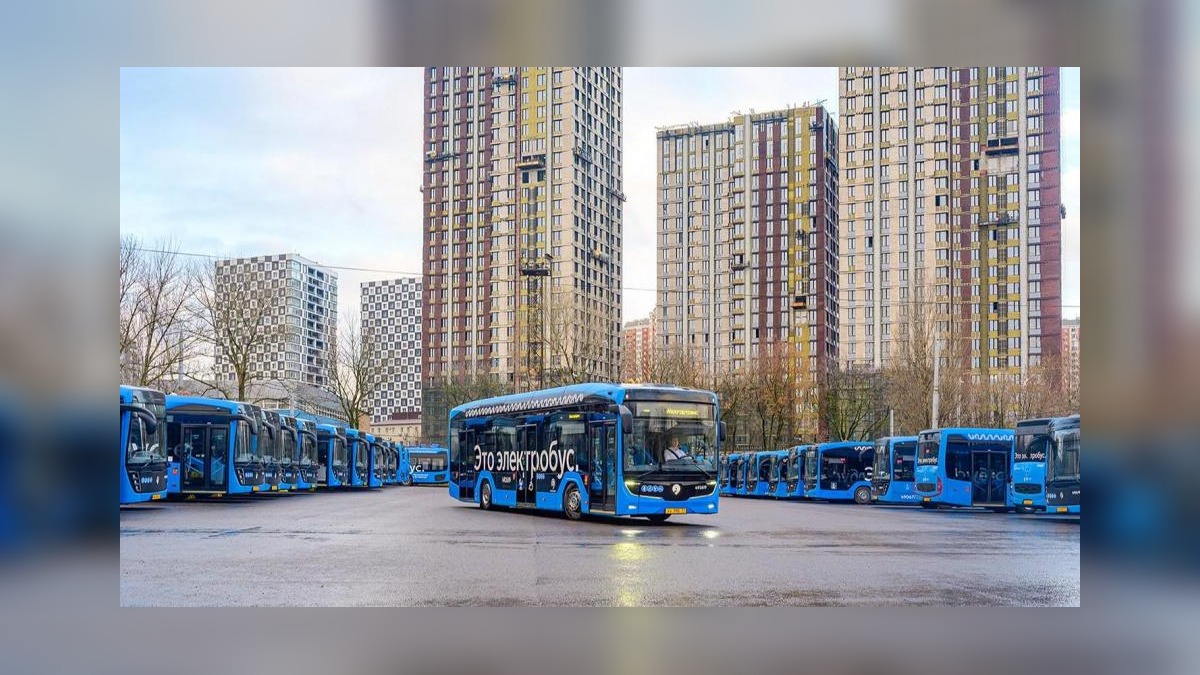
Efforts to modernise electric public transport across Russian regions are facing administrative challenges, with performance indicators for regional governors placing greater emphasis on bus purchases than investments in trams and trolleybuses.
The issue was highlighted by Valery Sherin, First Deputy Governor of the Kaliningrad Region, during a public transport forum in Moscow on October 18, 2026.
Sherin said regional authorities were spending money on electric transport but were not receiving equivalent recognition in the performance measurements used by the federal government to assess governors.
Under the current system, bus procurement contributes directly to reported performance results, while spending on trams and trolleybuses does not have the same impact on the indicators.
Kaliningrad Invests in Trolleybuses and New Trams
The Kaliningrad Region has continued investing in electric public transport despite the limitations of the performance framework.
According to Sherin, the region has purchased more than 30 trolleybuses over the past two years. Authorities are also preparing a programme to replace ageing Czech-made Tatra trams with 18 new vehicles.
However, these purchases do not significantly improve the indicators used to evaluate the region’s governor, despite the expenditure involved.
The situation illustrates the difference between investments made to maintain and renew electric transport networks and the results formally recognised through federal reporting requirements.




Orel Faces the Prospect of Tram Service Disruption
The condition of public transport in the Orel Region presents a contrasting picture.
Only nine trams remain in service in Orel, while authorities have concentrated their vehicle procurement efforts on purchasing 20 medium-class buses.
In some districts, tram services were projected to cease entirely by September 2026, according to the report.
The comparison between Kaliningrad and Orel highlights differing approaches to public transport investment, with Kaliningrad continuing to purchase electric vehicles while Orel faces the potential loss of tram services.
Infrastructure Costs Complicate Electric Transport Investment
Although the federal government’s “Development of Public Transport” project provides subsidies for trams and trolleybuses, introducing new vehicles often requires substantial infrastructure work.
Before new trams and trolleybuses can operate effectively, regions may need to repair tram tracks, track beds and overhead electrical contact networks. These projects can be expensive and take considerable time to complete.
Buses, by comparison, can generally be introduced more quickly because they do not depend on the same dedicated track and overhead power infrastructure.
This difference makes bus procurement easier for regional administrations to implement and demonstrate in official performance reports.
Federal Reporting System Influences Regional Spending
The existing performance indicators create an incentive for regional authorities to prioritise investments that produce measurable results within a shorter period.
Bus purchases can provide relatively immediate improvements in reported procurement figures, while spending on electric transport infrastructure may take longer to translate into operational services.
As a result, regional administrations may favour buses when seeking to meet federal targets, even when they are also investing in maintaining or renewing tram and trolleybus networks.
The issue raised at the Moscow forum centres on the relationship between regional transport spending and the indicators used to assess governors, with electric transport investments receiving less recognition than bus procurement under the current framework.
