
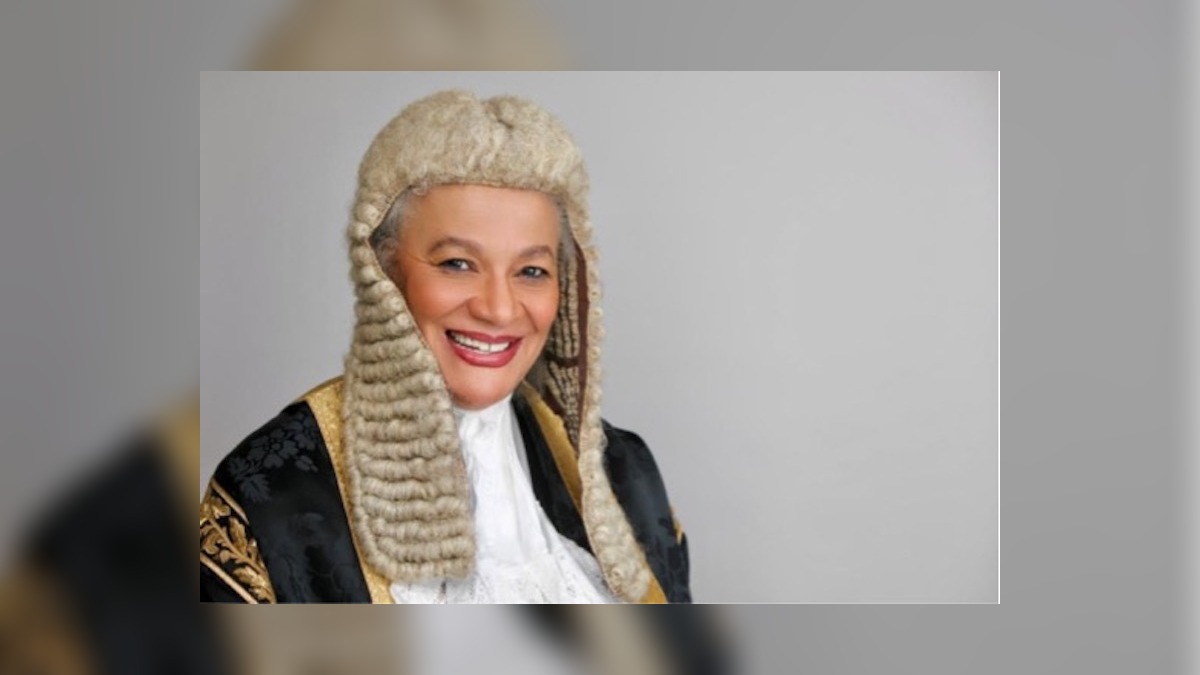
Retired Justice of the Supreme Court, Amina Augie, has warned legal practitioners against excessive reliance on Artificial Intelligence (AI), particularly when preparing legal citations and documents for court proceedings.
Augie gave the warning on Saturday in Abuja while delivering the keynote address at the 40th anniversary celebration of the Nigerian Law School (NLS) Class of 1986.
Her address, titled “The Rule of Law and Justice Delivery: The Last 40 Years, Today and Tomorrow — Whither Nigeria?”, focused on the importance of the rule of law and the challenges facing justice delivery in the country.
She advised lawyers to independently verify information generated by AI before relying on it in legal proceedings, stressing that technology could not replace human judgment or professional responsibility.
“A machine can predict the next word, it cannot read life,” she said.
Rule of Law Essential to Public Confidence in Justice System
Augie called on lawyers to uphold the rule of law, saying consistent adherence to legal principles was necessary to deliver justice and strengthen public confidence in the judicial system.
She described the rule of law as a promise that must be honoured, noting that its reliability was important for protecting citizens, encouraging investment and making the future more predictable.
“The rule of law is a promise; justice will be released whenever the promise is kept.
“Where the law is reliable, the poor are protected from the strong,” she said.
The retired justice also identified delays and the high cost of legal proceedings as major obstacles to justice, explaining that prolonged cases could make access to the justice system difficult.
She urged lawyers to maintain ethical standards and integrity, adding that their responsibilities extended beyond courtroom representation to protecting the public interest and democratic institutions.




House of Justice CEO Calls for Judicial Independence
Also speaking at the event, Ballason Mabeiam, Chief Executive Officer of House of Justice, emphasised the need for judicial independence and adequate funding to strengthen the rule of law.
Mabeiam said the judiciary’s budget should provide for its operational needs, including official residences for judicial officers, rather than leaving such responsibilities to the executive.
She also called for greater clarity regarding the role of the Attorney-General, arguing that the office should prioritise the public interest and the rule of law rather than executive interests.
According to her, the justice system must remain focused on protecting citizens’ rights and ensuring fairness, with justice serving as the guiding principle in resolving disputes and enforcing the law.
NLS Class of 1986 Marks Four Decades Since Graduation
In his welcome address, Mr Marcellous Oru, SAN, chairman of the NLS Class of 1986, described the anniversary as a significant milestone for the group.
He said members had agreed at their last Annual General Meeting in Enugu on Aug. 26, 2025, to commemorate four decades of shared experiences, resilience and growth.
“40 years is a remarkably significant milestone in the life of a group, class, person, nation or organisation,” Oru said.
He recalled that members graduated from the Nigerian Law School in Victoria Island, Lagos, with ambitions and aspirations they hoped to achieve.
Oru reaffirmed the class’s commitment to supporting the institution, which he described as its primary constituency.
Class Donates Moot Courts, Bus and Professional Ethics Award
Oru said the class had constructed four moot courts designed to Harvard standards at the Nigerian Law School headquarters in Bwari, Abuja, to improve students’ learning experience.
He added that members had donated a new Toyota Hiace bus to support transportation and established an award for the student who performs best in professional ethics.
The contributions form part of the class’s support for the institution where its members received their legal training.
Anniversary Celebrates Achievements and Remembers Deceased Members
Mr Mohammed Bello, SAN, chairman of the anniversary organising committee, said the class had produced professionals who had served Nigeria in various capacities over the past four decades.
He listed justices, Senior Advocates of Nigeria, professors, attorneys-general, permanent secretaries, military generals, directors and other public servants among the class’s members.
Bello said the anniversary also provided an opportunity to remember classmates who had died during the 40-year period.
He encouraged members to support one another instead of engaging in competition, urging them to celebrate their colleagues’ achievements and remain united during difficult times.
The anniversary brought together members of the Nigerian Law School Class of 1986 to reflect on their professional journeys and their continued relationship with the institution.

