
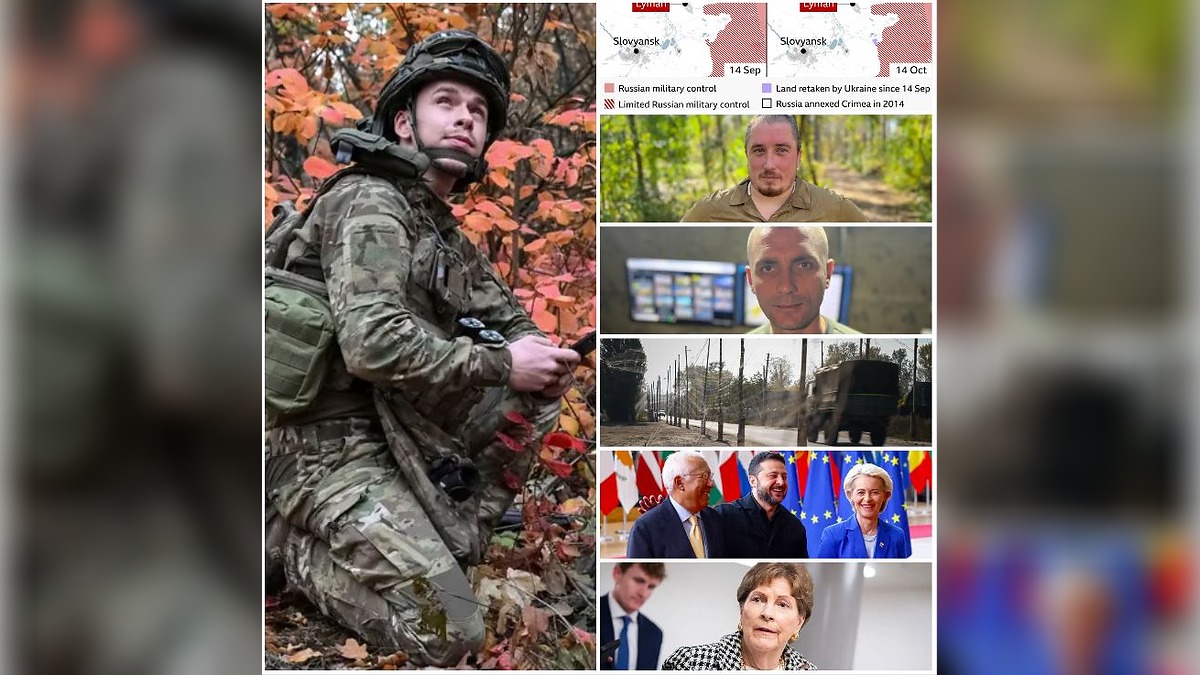
Ukraine says its forces have recaptured 277 square kilometres (106 square miles) of territory in the eastern Donbas region through a counter-offensive known as Operation Vivaldi.
The operation, which recently concluded, was designed to push Russian troops back and disrupt an attempted pincer movement that threatened to encircle key Ukrainian-held cities in the country’s Fortress Belt.
Ukrainian commanders say the campaign has inflicted significant losses on Russian forces while allowing Kyiv’s troops to regain strategically important positions. They estimate that Russia suffered approximately 8,000 casualties during Operation Vivaldi alone, with close to 50,000 casualties across the front line during September.
The Institute for the Study of War reported that pro-Russian military bloggers had acknowledged Ukraine’s advances and expressed concern about the possibility of further Russian losses.
Moscow has not publicly acknowledged the reported Ukrainian territorial gains. Russian Defence Ministry briefings have instead described its forces as repelling attacks in the Lyman region or improving their tactical positions.
Drones Remain a Constant Threat on the Front Line
Despite the advances, Ukrainian soldiers operating near Lyman continue to face persistent threats from Russian drones.
Commanders from the Revenge Brigade’s Silver Trinity unit say their troops encounter an average of 10 Russian drones a day. During a visit to their command bunker, a Russian reconnaissance drone appeared on a live surveillance feed, prompting an immediate response.
A Ukrainian drone was deployed to intercept the aircraft. It approached the Russian drone, hovered above it and released a net that pulled it from the sky.
The commanders explained that the Russian aircraft was gathering intelligence. Had it identified and tracked the soldiers, another drone carrying explosives could have followed.
The incident demonstrated the growing importance of unmanned aircraft in modern warfare, with surveillance drones, attack drones and real-time communications systems working together to identify and engage targets.
Satellite Communications Under Scrutiny
Ukraine’s military operations depend heavily on digital connectivity, including Starshield, the military-focused version of Elon Musk’s Starlink satellite communications network.
The technology provides broadband connectivity across the battlefield and supports the use of interceptor and medium-range strike drones.
Ukraine said this week that restrictions had been imposed on the system without prior warning as Operation Vivaldi came to an end, raising concerns about the country’s ability to rely on the technology during military operations.
Musk and media reports suggested that the restrictions may have originated from the White House. However, the account does not establish the precise source of the order.
Ukraine is not entirely dependent on Starshield, but the system remains an important part of its military communications infrastructure.
The reported restrictions have added to tensions between Kyiv and Washington, particularly as Ukrainian forces continue to rely on American technology and intelligence.
Soldiers Return After 95 Days on the Front Line
Ukrainian infantrymen involved in the offensive recently arrived at a command post after spending 95 days advancing along the front line.
The soldiers were met by their comrades in an emotional reunion after months of combat and repeated changes to their positions.
An infantryman using the call-sign Dealer said the operation had been demanding but successful, with his unit moving positions four times over more than three months.




He described Russian drones as the most frightening threat faced by the troops, explaining that remotely operated aircraft continued hunting for targets.
Commandant Phoenix, who leads the Silver Trinity unit, said preparations for the offensive had required months of training and a fundamental change in tactics.
The unit had previously concentrated on defending its positions but had to reorganise its approach to conduct offensive operations.
Robots and Explosive Vehicles Supported the Assault
According to Ukrainian commanders, robots and drones played a central role in attacks on Russian positions.
For the first time during the campaign, remotely controlled explosive vehicles were deployed behind Russian lines. Ukrainian military officials said the operation resulted in 250 Russian soldiers surrendering.
Commanders also said a year-long campaign had resulted in the liberation of 16 settlements from Russian occupation.
Unmanned ground vehicles have increasingly been used to transport supplies, evacuate wounded personnel and support assaults on enemy positions.
However, despite the growing role of remote-controlled equipment, soldiers in trenches remain responsible for holding territory after advances have been made.
Isolated Resident Found in a Recaptured Village
The scale of destruction in the recaptured territory was evident in Karpivka, a village that had been occupied since April.
Ukrainian troops found 61-year-old Volodymyr Zamota as the village’s only remaining resident. He said his neighbours had fled the Russian advance in 2025, leaving him to survive in isolation for eight months.
Zamota described the settlement as almost completely destroyed and said he had never expected to experience such devastation during his lifetime.
He said he had remained hopeful despite the conditions and the prolonged isolation.
The village’s destruction reflects the challenges facing communities in areas recently retaken by Ukrainian forces. Returning remains dangerous for residents, particularly where homes and essential infrastructure have been damaged or destroyed.
Ukraine Seeks to Secure Strategic Positions
Andriy Hitt, chief of staff of the Revenge Brigade, said the territorial gains were important because they provided Ukrainian forces with more favourable positions and a potential bridgehead for future operations.
He said the new positions could help the military regain the initiative, plan further manoeuvres and establish conditions for additional advances.
The operation has also halted part of the Russian advance in the area, according to Ukrainian commanders.
The long-term military significance of the gains will depend on whether Ukrainian forces can maintain control of the recaptured territory and use their new positions to support subsequent operations.
Disputes With Washington Raise Further Concerns
The reported restrictions on Starshield have emerged amid worsening relations between Ukraine and the United States.
Ukrainian President Volodymyr Zelensky said this week that he felt betrayed by US President Donald Trump. Trump, meanwhile, said he was not a fan of Zelensky and described dealing with the Ukrainian leader as more difficult than dealing with Russian President Vladimir Putin.
Trump has also blamed Ukrainian strikes on Russian oil refineries for contributing to higher oil prices. Ukraine has argued that the US and Israeli war against Iran is responsible for the increase.
The diplomatic disagreements have raised questions about the future availability of American technology and intelligence that support Ukraine’s military campaign.
Nevertheless, soldiers interviewed near Lyman said their morale remained high following the territorial gains.
Dealer said the operation had renewed his belief that Ukraine could win the war.
Food Supplies Reach the Last Resident of Karpivka
Ukrainian soldiers have continued supporting Zamota, whom they affectionately call Grandpa, by ensuring he has enough food.
Drones delivering supplies to troops near the front have also been used to drop food parcels for the isolated resident.
Asked whether he believed Ukraine could win the war, Zamota said he did, adding that he wanted to know when the conflict would finally end.
His village remains heavily damaged, while the wider region faces the challenge of rebuilding communities and restoring safe conditions for residents.
For Ukrainian forces, Operation Vivaldi has provided new positions and an opportunity to disrupt Russian advances. The soldiers’ ability to retain those gains will depend in part on continued battlefield operations and access to the technology supporting them.
