
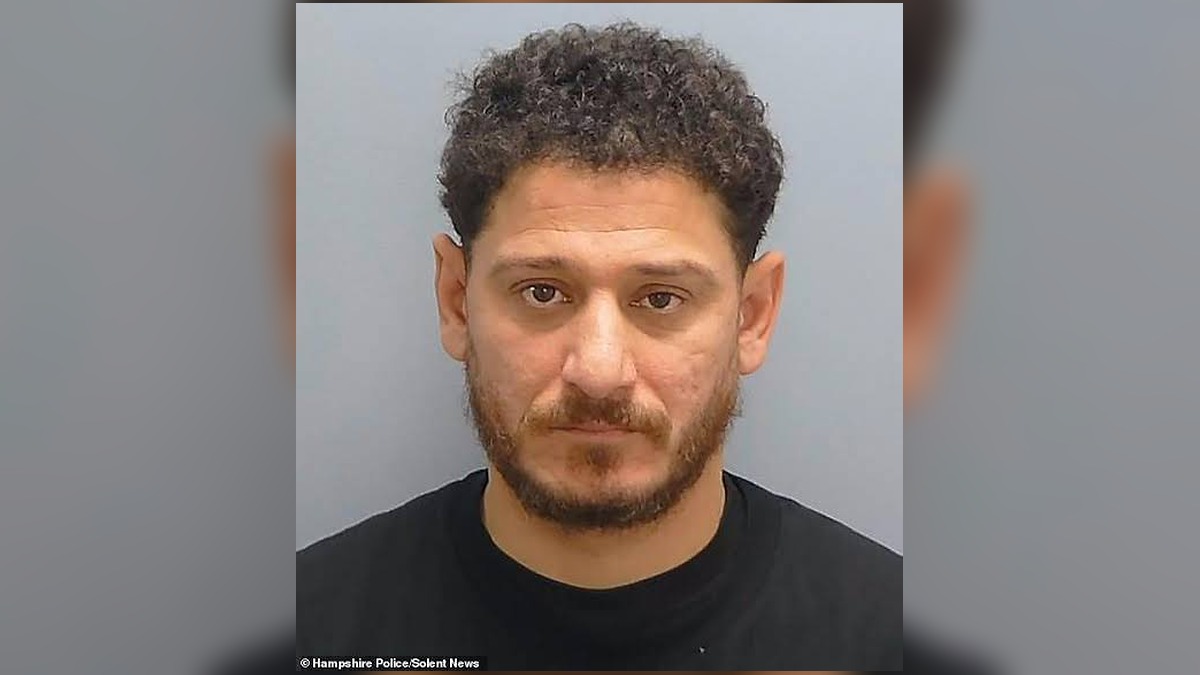
Iraqi national Mohammed Yaseen, a convicted member of the Islamic State group (ISIS), was returned to prison hours after the Home Office was contacted about his case, according to government sources cited by The Mail on Sunday.
Yaseen had been released from prison the previous week after serving six months of a two-year sentence for illegally entering the United Kingdom by crossing the English Channel in a small boat.
Following his release, he was placed in a bail hostel in Windsor, where he was reportedly seen shopping at a Co-op supermarket near Windsor Castle.
A Ministry of Justice source said Yaseen had been recalled to prison because he had apparently breached a good-behaviour requirement imposed at the bail hostel. The source confirmed that he was no longer in Windsor.
Deportation Efforts Delayed by Asylum Application
Yaseen has reapplied for permission to remain in Britain, a move that has halted efforts by the Home Office to deport him, according to the report.
The Foreign Office is understood to have raised concerns that he could face mistreatment if returned to Iraq because of his terrorist background.
Those concerns follow a previous attempt by German authorities to deport him after he completed a prison sentence for membership of ISIS. A German judge ruled that there was a genuine risk he could be mistreated or executed if returned to Iraq.
The latest case has raised questions about how the UK handles the deportation of foreign nationals convicted of terrorism-related offences.
Terrorism Conviction in Germany
Yaseen arrived in Germany in 2015 and applied for asylum. He subsequently lived in Bottrop, in North Rhine-Westphalia, where he worked as a hairdresser.
German authorities arrested him and three Iraqi associates in 2018 following a tip-off.
At his trial in Düsseldorf in 2020, prosecutors presented evidence linking Yaseen to the Islamic State organisation and its activities in Iraq. He was convicted of membership of ISIS and sentenced to four years and nine months in prison.
The court heard allegations that he had been involved in bomb attacks that killed American troops and had served as a security guard during public punishments and executions carried out by the group.
Court Heard of Involvement in Bomb Attacks and Executions
According to documents presented during the German proceedings, Yaseen grew up in Ar-Rutbah, western Iraq, and joined the Islamic State of Iraq, an Al-Qaeda-linked organisation, in 2006 when he was 16.
The court heard that he had planted at least 13 roadside bombs around Ar-Rutbah.



Prosecutors also alleged that he later became a prominent member of ISIS in the area and guarded public executions while carrying a Kalashnikov assault rifle.
The proceedings included allegations that he helped control crowds during the stoning of a couple accused of adultery and guarded at least two mass executions, in which children were among the victims.
The group was also linked to the 2004 beheading of British hostage Ken Bigley, a Liverpool engineer who was abducted in Iraq and killed by militants associated with Al-Qaeda in Iraq.
Yaseen Entered Britain on a Small Boat
After completing his German prison sentence, Yaseen faced deportation to Iraq. However, the German court’s ruling over the risk of mistreatment prevented his removal, according to the report.
He later travelled to Britain and was among approximately 80 people intercepted by Border Force while crossing the Channel in December.
Yaseen reportedly gave officials a false name when he arrived and was initially accommodated in a taxpayer-funded migrant hotel in Basingstoke.
Routine biometric checks subsequently established his identity and revealed his criminal background.
He was prosecuted at Winchester Crown Court for illegally entering the UK. Prosecutor Steven Molloy told the court that Yaseen had a “deeper and lengthy involvement in terrorism and Islamic extremist ideology”.
He received a two-year prison sentence but was released after serving six months.
Bail Conditions Applied During Windsor Stay
While staying at the Windsor bail hostel, Yaseen was reportedly required to wear an electronic ankle tag and comply with a curfew running from 6pm to 6am.
The report said there appeared to be no specific restrictions preventing him from visiting Windsor Great Park or the area around Windsor Castle, provided he complied with his bail conditions.
His accommodation was close to Windsor Castle, where King Charles was due to host a state banquet for the Sultan of Oman on Thursday.
The Prince and Princess of Wales and their children live nearby at Forest Lodge in Windsor Great Park. The Duke and Duchess of Edinburgh also reside in the wider area, at Bagshot Park.
Political Reaction Over Cost of Asylum Case
The case prompted criticism from politicians over the public cost of accommodating Yaseen while his application to remain in Britain is considered.
Shadow Home Secretary Chris Philp said the taxpayer was paying to house and support people he described as posing a security threat. He called for Yaseen to be deported.
Legal experts cited by The Mail on Sunday said Yaseen could receive legal aid for his asylum application. They estimated that if the case proceeded through the courts as far as the European Court of Human Rights, the cost to taxpayers could reach £500,000.
Other experts estimated that accommodation, food allowances and monitoring could cost as much as £85,000 a year.
Those figures were presented as estimates of potential costs rather than confirmed expenditure.
Government Confirms He Is No Longer in Windsor
Government sources said Yaseen was returned to prison after the newspaper contacted the Home Office about his circumstances.
A Ministry of Justice source attributed the recall to an apparent breach of the good-behaviour condition attached to his bail accommodation.
The source confirmed that Yaseen had been removed from Windsor, while the status of his wider asylum and deportation proceedings remained linked to the concerns surrounding his possible return to Iraq.
