
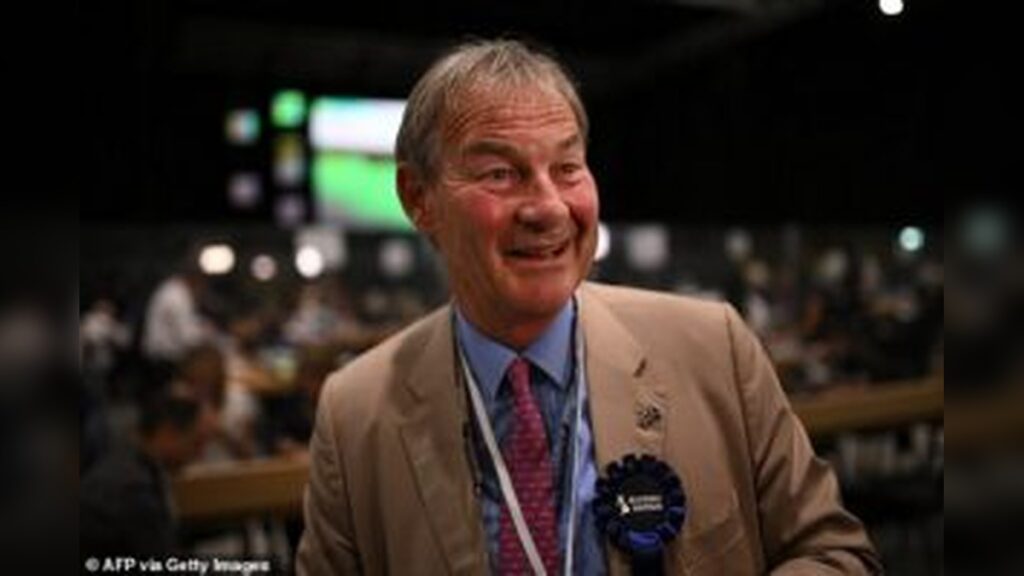
A public dispute has broken out within the hard-right Restore Britain party after remarks by its leader, Rupert Lowe, about multiculturalism triggered criticism from supporters, donors and activists.
The controversy has exposed growing divisions inside the fledgling political movement, with several prominent backers questioning both the party’s direction and its future.
Interview Clip Sparks Backlash
The row began after an interview resurfaced in which Lowe discussed King Charles’ decision to host Muslim worshippers at Windsor.
While acknowledging that the monarch actively promotes a multicultural society, Lowe said he had “no problem” with multiculturalism provided people integrate into British society.
Those comments quickly spread online and prompted an angry response from many within the party’s anti-immigration support base, who argued the position contradicted the principles they believed Restore Britain stood for.
High-Profile Supporters Turn on the Leadership
Political commentator and Restore Britain supporter Connor Tomlinson became one of the most outspoken critics.
He argued that multiculturalism had failed and claimed the party risked abandoning the values that initially attracted supporters.
Tomlinson also suggested Restore Britain may have already fulfilled its purpose if it only succeeded in pushing other parties toward tougher immigration policies.
He further accused the party of suffering from poor organisation, weak candidate selection and ineffective decision-making, warning that those problems had undermined its opportunity to challenge Reform UK on the political right.
Calls for Apology and Policy Clarification
The criticism was echoed by far-right activist Steve Laws, who demanded that Lowe publicly apologise for his remarks.




Laws also called on the party to commit to a policy of “remigration,” describing mass deportations as a minimum requirement if Restore Britain hoped to retain its core supporters.
Other activists also questioned whether the party was drifting away from the platform they expected, with some arguing there was little reason to support Restore Britain if it accepted multiculturalism as compatible with its political vision.
Donor Voices Frustration Over Party Management
The controversy extended beyond ideological disagreements after donor Miles Routledge, known online as “Lord Miles,” publicly aired his dissatisfaction with the party’s internal operations.
Routledge, who said he donated £2,500 to Restore Britain, claimed he was promised a personal thank-you call from Lowe that never came.
He also revealed that after expressing interest in standing as a local election candidate, he received no further communication from party officials.
The experience, he said, has made him reconsider plans to contribute significantly more financial support in the future.
Reform UK Watches From the Sidelines
The public infighting has been welcomed by figures within Reform UK, which has consistently argued that Restore Britain’s emergence risks dividing right-wing voters.
A source from Reform suggested the latest dispute confirmed longstanding concerns that Lowe remained politically closer to the Conservative Party than many of his supporters believed.
The source also contrasted Lowe’s recent remarks with Nigel Farage’s long-held criticism of multiculturalism, arguing Reform had maintained a more consistent position on the issue for years.
Election Results Add to Pressure
The internal tensions come shortly after Restore Britain’s first significant electoral test in the Makerfield by-election.
Although the party retained its deposit by securing just under seven percent of the vote, the result fell well below expectations set by senior figures before polling day.
Party insiders had privately hoped to achieve between 15 and 20 percent, while Lowe himself indicated that reaching 10 percent would have represented a successful debut.
The final tally also failed to surpass the vote share achieved by the British National Party in the same constituency during the 2010 general election, adding further pressure on the party’s leadership as questions grow over its political direction.
Party Yet to Respond
Restore Britain had not issued a public response to the criticism at the time of reporting.
The episode leaves the party facing mounting questions over both its internal unity and its ability to establish itself as a lasting force within Britain’s right-wing political landscape.

