
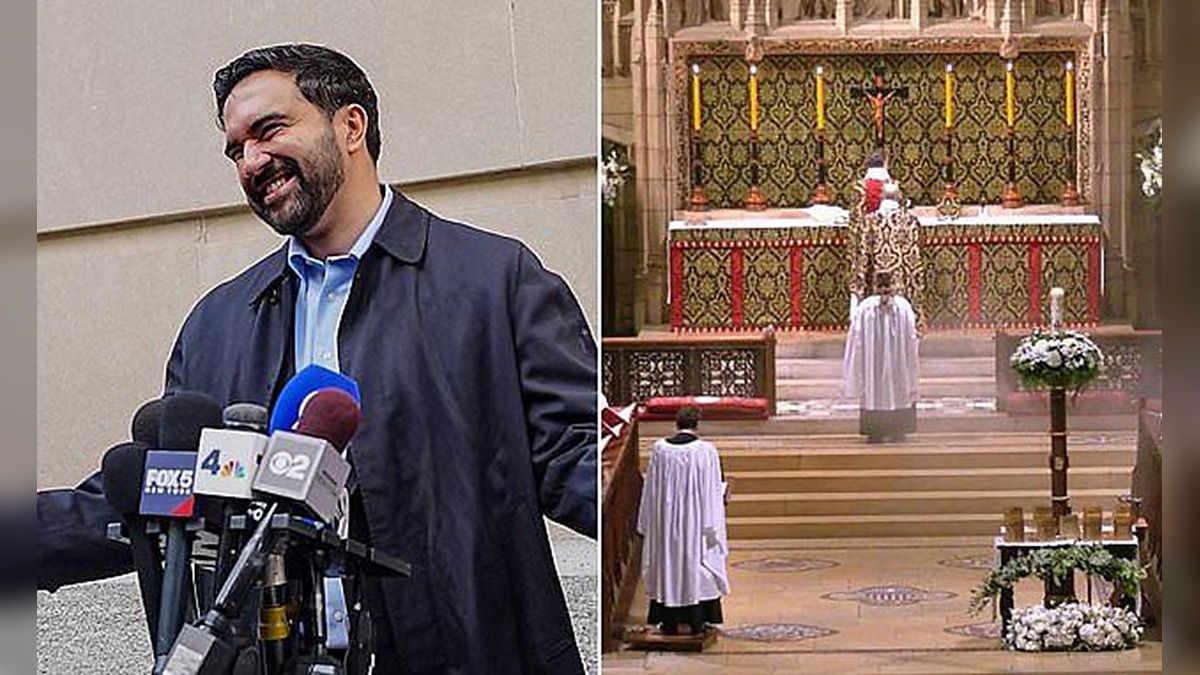
Nine homeless New Yorkers who died during last winter’s severe cold snap were honoured at a memorial service in Manhattan, but Mayor Zohran Mamdani was absent from the ceremony.
The All Souls Day Mass, held Monday at St. Thomas Church Fifth Avenue, commemorated nine people whose bodies remained unclaimed by relatives following their deaths.
The service was organised by a small group of volunteers who wanted to ensure the deceased received a dignified farewell rather than being buried anonymously on Hart Island, the city’s public burial ground off the Bronx coast.
Addressing mourners, Reverend Mark Schultz spoke about the dignity and value of those who had died.
“Now we know little of these nine neighbors, but we do know this – they are beloved,” Schultz said.
He added that the service was an opportunity to acknowledge their dignity.
Volunteers Arrange Funeral to Prevent Anonymous Burial
The memorial was organised through the efforts of several individuals who intervened to prevent the nine deceased from being laid to rest without a formal ceremony.
Rhonda Roland Shearer, a nonprofit founder who helped coordinate the arrangements, said she wanted the gathering to draw attention to the dangers faced by people experiencing homelessness during extreme winter weather.
She said the service was intended to “make everybody alert to prevent this again.”
The nine people honoured at the ceremony were among 18 homeless New Yorkers who died outdoors during last winter’s freezing conditions.
Mamdani Faces Criticism Over Winter Homelessness Response
Mamdani’s absence came amid continued scrutiny of his administration’s handling of the freezing temperatures that claimed the lives of homeless residents.




The mayor faced criticism over his response to the crisis, particularly his position on whether authorities should compel people living on the streets to enter shelters when temperatures become life-threatening.
During the cold snap, Mamdani encouraged homeless New Yorkers to come inside and seek shelter.
However, he maintained that involuntary removal from the streets should only be considered as a last resort.
His position drew criticism from those who argued that authorities should take stronger measures to protect people from potentially fatal weather conditions.
Mobile Warming Centres Also Attracted Criticism
Questions were also raised about the city’s mobile warming centres, which were established to provide temporary refuge during the extreme cold.
Critics said some facilities were difficult to locate and that certain centres were not operating from their designated locations.
The concerns prompted questions about whether the emergency arrangements were adequately reaching homeless people who needed protection from the freezing temperatures.
Nicole Gelinas, a fellow at the Manhattan Institute, previously criticised the mayor’s approach and warned about the possibility of further fatalities.
“He knows this is coming and more deaths are coming unless he changes his approach,” she told The New York Post at the time.
Homelessness Policy Remains a Point of Contention
Mamdani, a democratic socialist, campaigned on making New York more affordable and adopting a more compassionate approach to poverty and homelessness.
His position has included distancing his administration from policies viewed by critics as punitive or excessively dependent on policing.
However, the deaths recorded during last winter’s cold spell intensified disagreements over how the city should respond when homeless people refuse available assistance during dangerous weather.
Critics have argued that encouraging people to seek shelter is insufficient when temperatures pose an immediate threat to their lives.
They maintain that city authorities have a responsibility to intervene even when individuals decline assistance.
Others have raised concerns about the consequences of forcibly removing people from public spaces, arguing that such interventions can be traumatic and undermine trust between homeless residents and outreach workers.
They have instead emphasised the importance of accessible shelters, mental health services, outreach programmes and permanent housing in addressing homelessness.
