
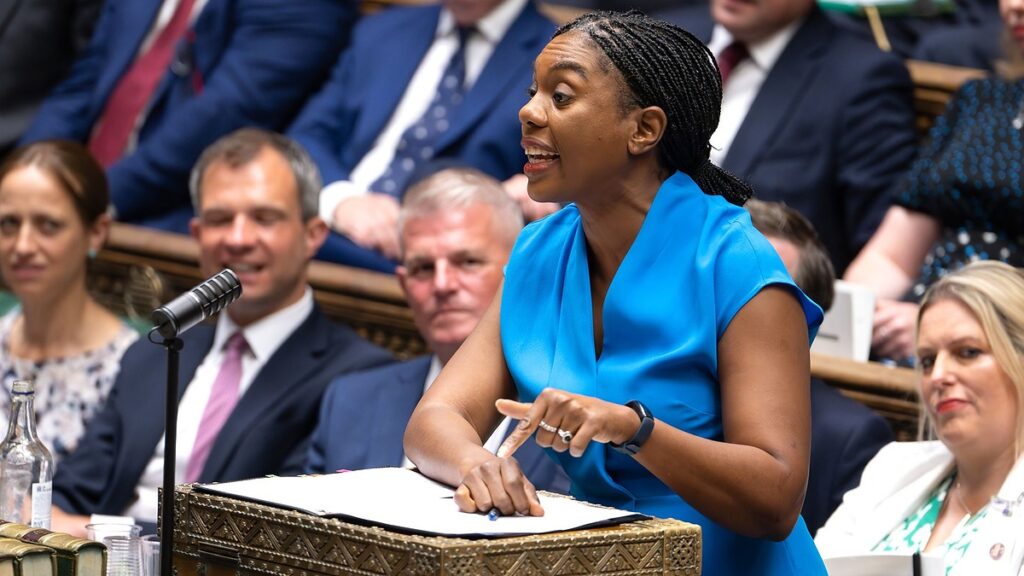
Conservative leader Kemi Badenoch has sharply criticised Labour MPs calling for gender quotas in the next government, arguing that ministerial positions should be awarded based on ability rather than gender.
Her comments came as debate intensified over the composition of a future administration expected to be led by Andy Burnham.
A group of Labour women has urged Burnham to commit to an equal split between male and female ministers, saying the move would demonstrate a commitment to tackling sexism and improving representation at the highest levels of government.
Women’s Labour Group Pushes for 50-50 Representation
According to a letter from the Women’s Parliamentary Labour Party, seen by the BBC, the group wants Burnham to appoint a Cabinet made up of at least 50 percent women once he takes office following Keir Starmer.
The letter argues that gender parity should be established from the beginning of the new administration and says such a move would help confront what it describes as misogyny and toxic workplace culture within both the party and government.
The request has fueled a wider political debate over whether representation should be guaranteed through quotas or determined solely by individual merit.
Miliband Speculation Adds to Cabinet Debate
The discussion has also been influenced by reports that former Foreign Secretary David Miliband could return to frontline politics in a senior government role.
Speculation has also suggested his brother, Ed Miliband, could be considered for the position of Chancellor.
Those reports prompted criticism from at least one Labour minister, who reportedly questioned whether a government should include “more Milibands than women” in its most senior positions.
Conservative Leader Says Merit Should Decide Appointments
Writing in The Times, Badenoch dismissed the demands for gender guarantees, insisting that political appointments should be earned through competence and performance rather than reserved under quota systems.




She argued that complaints about male politicians securing senior roles reflected what she described as Labour’s continued reliance on identity politics.
Badenoch also suggested there were many reasons to debate the appointment of the Miliband brothers but maintained that gender should not be one of them.
According to her, political leaders should build teams by selecting the strongest candidates available rather than focusing on numerical representation.
Badenoch Points to Conservative Leadership Record
Badenoch contrasted Labour’s position with the Conservative Party’s history, noting that the Conservatives have elected three female leaders while Labour has never chosen a woman to lead the party.
She argued that Conservative women who reached senior positions did so by competing successfully on merit rather than relying on guaranteed representation.
In her article, Badenoch said that a merit-based system removes the need for concerns about jobs being reserved for particular groups, adding that women seeking leadership positions should be prepared to compete for them rather than request assurances.
Labour Minister Rejects Reserved Positions
The proposal for mandatory gender balance has also drawn reservations from within Labour itself.
Jacqui Smith, the party’s Skills Minister, rejected the idea that ministerial roles should be reserved specifically for women.
Speaking to Times Radio, she said Burnham’s priority should be assembling the strongest possible team capable of governing effectively and delivering change for the country.
Her remarks highlighted differing opinions inside Labour over whether diversity targets should influence appointments to the highest offices of government.
Debate Reflects Wider Questions About Representation
The dispute has reignited a long-running political argument over the balance between merit-based appointments and efforts to improve gender representation in public office.
Supporters of the Women’s Parliamentary Labour Party’s proposal argue that equal representation would better reflect modern Britain and help address longstanding barriers faced by women in politics.
Critics, including Badenoch, contend that introducing quotas risks prioritising identity over qualifications and could undermine confidence in merit-based selection.
With speculation continuing over the shape of Burnham’s future Cabinet, the debate over gender representation is expected to remain a prominent issue as government appointments come into focus.
