
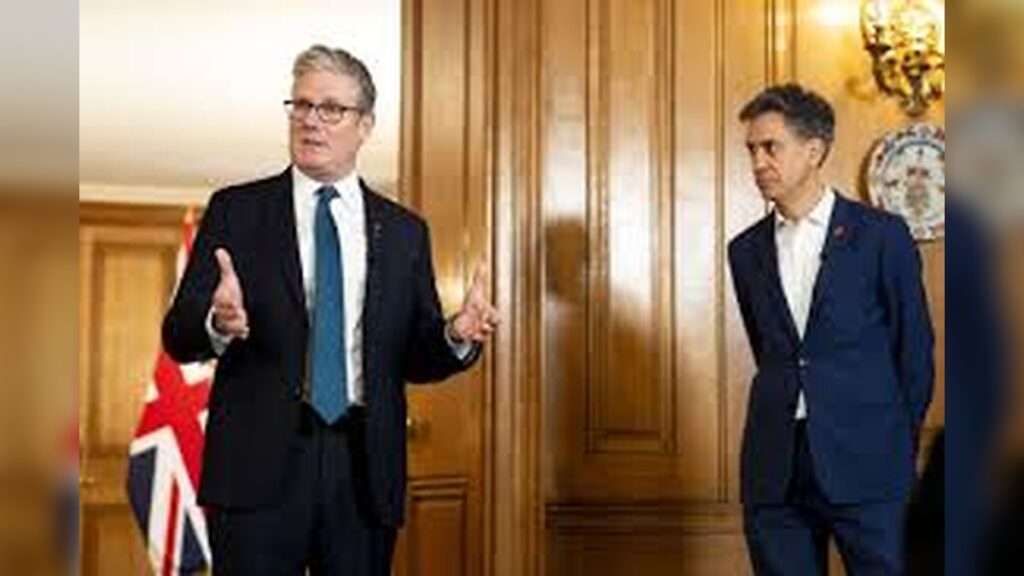
Prime Minister Keir Starmer is preparing to soften the United Kingdom’s electric vehicle sales requirements, marking a significant shift in government policy and dealing a setback to Ed Miliband’s ambitious Net Zero agenda.
Under the proposed changes, ministers are expected to reduce the proportion of new vehicle sales that must be fully electric by 2030.
The target, previously set at 80 percent, could be lowered to 50 percent following sustained lobbying from car manufacturers and trade unions concerned about the impact on jobs and investment.
Cabinet Divide Emerges Over Green Transition Strategy
The reported decision is the latest indication of friction between Starmer and Energy Security and Net Zero Secretary Ed Miliband.
Sources suggest the Prime Minister personally stepped in to back a more flexible approach after concerns were raised about the strain the existing targets could place on the automotive sector.
The move comes amid broader disagreements within government, with Miliband having resisted spending reductions sought by the Treasury as ministers scramble to identify resources for other priorities, including defence.
Existing Rules Have Put Pressure on Carmakers
Current Zero Emission Vehicle (ZEV) regulations require manufacturers to ensure that electric-only vehicles account for 33 percent of new car sales by the end of this year.
The quota was scheduled to rise steadily each year before reaching 80 percent by 2030.
At the same time, the sale of new petrol and diesel vehicles is due to end in 2030, with hybrid models permitted to fill the remaining share of the market.
It remains unclear how the wider regulatory framework would be adjusted if the EV sales target is reduced.
Automotive companies have repeatedly argued that the existing rules are difficult to meet because consumer demand has not grown as quickly as anticipated.
Several firms have warned that they may reconsider future investments in Britain, while others have relied on substantial discounts and incentives to encourage motorists to switch to electric vehicles.




Trade Union Hails Planned Policy Shift
The prospect of a revised target has been warmly welcomed by Unite, one of the country’s largest trade unions.
General Secretary Sharon Graham described the expected change as a major victory for automotive workers, saying many employees had become increasingly worried about their future as manufacturers struggled to meet government requirements.
She argued that ministers had listened to concerns raised by the union and were now taking action to safeguard jobs in a sector she described as one of the most important parts of British manufacturing.
Consultation Could Trigger Political Disputes
Before any changes are implemented, the government is expected to launch a consultation process.
Because transport and environmental policies involve devolved administrations, the proposals may require support from governments in Scotland and Wales.
That could set the stage for disagreements between Westminster and devolved leaders if they take a different view on the pace of the transition to electric vehicles.
Labour Reconsidering Targets It Previously Defended
The potential shift represents a notable adjustment from Labour’s earlier stance.
When the Conservatives were in power, former Prime Minister Rishi Sunak pushed back the ban on new petrol and diesel vehicle sales from 2030 to 2035.
After entering government, Labour restored the 2030 deadline while maintaining plans to phase out hybrid vehicles by 2035.
Miliband has repeatedly defended the policy, arguing that Britain should maintain what he called a world-leading transition to electric transport.
Defence Funding Battle Deepens Internal Tensions
The debate over EV targets comes against the backdrop of wider disputes over public spending inside government.
Starmer’s efforts to secure additional defence funding have encountered resistance as departments face pressure to identify savings.
The situation intensified after Defence Secretary John Healey resigned following disagreements over proposals for a £10 billion increase in defence spending over the next four years.
Military leaders have reportedly warned that the Defence Investment Plan faces a funding shortfall estimated at £28 billion.
Treasury Push for Savings Meets Resistance
To create room for increased defence expenditure, the Treasury has been pressing departments to reduce spending.
However, Miliband is understood to have opposed requests for cuts of at least one percent within the Department for Energy Security and Net Zero.
Such reductions could exceed £600 million from the department’s capital budget over the current spending period, potentially affecting programmes linked to heat pump installations, carbon capture projects and other green energy initiatives.
The disagreement has further highlighted divisions within government over how to balance economic pressures, industrial competitiveness and the UK’s long-term climate commitments.

