
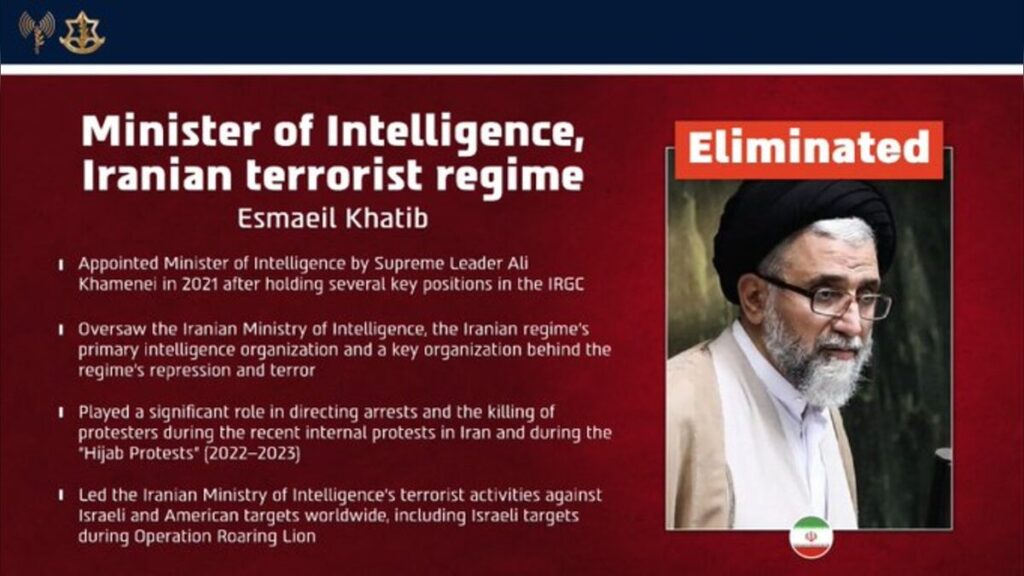
Esmaeil Khatib, Iran’s intelligence minister, has reportedly been killed in a targeted strike in Tehran, marking a dramatic development within the country’s security landscape.
Khatib, a central figure in Iran’s intelligence operations, was widely known for overseeing both domestic surveillance and international covert activities.
His reported elimination signals a major blow to the country’s intelligence leadership.
A Powerful Figure in Iran’s Security Network
As head of the Ministry of Intelligence of Iran, Khatib played a critical role in shaping Iran’s internal and external security strategies.
The agency is responsible for intelligence gathering, counterintelligence, and operations that extend beyond Iran’s borders.
It has long been viewed as one of the most influential institutions within the Government of Iran, tasked with protecting national interests and responding to perceived threats.
Role During Nationwide Protests
Khatib’s tenure drew significant attention during the protests that followed the death of Mahsa Amini between 2022 and 2023.
During that period, authorities carried out widespread crackdowns across Iran, including arrests and actions against demonstrators. Khatib was seen as a key figure behind the intelligence operations that monitored and responded to the unrest.



He was also associated with broader security measures targeting individuals both داخل Iran and abroad, particularly in operations involving perceived adversaries.
Alleged Global Intelligence Activities
Under Khatib’s leadership, the intelligence ministry continued to expand its reach internationally.
The agency has been linked to surveillance networks, espionage efforts, and covert missions targeting foreign interests, including Israelis and Americans.
These activities have been a point of ongoing tension between Iran and other countries.
Impact and Consequences
The reported killing of such a senior intelligence official could significantly reshape Iran’s security structure.
Internally, it may disrupt command within the intelligence apparatus and trigger a rapid reorganization of leadership.
Externally, it could escalate tensions between Iran and its rivals, potentially leading to retaliatory actions or increased covert operations.
The development may also heighten instability in an already tense region, drawing attention from global powers monitoring Middle Eastern security dynamics.
What’s Next?
Attention will now turn to how the Government of Iran responds.
Possible next steps could include appointing a new intelligence chief, reinforcing internal security, and signaling its موقف on the international stage.
Observers will also be watching closely for any reaction that could shift regional dynamics.
Summary
The killing of Esmaeil Khatib in Tehran marks a significant moment for Iran’s intelligence and security framework.
As a key figure in both domestic and international operations, his absence could have far-reaching consequences for the country’s internal stability and its relationships abroad.
Bulleted Takeaways
- Esmaeil Khatib has reportedly been killed in a strike in Tehran.
- He led the Ministry of Intelligence of Iran, a key security institution.
- Khatib played a major role during protests following Mahsa Amini.
- The intelligence agency oversees surveillance, espionage, and covert global operations.
- The development could impact Iran’s internal security and increase regional tensions.
