
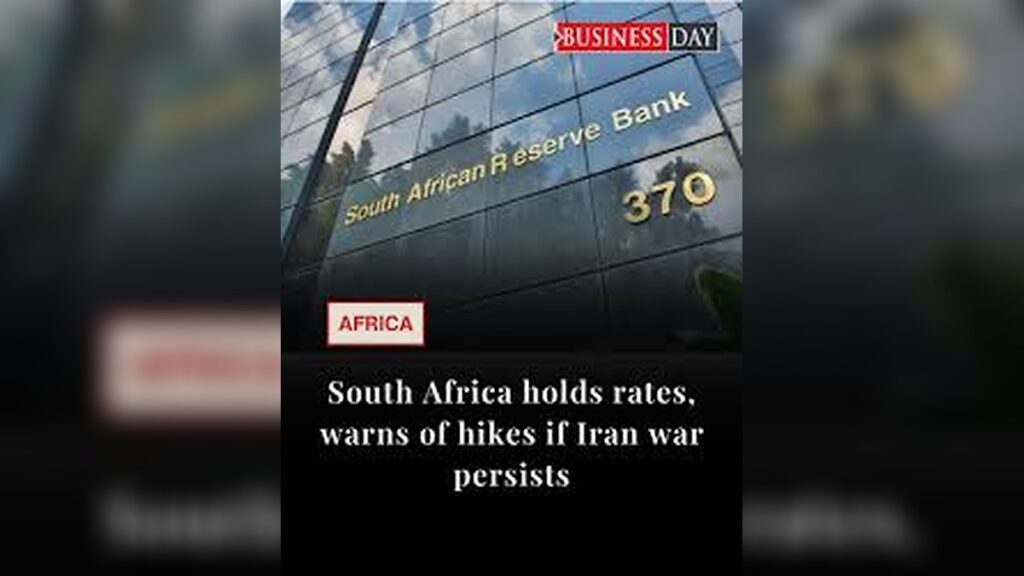
South Africans could soon face another increase in borrowing costs after inflation climbed sharply in April, raising concerns inside the country’s central bank.
Fresh economic data released by Stats SA showed consumer inflation rising to 4% year-on-year, up from 3.1% in March.
That marks the highest inflation reading since August 2024 and places price growth at the upper edge of the South African Reserve Bank’s preferred inflation range.
The latest figures have strengthened expectations that the South African Reserve Bank (SARB) may raise interest rates at its upcoming policy meeting.
Economists now believe the bank is becoming increasingly worried that rising fuel and transport costs could spread into the wider economy and create more persistent inflation.
Oil Market Turmoil Is Driving Up Costs
One of the biggest drivers behind the inflation surge has been higher transport expenses linked to global oil market instability.
The conflict involving the United States and Iran has disrupted supply chains and pushed oil prices higher internationally, affecting countries that rely heavily on imported fuel.
South Africa imports a large share of its oil and petroleum products, making the country highly vulnerable whenever global energy markets become unstable.
As fuel prices climb, the effects quickly spread through transport, logistics, food distribution, and household expenses.
Stats SA reported that transport inflation reached 4.9%, while housing and utilities recorded a 5.2% annual increase.
Monthly inflation also accelerated significantly, with the consumer price index rising 1.1% in April compared with 0.6% in March.
SARB Warns About “Second-Round Effects”
SARB governor Lesetja Kganyago recently warned that the central bank may have to make difficult decisions in the coming months because of inflation risks tied to the Middle East conflict.
According to Kganyago, central banks usually cannot stop the first wave of inflation caused by sudden oil shocks because those price increases happen immediately.
However, policymakers become concerned when businesses and workers start adjusting wages, prices, and expectations upward in response to the initial shock. Economists call this the “second-round effect.”
That is the scenario SARB wants to avoid.
If companies begin charging more for goods and services to offset transport costs, and workers demand higher wages to keep up with living expenses, inflation can remain elevated long after oil prices stabilize.
Economists Predict a Rate Increase
Several economists now expect the Reserve Bank to respond with tighter monetary policy.
First National Bank senior economist Koketso Mano believes the central bank will likely raise rates by 25 basis points, although she warned policymakers could opt for an even larger increase if inflation pressures worsen.
Analysts say the SARB is trying to avoid repeating mistakes that many global central banks faced after earlier inflation shocks.
During the Russia-Ukraine conflict in 2022, energy costs triggered widespread inflation across many economies, forcing central banks worldwide to increase borrowing costs aggressively.




Economists at Standard Bank also believe the Reserve Bank is worried about how quickly higher fuel prices are spreading into daily living costs.
Transport services such as taxis, buses, air travel, and e-hailing have already become more expensive in many areas.
Transport Companies Are Already Passing Costs to Consumers
The pressure is already being felt by commuters.
Major bus operator Putco announced that it will implement an average 10% fare increase beginning June 1 because soaring diesel prices are severely affecting operations.
The company transports thousands of passengers daily across Gauteng, Limpopo, and Mpumalanga.
The fare adjustment reflects the broader challenge many transport operators are facing as fuel expenses continue climbing.
Higher transport costs often have a domino effect throughout the economy because businesses typically pass increased logistics expenses onto consumers through higher product prices.
The Reserve Bank May Still Wait Before Acting
Despite growing expectations of a rate hike, not all economists are convinced the SARB will move immediately.
Investec Treasury economist Tertia Jacobs believes policymakers may delay action until July, although she still expects rates to rise eventually.
Some analysts argue that central banks usually avoid reacting too quickly to a single month of elevated inflation data.
However, concerns are growing that inflation forecasts could soon move outside the Reserve Bank’s target range, which would increase pressure for action.
The debate now centers more on timing rather than whether rates will rise at all.
Consumers Could Soon Feel Financial Strain
South African households had entered 2026 in relatively stable financial condition.
Lower debt-servicing costs, improved purchasing power, and stronger consumer confidence helped retail sales perform better earlier this year.
But economists now warn that the environment may soon become more difficult.
If interest rates increase, borrowing will become more expensive for consumers and businesses alike.
Mortgage repayments, vehicle financing, credit card debt, and personal loans could all cost more.
At the same time, rising transport and fuel prices will likely reduce disposable income, leaving households with less money to spend on non-essential goods and services.
Impact and Consequences
The inflation spike could create several major economic consequences for South Africa in the months ahead:
- Higher interest rates may slow economic growth by reducing consumer spending and business investment.
- Increased transport costs could push food prices and retail prices even higher.
- Small businesses that depend heavily on transportation may face tighter profit margins.
- Consumers with existing debt could experience greater financial pressure.
- Investor confidence in the Reserve Bank’s inflation management strategy may improve if policymakers act decisively.
There are also political and social implications.
Rising living costs often increase pressure on governments to provide relief measures, subsidies, or support programs for vulnerable households.
What’s Next?
Attention is now focused on the SARB’s upcoming Monetary Policy Committee meeting.
Financial markets, businesses, and consumers will closely monitor whether policymakers decide to raise the repo rate immediately or delay action until later in the year.
Future inflation reports will also play a critical role.
If fuel prices remain elevated and transport-related inflation spreads further across the economy, the likelihood of additional rate hikes could increase significantly.
Global developments will remain important as well.
Any easing in tensions involving Iran and the United States could help stabilize oil prices and reduce pressure on inflation worldwide.
Summary
South Africa is once again facing mounting inflation concerns after April consumer prices accelerated sharply due to rising transport and fuel costs.
The ongoing global oil supply disruption linked to geopolitical tensions has increased fears that inflation could spread more broadly across the economy.
The South African Reserve Bank now faces a difficult balancing act: protecting the economy from persistent inflation while avoiding excessive pressure on consumers and businesses already dealing with higher living costs.
Whether the next interest rate hike arrives immediately or later in the year, economists increasingly agree that tighter monetary policy now appears highly likely.
Bulleted Takeaways
- South Africa’s inflation rate rose to 4% in April, the highest since August 2024.
- Rising transport and fuel costs are major contributors to inflation pressures.
- The US-Iran conflict has disrupted global oil supplies and increased fuel prices.
- SARB governor Lesetja Kganyago warned about possible “second-round” inflation effects.
- Economists widely expect a 25 basis point interest rate hike soon.
- Putco announced a 10% fare increase due to soaring diesel costs.
- Higher borrowing costs could place additional pressure on households and businesses.

