
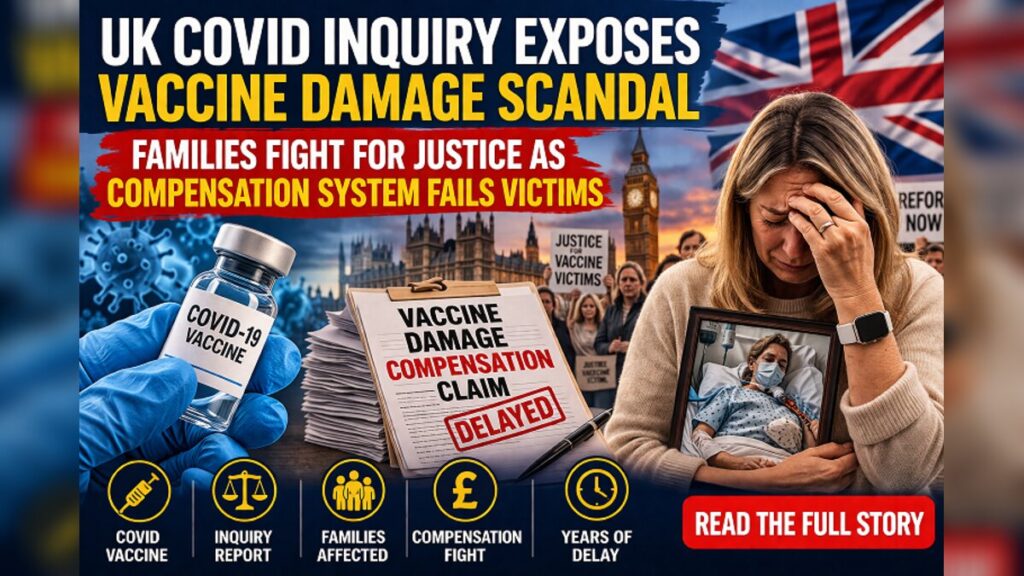
The UK’s Covid-19 vaccine programme has been described as a major success by the public inquiry examining the pandemic response, but the same report says people who were injured by the vaccines — or families who lost loved ones after vaccination — have not been properly supported.
The findings say the rollout was a remarkable achievement overall, but conclude that the government’s current compensation system is no longer fit for purpose and needs urgent reform.
Inquiry Says Rapid Vaccine Delivery Was a Historic Achievement
Baroness Heather Hallett, who chairs the UK Covid-19 Inquiry, said the speed at which Covid vaccines were developed, authorised and distributed was extraordinary.
The report notes that years of global scientific preparation laid the groundwork for the UK’s response, allowing the Oxford/AstraZeneca vaccine to be developed and two more vaccines to be approved within a year of the country’s first confirmed Covid case.
That pace would normally have taken far longer under ordinary circumstances.
Millions Vaccinated as Programme Reached Nearly the Entire Eligible Population
The scale of the vaccination campaign was also highlighted as one of the biggest public health efforts ever undertaken in Britain.
In 2021 alone, around 132 million Covid vaccine doses were administered across the UK, making it the largest vaccination drive in the country’s history.
By June 2022, roughly 87 per cent of people aged 12 and over had received two doses, while one study cited in the report estimated that nearly 450,000 lives were saved in England alone.
Inquiry Says Safety Standards Were Not Abandoned
Despite public concern over the speed of the vaccine rollout, the inquiry concluded that the UK government and regulators did not abandon established safety standards.
The report says safety issues were identified quickly and closely monitored, and it stresses that the benefits of the vaccination programme far outweighed the risks.
At the same time, it also makes clear that serious side effects did occur in a small number of rare or very rare cases, and that those experiences should not be dismissed or minimised.
Report Says Vaccine-Injured Families Have Felt Ignored
One of the strongest parts of the inquiry’s findings concerns the treatment of people who say they were harmed by the vaccines.
Baroness Hallett said the inquiry heard emotional testimony from representatives of the vaccine injured and bereaved, many of whom felt ignored, silenced or unfairly labelled.
She said it is especially important in a mass vaccination programme, where people are encouraged to get vaccinated partly to protect others, that anyone suffering serious side effects is given proper support.
Compensation Scheme Comes Under Heavy Fire
The report singles out the Vaccine Damage Payment Scheme for major criticism.
The scheme currently offers a one-off tax-free payment of £120,000, but only if an applicant can show they are at least 60 per cent disabled and that the injury was, on the balance of probabilities, caused by a vaccine.




The inquiry says that threshold is too harsh and leaves people with serious injuries but lower disability levels with nothing at all. It also says the maximum payment is too low and should be increased to at least £200,000 to reflect inflation, with annual increases added going forward.
Backlogs and Delays Left Claimants Waiting for Years
The inquiry also found that the scheme was overwhelmed by demand during the pandemic.
It heard that there had been only 800 applications in the ten years before Covid, compared with 17,519 by January 2025.
That surge created major delays. Between 2021 and 2023, just 125 claims resulted in payment, while 2,266 were rejected.
The report says the system was badly under-resourced, noting that only four administrative staff were handling the scheme in December 2020 even though a sharp increase in claims should have been expected. Some applicants reportedly waited more than two years for a decision.
Inquiry Warns Public Trust in Vaccines Must Be Rebuilt
Another major concern raised in the report is falling public trust in vaccines. Baroness Hallett said trust has been damaged by misinformation on social media and public unease over how quickly the Covid vaccines were introduced.
The inquiry says ministers now need to take action to restore confidence, while also tackling the gaps in vaccine uptake seen in poorer communities and among some ethnic minority groups.
According to the report, those inequalities were predictable and should be addressed before the next pandemic.
Dexamethasone Also Highlighted as a Key Covid Breakthrough
Although much of the focus was on vaccines, the report also underlined the importance of drugs in the pandemic response.
It points to dexamethasone as a major example, noting that the treatment was being used to save hospitalised Covid patients within hours of trial results showing it worked.
By March 2021, the report says, the drug was estimated to have saved 22,000 lives in the UK and one million worldwide.
Five Recommendations Set Out for Future Pandemic Planning
The report ends with five recommendations designed to improve the UK’s readiness for future pandemics.
These include overhauling the Vaccine Damage Payment Scheme, setting up a pharmaceutical expert advisory panel, improving targeted vaccination strategies to reduce inequalities, strengthening how vaccine uptake is monitored, and giving regulators better access to patient medical records so they can track the safety of new vaccines and treatments more effectively.
Baroness Hallett said another pandemic will come at some point, and urged governments across the UK to act on the recommendations fully and without delay.
Impact and Consequences
The inquiry’s findings are likely to increase pressure on ministers to reform the vaccine compensation system quickly, especially after such strong criticism of the current arrangements.
The report also adds weight to calls for a more balanced public conversation about Covid vaccination — one that recognises the huge public health benefit of the rollout while also acknowledging the suffering of people who experienced serious side effects.
Politically, it may reopen debate over trust, transparency and how governments support those harmed during emergency health programmes.
What’s next?
Attention will now turn to whether the UK government accepts and acts on the inquiry’s recommendations.
That includes possible changes to compensation payments, disability thresholds, staffing levels and how claims are assessed.
Ministers may also face growing calls to rebuild trust in vaccination through clearer public messaging and better support for affected families before any future health emergency arrives.
Summary
The UK Covid-19 Inquiry has praised the country’s vaccine rollout as a major success that saved large numbers of lives, but it says the system for supporting those harmed by the jab has badly failed many people.
Baroness Hallett’s report calls for urgent reform of the Vaccine Damage Payment Scheme, including higher payouts, fairer rules and faster decisions.
It also urges ministers to rebuild public trust in vaccines and strengthen pandemic preparedness for the future.
Bulleted Takeaways:
- The inquiry says the UK Covid vaccine programme was a major success overall.
- It also says some people were seriously harmed or died after vaccination and have not been adequately supported.
- The Vaccine Damage Payment Scheme is described as urgently in need of reform.
- The report recommends increasing the maximum payment from £120,000 to at least £200,000.
- It also says the 60 per cent disability threshold should be scrapped.
- The inquiry found major backlogs and delays in processing claims.
- Public trust in vaccines must be rebuilt, especially in communities with lower uptake.
- The report makes five recommendations to improve vaccine and therapeutic preparedness for future pandemics.
