
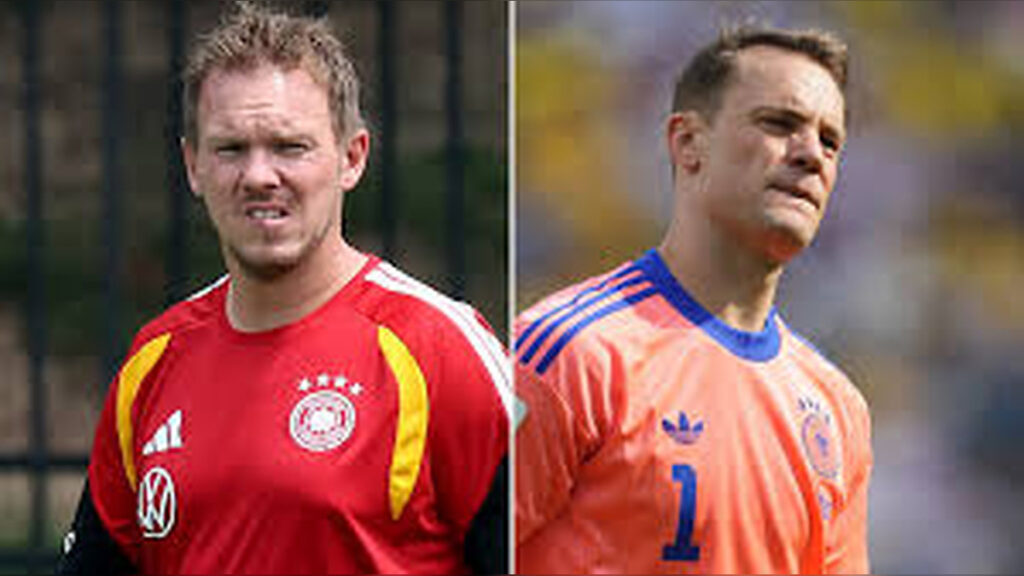
Germany’s disappointing 2026 FIFA World Cup campaign has triggered widespread debate after the four-time champions crashed out in the last 32 following a penalty shootout defeat to Paraguay.
The elimination marked an unwanted milestone, as Germany suffered its first-ever World Cup loss on penalties while extending a worrying run of underachievement at major tournaments.
The result has intensified scrutiny of head coach Julian Nagelsmann, with many supporters and football observers questioning whether the German Football Association should make a managerial change before the team’s next major challenge.
Nagelsmann Refuses to Walk Away
Despite the growing criticism, Nagelsmann made it clear after the defeat that he has no intention of stepping down from his position.
The 38-year-old insisted he would not abandon the project following a painful exit, maintaining that he is determined to continue rather than resign under pressure.
However, his stance has done little to calm frustrations among fans, many of whom believe the national team requires a fresh direction after years of declining results.
Critics also point to Nagelsmann’s often confrontational media appearances, arguing that his public image has failed to inspire confidence during a difficult period for German football.
A Once-Dominant Nation Losing Its Edge
Germany’s struggles on the global stage have become increasingly difficult to ignore.
Since lifting the World Cup trophy in Brazil in 2014, the national team has failed to progress beyond the group stage in both the 2018 and 2022 tournaments before suffering another early elimination in 2026.
The disappointing international performances stand in sharp contrast to the domestic game’s continued popularity.
Bundesliga clubs continue to attract large crowds every weekend, while even lower-division matches enjoy impressive attendances.
Although exciting young talents such as Florian Wirtz, Jamal Musiala and emerging Bayern Munich prospect Lennart Karl have given supporters reasons for optimism, many analysts believe Germany no longer possesses the exceptional squad depth that once made the country a consistent tournament favourite.
Calls for Reform Growing Louder
Germany has faced similar moments before.
Following disappointing performances at the 1998 World Cup and Euro 2000, the German Football Association introduced sweeping reforms to youth development and coaching education, changes that eventually helped produce the generation that won the 2014 World Cup.




Whether similar structural reforms are now required has become a major talking point.
While long-term development programmes would take years to produce results, replacing the head coach could be an immediate option if the federation decides change is necessary.
Kimmich Defends the Coach but Accepts Team Responsibility
Germany captain Joshua Kimmich urged against placing all the blame on Nagelsmann, insisting the players themselves must accept responsibility for failing to deliver.
Kimmich admitted the squad had fallen short of expectations and expressed disappointment that they were unable to give supporters a performance they could celebrate during a difficult period for the country.
He also voiced hope that Nagelsmann would remain in charge.
Even so, many believe the coach must ultimately answer for key tactical and squad decisions throughout the tournament.
Selection Decisions Under the Spotlight
Several of Nagelsmann’s choices have become major points of criticism following Germany’s exit.
His decision to recall 40-year-old goalkeeper Manuel Neuer raised eyebrows, particularly after the veteran produced several uncertain moments during the competition.
Questions have also been asked about deploying Joshua Kimmich at right-back rather than in his preferred midfield role.
The continued reliance on experienced figures including Leroy Sané and Leon Goretzka has likewise been challenged by those who believe younger players should have been given greater responsibility.
Although Nagelsmann signed a contract extension through Euro 2028, terminating his deal would likely come at a significant financial cost for the German Football Association.
German Media Demand Accountability
The country’s newspapers reacted harshly to the elimination, describing it as one of the national team’s most disappointing World Cup campaigns in recent memory.
Several publications labelled the defeat humiliating and argued that serious discussions about the future of the coaching staff must now take place.
Former Germany captain Mats Hummels also suggested that the federation should carefully examine what went wrong and consider appropriate consequences following another major tournament failure.
Klopp Emerges as the Leading Alternative
As speculation over Germany’s next move intensifies, Jürgen Klopp has quickly become the name dominating conversations.
The former Liverpool and Borussia Dortmund manager has impressed television audiences throughout the World Cup with his insightful analysis and engaging personality.
An earlier comment in which he jokingly suggested Nagelsmann would “still” choose Germany’s starting lineup sparked headlines before Klopp later laughed off the remark and apologised for his wording.
Klopp currently serves as Red Bull’s Head of Global Soccer after accepting the role in early 2025, overseeing football operations across several clubs within the company’s network.
While he has reportedly shown little interest in returning to club management despite interest from major European sides, many believe leading the German national team could represent an attractive final chapter in his coaching career.
Germany Faces a Defining Decision
The German Football Association now faces one of its biggest decisions since the country’s previous footballing rebuild more than two decades ago.
Keeping Nagelsmann would signal faith in a long-term project despite disappointing tournament results, while appointing a figure such as Klopp could offer supporters renewed optimism and a fresh start.
Whatever decision is made, Germany’s latest World Cup disappointment has made one thing clear: expectations remain as high as ever, and the pressure to restore the national team’s status among football’s elite has never been greater.

