
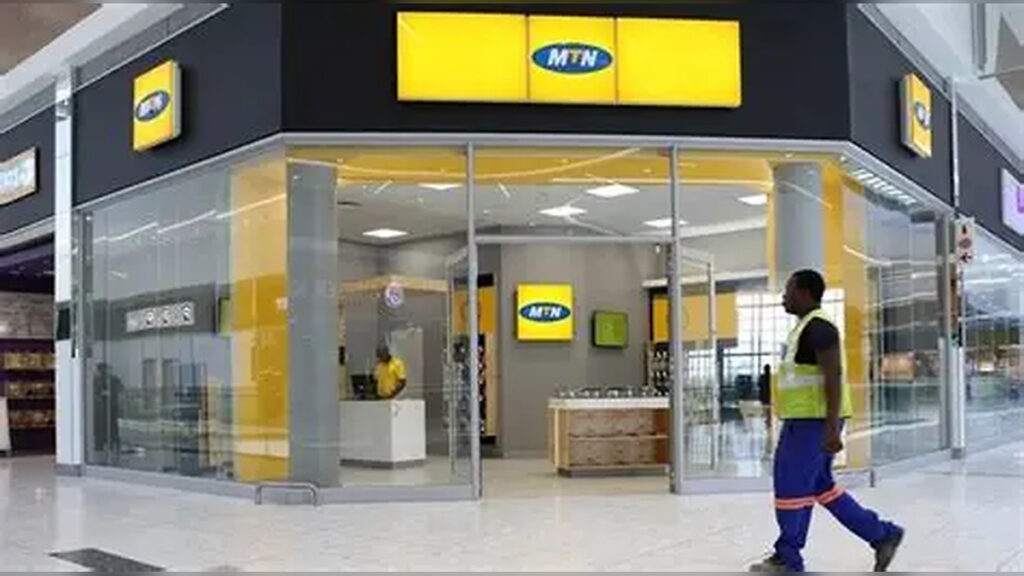
Walking into MTN Nigeria Plaza, visitors are immediately surrounded by reminders of a quarter-century of technological change.
From the colours and inscriptions to the carefully arranged displays, Y’ello Street presents more than the history of a telecommunications company—it captures how Nigerians moved from limited access to mobile communication into an era where digital connectivity shapes everyday life.
For Nigerians who came of age in the early 2000s, the experience is particularly nostalgic.
Owning a mobile phone or SIM card was once considered a luxury, while voice calls were carefully rationed and small amounts of mobile data could last for days.
Today, that same data allowance can disappear almost instantly while loading modern websites and applications.
Y’ello Street brings those contrasting realities together in one space.
When Mobile Phones Changed Nigeria
The story begins with the landmark moment in May 2001, when MTN Nigeria entered the market and the first successful call marked the beginning of a new telecommunications era.
During the opening ceremony, MTN Nigeria’s Chief Financial Officer, Modupe Kadri, described the exhibition as a reflection of how Nigerian lives have evolved alongside technology.
The significance of the exhibition extends beyond MTN’s corporate history.
Its collection of objects, advertisements and technological artefacts tells a broader Nigerian story—one in which communication technology gradually transformed how people worked, socialised, conducted business and maintained relationships.
The Leaders Behind the Journey
One of the early sections introduces the executives who helped steer MTN Nigeria through different stages of its development.
The company’s leadership history includes Karel Pienaar, who helped establish the foundations for commercial operations, and Adrian Wood, associated with the acquisition of the company’s $285 million licence.
Later leaders, including Michael Ikpoki and Ferdinand Moolman, continued guiding the company through periods of rapid technological and market change.
With Karl Toriola now leading the company, the succession of eight chief executives demonstrates how MTN Nigeria has repeatedly adapted as the telecommunications landscape evolved.
The leadership display therefore becomes part of a larger message: technological progress is rarely a single achievement but a relay in which each generation builds on what came before.
From “The Better Connection” to “What Are We Doing Today?”
MTN’s branding history also occupies a prominent place along the journey.
Some of the company’s earliest slogans may feel distant to younger Nigerians, while “Everywhere you go” remains deeply familiar to those who witnessed MTN’s rapid expansion across the country.
The latest messaging, “What are we doing today,” reflects a dramatically different technological environment.
The focus has moved beyond simply connecting people through voice calls to supporting a digital economy built around high-speed data, platforms and emerging technologies.
The evolution of the slogans mirrors the evolution of the network itself.
The Age of Scratch Cards and Pay-Per-Second Calls
Among the exhibition’s most evocative objects are the everyday items that defined Nigeria’s early mobile-phone culture.
Manual typewriters, older computers and telephone booths demonstrate how communication once depended on physical infrastructure and slower processes.
Scratch cards and paper vouchers recall a period when customers physically purchased airtime before making calls.
The introduction of per-second billing also became an important part of the early GSM experience, helping make mobile communication more accessible to Nigerians who were carefully monitoring their spending.
For those without personal phones, public call centres offered another route to staying connected.
Nokia, Motorola and the Phones Nigerians Could Not Break
The display of early GSM handsets offers perhaps the clearest reminder of how quickly mobile technology has changed.
Nokia models such as the 3310, 3210, 5110 and 8210 sit alongside Motorola and Siemens C35 and S35 devices.
These phones are remembered for their durability, long-lasting batteries and, in some cases, external antennas.




At the time, obtaining a SIM card itself could feel like a major achievement.
Voice calls were valuable enough that Nigerians developed their own communication shortcuts.
One of the most recognisable was “flashing”—placing a call and ending it before the recipient answered as a signal for them to call back.
When 2G and 3G Made the Internet Mobile
The next stage of Y’ello Street traces the transition from basic mobile communication to the early mobile internet.
The expansion of 2G and later 3G services coincided with the growing popularity of social and messaging platforms such as Facebook, 2go, Eskimi, MSN Messenger and Yahoo! Messenger.
Communication was no longer limited to SMS and voice calls.
Nigerians began browsing the web on mobile devices, using early applications and experimenting with emerging social networks.
Data remained relatively expensive and speeds were modest by today’s standards, but the foundations of Nigeria’s digital culture were being established.
The BlackBerry Era and a New Social Culture
Few devices symbolised Nigeria’s early mobile-internet boom as strongly as the BlackBerry.
The exhibition features BlackBerry handsets that helped popularise BlackBerry Internet Service, push email and BlackBerry Messenger.
BBM statuses became part of everyday youth culture, while mobile app stores began giving users access to dedicated software and services.
This was a period when the mobile phone increasingly became more than a device for calls.
It became a personal gateway to the internet.
XtraCool and the Midnight Generation
The exhibition also taps into the cultural memories created by MTN’s XtraCool plan.
The offer of free midnight calls between 12:30 a.m. and 4:30 a.m. helped create a distinctive late-night communication culture among young Nigerians.
Friends and couples stayed awake talking, while others used the hours to gossip, share secrets and maintain relationships without the cost of conventional calls.
For a generation that remembers those hours, XtraCool represents more than a tariff plan.
It is a snapshot of how telecommunications products became woven into Nigerian social life.
“I Don Port” and the Saka Era
Another memorable chapter revolves around mobile number portability.
The “I Don Port” campaign captured the arrival of a system that allowed subscribers to retain their numbers when moving between networks.
It also became part of the advertising rivalry between MTN and Etisalat, now T2mobile, famously associated with the “Saka” campaign.
The period demonstrated how competition in Nigeria’s telecommunications industry was increasingly being fought not only through network coverage and pricing but also through memorable advertising and popular culture.
From Voice Calls to the 4G Revolution
The arrival of 4G represented another major transformation.
High-speed mobile broadband expanded the possibilities of what Nigerians could do with their phones, supporting modern social-media platforms, streaming, cloud-based services, remote work and digital businesses.
Mobile connectivity was no longer primarily about making calls.
Data had become central to how people worked, entertained themselves, learned and interacted with businesses.
The shift also reflected MTN Nigeria’s broader transformation from a traditional telecommunications operator toward a technology-focused company serving an increasingly digital economy.
5G and the Connected Future
The 5G era represents the latest stage of the journey documented by Y’ello Street.
Faster and more capable networks are supporting an environment in which digital services increasingly operate in real time.
From mobile financial services and cloud computing to streaming and digitally enabled businesses, connectivity has become infrastructure for modern life.
The contrast with the early GSM era is striking.
In 2001, the arrival of reliable mobile voice communication was itself revolutionary.
Today, Nigerians expect fast internet access to underpin an expanding ecosystem of digital services.
A Museum of MTN—and Nigeria
Y’ello Street ultimately succeeds because its story is not limited to one company.
The objects on display evoke personal memories for Nigerians who experienced the transition firsthand: the first SIM card, the first mobile phone, the first SMS, the excitement of owning a BlackBerry, late-night XtraCool calls and the gradual move from 2G and 3G to 4G and 5G.
For younger visitors, the exhibition offers a glimpse into a technological world that existed before smartphones and always-on internet access became normal.
The Road Ahead
Leaving Y’ello Street offers more than a nostalgic look at the past.
It raises a broader question about how quickly technology can reshape a society.
MTN Nigeria’s 25-year journey mirrors Nigeria’s own telecommunications transformation—from scarce and expensive access to widespread connectivity and an increasingly digital economy.
The exhibition therefore serves as both an archive and a reminder.
The technologies that once seemed revolutionary have become ordinary, while today’s innovations may eventually become tomorrow’s museum pieces.
After 25 years, the story is far from finished.
The next chapter will be defined by how Nigerians use the connectivity that previous generations worked to build—and by what emerges when the next wave of technology arrives.

