
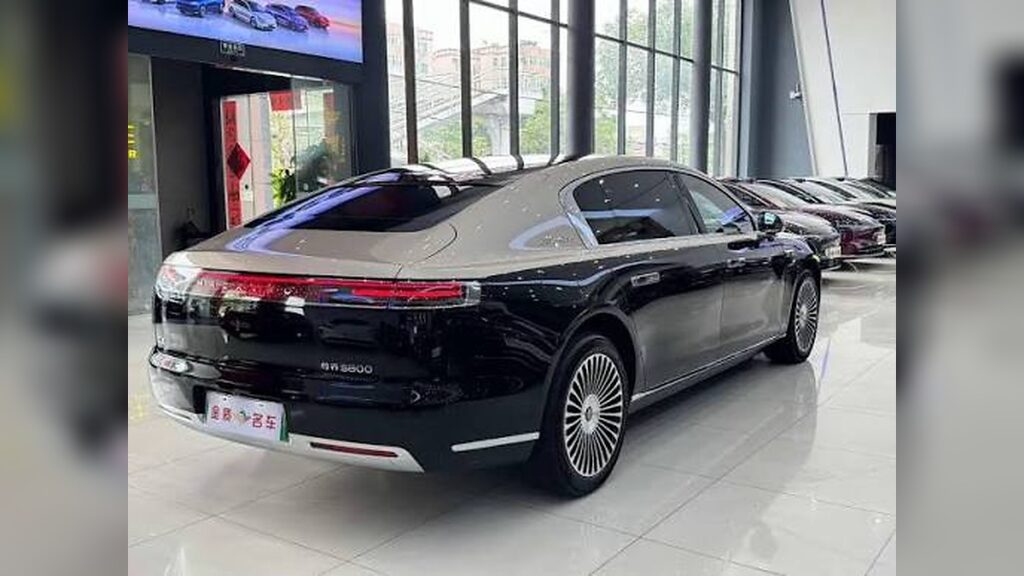
Nigeria’s Federal Government has approved tax waivers for nearly 4,000 electric vehicles imported into the country during the first half of 2026, marking a significant step in its efforts to accelerate the transition toward cleaner transportation.
The incentives are part of a broader government programme combining fiscal measures with plans to encourage local vehicle assembly, even as Nigeria continues to face major challenges with electricity supply and charging infrastructure.
EV Incentives Expand Under Government Transition Strategy
The approvals represent the first batch processed under the new initiative, according to government data reviewed by Reuters.
Nigeria has been attempting to make electric vehicles more affordable as it seeks to reduce dependence on petrol and diesel-powered transportation.
The government exempted electric vehicles from value-added tax in 2024 and reduced import duties on EVs to zero in 2026, down from five per cent previously.
The measures have become increasingly relevant following the removal of the petrol subsidy in 2023, which significantly increased fuel costs for motorists and commercial transport operators.
Ambitious 2050 Target Faces Difficult Reality
Nigeria’s 2022 Energy Transition Plan envisages electric vehicles accounting for 60 per cent of the country’s vehicle fleet by 2050.
Yet the country remains far from that target. Official figures on the total number of EVs currently operating on Nigerian roads are unavailable, although industry participants cited by Reuters estimate that electric vehicles represent less than one per cent of the national fleet.
The figure translates to only tens of thousands of vehicles in a country with a population exceeding 200 million.
Electricity Supply Remains a Major Obstacle
Nigeria’s push toward electric transportation is unfolding against the backdrop of an unreliable power system.
The national grid supplies roughly 4,000 megawatts to a population of more than 200 million people, leaving households and businesses heavily dependent on petrol and diesel generators when grid electricity becomes unavailable.
That challenge is now affecting the country’s emerging electric mobility industry. Charging stations, dealerships and battery-swapping businesses frequently rely on generators to continue operating during power outages.
Industry Says Nigeria Cannot Wait for Perfect Power
Despite the infrastructure challenges, electric mobility companies argue that Nigeria cannot afford to postpone the transition until its electricity system becomes fully reliable.
Bolanle Boboye, an executive at Saglev, Nigeria’s first electric vehicle manufacturer affiliated with Chinese automaker Dongfeng, said the country should develop its energy and transport systems simultaneously.
He argued that delaying EV adoption until electricity supply improves could cause Nigeria to fall further behind other emerging markets.
Boboye also maintained that electric vehicles can still reduce overall emissions even when their batteries are charged using electricity generated by diesel-powered generators.
Charging Network Remains Extremely Limited
A shortage of public charging infrastructure presents another significant barrier to mass adoption.




A policy brief reviewed by Reuters estimated that Nigeria had only about 48 public EV charging stations by late 2025, with most concentrated in Lagos and Abuja.
South Africa, by comparison, had more than 500 public charging stations, highlighting the substantial infrastructure gap facing Nigeria.
Nigeria’s Energy Transition Plan had projected approximately 60 charging stations by 2030, illustrating just how early the country’s public charging network remains in its development.
Home Charging Becomes the Default for Many Owners
For many existing EV owners, home charging has become the most practical alternative to the limited public network.
Drivers commonly use portable charging cables connected to household electrical outlets. However, unreliable grid supply means even home charging can be interrupted, forcing some owners and businesses to seek alternative power sources.
The infrastructure constraints are consequently influencing the types of electric vehicles that consumers are willing to purchase.
Extended-Range Vehicles Gain Popularity
Extended-range electric vehicles are emerging as one solution to Nigeria’s charging limitations.
These vehicles primarily use electric propulsion but incorporate a small fuel-powered range extender that can provide additional power when battery charging is unavailable.
Boboye said sales of extended-range models had doubled during 2026 as Nigerian consumers sought the lower operating costs associated with electric propulsion without completely abandoning the security of a fuel-powered backup.
Automakers Expand Electric and Hybrid Offerings
Chinese manufacturers are also adapting their strategies to Nigeria’s energy environment.
Companies including BYD and Geely have expanded their presence in the Nigerian market with electric and hybrid vehicles that industry executives believe can better accommodate consumers facing unreliable electricity supplies.
Tim Motors, Geely’s Nigerian partner, said new-energy vehicles, including electric and hybrid models, currently account for around two per cent of its sales.
Leon Zhan, head of Tim Motors, said Nigeria’s large automotive market offered an opportunity to gradually replace its predominantly used-vehicle fleet with newer and cleaner alternatives.
Electric Motorcycles Could Drive Faster Adoption
While passenger electric cars are receiving increasing attention, industry analysts believe electric motorcycles and tricycles could provide a faster path to widespread electrification.
Nigeria has more than 15 million motorcycles, while commercial motorcycle and tricycle operators have been particularly exposed to rising petrol costs since the fuel subsidy was removed.
For operators whose livelihoods depend on daily transport income, reducing fuel expenditure could make electric alternatives financially attractive.
Battery Swapping Offers a Practical Solution
Electric mobility companies are also experimenting with battery-swapping systems to overcome long charging times and unreliable electricity.
Companies such as MAX and Spiro are investing in networks where depleted batteries can be exchanged for fully charged units within minutes.
The model could be particularly useful for commercial riders who cannot afford to keep their motorcycles or tricycles stationary for hours while batteries recharge.
It also allows batteries to be charged centrally when electricity is available before being distributed through swapping stations.
Tax Relief Is Only the Beginning
The government’s decision to waive taxes on nearly 4,000 electric vehicles represents a major policy push for Nigeria’s emerging EV market.
Lower import costs could make electric vehicles more accessible and encourage consumers and businesses to move away from conventional petrol and diesel vehicles.
But the experience of Nigeria’s existing EV users illustrates the limits of financial incentives alone. Without a more reliable electricity supply and a much larger charging network, consumers may continue to question how practical electric vehicles will be outside major urban centers.
Nigeria Faces a Race Between Policy and Infrastructure
Nigeria’s electric mobility transition is therefore entering a critical phase. Government incentives are beginning to reduce the financial barriers to EV ownership, while manufacturers and mobility companies are developing alternatives such as hybrids, extended-range vehicles and battery swapping.
The larger challenge will be building an energy and charging ecosystem capable of supporting the government’s ambitious 2050 target.
For Nigeria, the shift to electric transportation may ultimately depend not only on how many vehicles the government can make affordable, but on whether the country can simultaneously build the infrastructure needed to keep those vehicles moving.

