
South Africa is taking steps to expand its ability to produce Foot-and-Mouth Disease (FMD) vaccines locally as authorities seek to reduce dependence on imports and improve the country’s capacity to respond to livestock outbreaks.
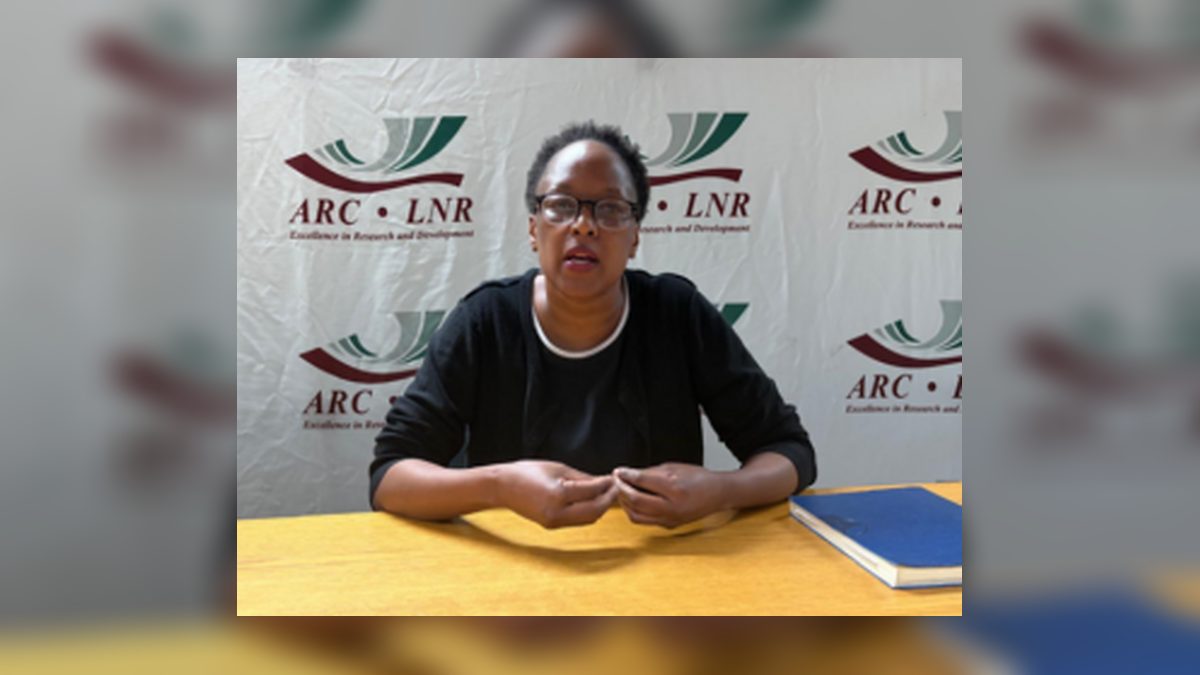
At the centre of that effort is Dr Faith Peta, Chief Research Technician in the Agricultural Research Council’s FMD Vaccine Production Programme, whose work has contributed to the development of a locally produced vaccine.
The Agricultural Research Council (ARC), an entity of the National Department of Agriculture, handed over its first batch of 12 900 locally produced FMD vaccine doses on 6 February 2026. The doses were subsequently distributed across all nine provinces.
Production Capacity Remains a Major Challenge
While the locally developed vaccine has received positive feedback from farmers and provincial authorities, the ARC currently does not have enough manufacturing capacity to meet national demand.
Peta said the organisation is therefore investing in larger production equipment, including 1 000-litre vaccine production vessels, which are expected to be installed at the existing facility as an interim measure.
The ARC has committed to producing 20 000 doses a week, with an ambitious target of reaching 200 000 doses weekly in 2027.
The longer-term objective is to establish greater vaccine-production sovereignty, allowing South Africa to rely increasingly on domestic manufacturing rather than international supplies.
Private Manufacturers Could Help Close the Gap
The country’s manufacturing constraints have also prompted government to broaden the production effort.
On 21 September 2026, Agriculture Minister Willie Aucamp’s proposal to allow qualifying private companies to use the ARC’s intellectual property to manufacture the FMD vaccine on a larger scale was approved.
Under conditional intellectual-property licensing arrangements, local and international companies will be able to manufacture the vaccine while the ARC continues expanding its own capacity.
The move is intended to increase the availability of vaccines as South Africa continues its response to the FMD outbreak.
Peta Warns That FMD Will Remain a Long-Term Threat
Despite encouraging developments, Peta believes South Africa will need to manage FMD for years to come.
She estimates that the disease could remain a challenge for at least five to 10 years, with the national strategy centred on vaccinating the entire livestock herd and then consistently demonstrating that new infections are no longer occurring.
Recent developments have offered some encouragement. The North West, for example, reported no new FMD cases for the first time since December 2025.
Peta described the development as encouraging but stressed that vaccination would remain essential to the country’s longer-term control strategy.
A Scientist Who Started With an Unlikely Inspiration
Peta’s route into veterinary science was far from conventional.




Growing up in Marapyane, Mpumalanga, she initially wanted to become a chemist after drawing inspiration from Brooke Logan, a character in the television soap opera The Bold and the Beautiful.
Chemistry did not hold her interest for long. After abandoning the field during her first year after matric, she moved into Veterinary Technology, eventually qualifying at Tshwane University of Technology.
Her early professional experience involved diagnosing animal diseases, but that work led her to a different question: how could diseases be prevented rather than simply identified?
That interest ultimately drew her towards virology and vaccine development.
Two Decades of Work Behind the Vaccine
Peta joined the ARC in 2001 and initially helped establish a Bacterial Molecular Biology Diagnostics Laboratory focused on diagnosing bacterial diseases using molecular techniques.
She later moved to the ARC’s Transboundary Animal Disease Facility and eventually became involved in developing systems for manufacturing vaccines using the FMD virus.
Her academic career progressed alongside her research work. She completed her Master’s degree in 2014 before earning a PhD in Medical Virology in 2022.
The locally produced FMD vaccine represents the culmination of roughly two decades of scientific work. Peta said the research began in 2006 and required repeated experimentation, persistence and the willingness to rethink approaches when results did not go as planned.
Leadership Has Become Part of Her Scientific Role
Beyond vaccine production, Peta has taken on a leadership role within the scientific team and has helped train young scientists entering the profession.
She says her leadership instincts began much earlier in life as the eldest of four siblings.
For aspiring scientists, she believes curiosity and patience are essential. Research, she explained, rarely produces immediate results, and experiments can fail repeatedly before a workable solution emerges.
For Peta, persistence is ultimately what turns years of individual experiments into a tangible scientific achievement.
Peta Calls for Greater Confidence Among Women in Science
Peta also used her experience to highlight the importance of confidence among women working in scientific fields.
She believes women should not make themselves smaller when opportunities arise and should be comfortable occupying space in professional environments.
At the same time, she cautioned against confusing confidence with arrogance, arguing that knowing oneself is one of the most liberating forms of personal knowledge.
She welcomed the increasing participation of women in science and said their presence was helping challenge traditional perceptions about who belongs in scientific professions.
A Different View of Public Service
With South Africa observing Public Service Month in September, Peta also challenged the perception that government employees lack ambition or work ethic.
She pointed to the quality of professionals working within the public sector and argued that their contribution demonstrates the capabilities available within government institutions.
For Peta, public service should be understood literally: professionals are serving society through their chosen occupations and should approach that responsibility with diligence, humility and pride.
She also stressed that public servants must continue striving for excellence and delivering results to the communities they serve.
‘Leave Things Better Than I Found Them’
Peta’s motivation extends beyond her scientific work.
She describes herself as a custodian of creation and says her guiding principle is to ensure that whatever she contributes leaves the world in a better condition for the next generation.
That philosophy is reflected in her work on vaccine development, which aims to strengthen South Africa’s ability to protect its livestock sector while building domestic scientific and manufacturing capability.
For Peta, the work is ultimately bigger than personal achievement. It is about using the opportunities and resources entrusted to her to create something that others can benefit from long after her own contribution has ended.

