
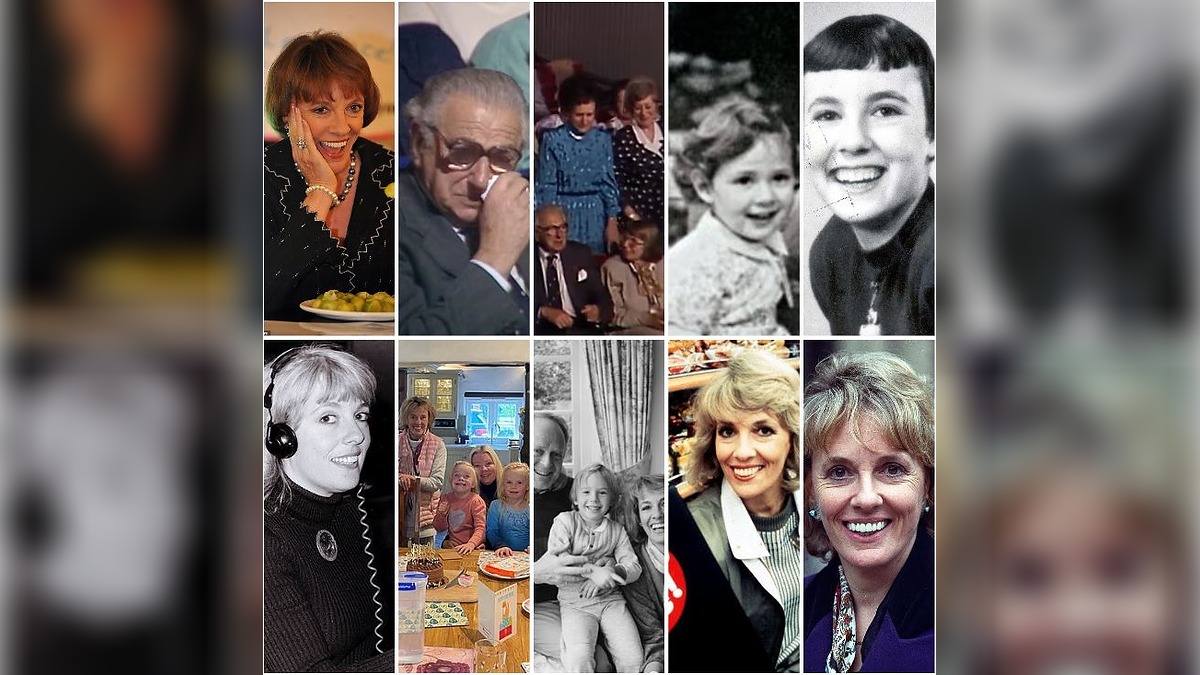
Dame Esther Rantzen, one of Britain’s most recognisable broadcasters and campaigners, has died aged 86 following a long battle with cancer.
Rantzen, who spent decades combining humour with hard-hitting journalism and campaigning, died on Wednesday after years of making a distinctive mark on British television and public life.
Her death brings an end to a broadcasting career that made her a household name and established her as a prominent campaigner on issues ranging from child protection to loneliness and assisted dying.
Her Final Years Were Shaped by Cancer
Rantzen revealed in December 2023 that she had joined Dignitas, the Swiss assisted-dying organisation, after being diagnosed with stage four lung cancer.
She had hoped to travel to Switzerland to end her life but said last month that she had become too physically fragile to make the journey.
Much of her final period was spent at her country home in the New Forest, surrounded by family.
Her death came less than three weeks after an assisted-dying bill she had strongly supported was defeated in the House of Commons.
The Broadcaster Who Was Never Afraid to Challenge Authority
Rantzen developed a reputation for refusing to be intimidated by authority, a characteristic that became central to both her broadcasting career and campaigning work.
She was particularly fond of recounting her arrest in 1980 while filming That’s Life.
During one street segment, Rantzen was handing out bat soup to members of the public when a police officer objected to the amount of pavement being occupied by the television crew.
Rather than simply move on, Rantzen argued her case while cameras continued rolling, even demonstrating how much pavement remained available.
She was eventually taken to a police van and later fined £15 after being convicted of wilful obstruction.
Far from being embarrassed, she treated the episode as one of the more entertaining stories of her career.
That’s Life Made Her a Household Name
Rantzen’s greatest television success came with That’s Life, which she fronted from 1973 until the programme ended in 1994.
At its peak, the show attracted audiences of up to 22.5 million viewers, making it one of the BBC’s most successful light-entertainment programmes.
Its appeal came from its unusual mixture of comedy, human-interest stories and investigative reporting.
Viewers could be entertained by bizarre stories one moment and confronted with serious consumer, health, safety or institutional issues the next.
Rantzen used the programme to expose problems, challenge officials and highlight people who she believed were being treated unfairly.
She once explained the programme’s appeal simply: audiences wanted to laugh as well as cry.
She Turned Down Major BBC and ITV Opportunities
By the 1980s, Rantzen had become sufficiently influential to receive offers that could have taken her career in a very different direction.
ITV reportedly offered her £1 million to leave That’s Life and present a nightly news programme. She declined.
She also turned down the opportunity to become the first female Controller of BBC1.




Rantzen later admitted that the decision was one of the few professional choices she wondered about.
She recalled arriving for the meeting carrying two letters — one accepting the position and another rejecting it. Even in the lift, she had not decided which one she would hand over.
Ultimately, she believed that taking the position would distance her from the audience that had always been central to her work.
Her Childhood Shaped Her Sense of Justice
Born in Berkhamsted in June 1940, Rantzen grew up during the Second World War.
She recalled hearing air-raid sirens as one of her earliest memories and remained deeply conscious of her Jewish heritage.
Her parents, Henry and Katherine, fostered two child refugees from Nazi Germany and helped pay for their education.
Rantzen later said that growing up Jewish and seeing what had happened to refugees had influenced her attitude towards minorities, injustice and people who were vulnerable.
She described herself as someone who distrusted bullies, snobs and lynch mobs and felt strongly about protecting those who were disadvantaged.
Her Route Into Broadcasting Began at the BBC
Rantzen studied English at Somerville College, Oxford, where she became involved in student theatre and revues.
She joined the BBC in 1963 as a trainee radio studio manager, beginning in a relatively technical role.
Her early duties included working with sound effects and operating studio equipment.
She eventually moved into research and journalism, gaining experience on consumer-affairs programmes before rising through the broadcasting ranks.
Those experiences helped shape the style she would later bring to That’s Life — combining entertainment with public-interest journalism.
Childline Became One of Her Greatest Achievements
Rantzen’s influence extended far beyond television.
In 1986, she founded Childline, which became one of Britain’s best-known organisations supporting children facing abuse and other difficulties.
The charity became one of the defining achievements of her public life.
Following the death of her husband, Desmond Wilcox, in 2000, Rantzen also experienced severe loneliness and responded by helping establish Silverline, a service designed to support older people who were isolated.
Her campaigning was often connected to experiences she had encountered personally or through people close to her.
A Career Filled With Controversy and Self-Questioning
Rantzen did not portray her life or career as free from difficult decisions.
Her relationship with Desmond Wilcox became controversial because he was married when they met. Rantzen later acknowledged that the circumstances were wrong and expressed regret about the impact on his first wife, Patsy.
The couple remained together for 32 years until Wilcox’s death in 2000 and had three children: Emily, Rebecca and Joshua.
Rantzen also spoke publicly about childhood sexual abuse and later questioned whether her early experiences had been more significant than she had initially acknowledged.
Her willingness to examine her own decisions extended to the Jimmy Savile scandal, when she questioned what broadcasters had known and whether the industry had ignored warnings.
She Continued Campaigning Into Her Final Years
Even in old age, Rantzen remained outspoken about issues she believed deserved greater attention.
Her list of concerns included misogyny, disability rights, online scams, animal welfare, sports-related injuries and compensation for victims of major scandals.
Her daughter Miriam’s experience with disability also influenced her interest in medical research and disability rights.
Rantzen’s campaigning style was characteristically direct, mixing humour with a determination to challenge institutions.
A Final Message of Thanks
Rantzen’s final public appearance came in June as she celebrated her 85th birthday.
Even while discussing her own death, she remained focused on other people and had carefully considered her funeral arrangements.
She had planned a service that would contain both humour and emotion, including poetry and readings.
In a message prepared for release after her death, Rantzen thanked the people who had supported her throughout her life and career.
She reflected on the friendships and professional relationships that had helped make her life a happy one before acknowledging that, eventually, all lives come to an end.
Her career left a distinctive legacy: a broadcaster who could make millions laugh, challenge powerful institutions, campaign for vulnerable people and remain unafraid to question the establishment.

