
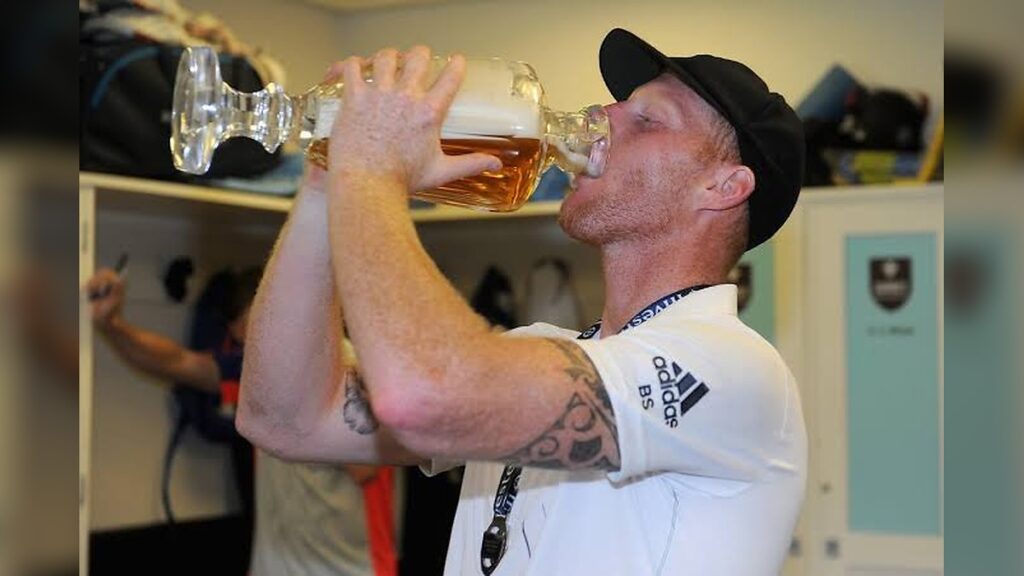
The England and Wales Cricket Board (ECB) has introduced a stricter code of conduct aimed at curbing players’ alcohol consumption during international assignments, but the tougher measures may prove far more complicated to enforce than they appear on paper.
The updated guidelines were rolled out between the opening and second Test matches against New Zealand, shortly after attention shifted from England’s on-field success to reports of captain Ben Stokes and fast bowler Gus Atkinson visiting London’s Rex Rooms nightclub following the victory at Lord’s.
Rather than ending the conversation, the new regulations have sparked debate over whether they address the real issue or simply create new grey areas.
New Restrictions Expand Beyond Curfews
One of the biggest clarifications in the revised policy is that England’s midnight curfew now applies throughout every day of a home series or overseas tour, not just on match days.
Players have also been instructed not to appear intoxicated in public, while anyone intending to stay out later than 10 p.m. during a tour or home series must notify team management or security staff beforehand.
The additions suggest the ECB wants greater oversight of players’ whereabouts after criticism that previous expectations had not been clearly communicated.
Alcohol Ban Comes With Notable Exceptions
The most ambitious element of the policy concerns drinking around matches.
From the day before a game begins until the end of the following day after its conclusion, players are advised to avoid alcohol entirely.
However, the wording stops short of making abstinence compulsory, instead describing it as a recommendation designed to prioritize preparation, recovery and professionalism.
Complicating matters further is another provision banning public drinking during this period unless specific approval has been granted by England men’s managing director Rob Key or head coach Brendon McCullum.
That exception immediately raises questions about how celebrations following major victories will be handled, particularly when champagne traditions are deeply embedded in elite sport.
A Culture That Has Long Been Part of English Cricket
The ECB’s tougher stance highlights an uncomfortable reality: English cricket has carried a reputation for its drinking culture across multiple generations.




Unlike many modern professional sports where alcohol restrictions are largely accepted as standard, cricket has repeatedly found itself balancing elite performance with long-standing social traditions.
The need to formally remind players that recovery should take precedence over drinking reflects how deeply rooted those habits have become within the game’s culture.
Historic Examples Continue to Shape the Narrative
England’s relationship with alcohol is hardly a recent phenomenon.
Legendary all-rounder Ian Botham famously joked about consuming brandy before producing one of his greatest performances during the 1980 Jubilee Test in Mumbai.
Denis Compton earned a reputation for late nights that became almost mythical, while Andrew Flintoff’s infamous pedalo incident during the 2007 World Cup remains one of English cricket’s most recognizable off-field episodes.
Ben Stokes has also experienced the consequences of alcohol-related headlines before, having previously appeared in court following the Bristol nightclub incident that dominated coverage in 2017.
These episodes illustrate why the ECB’s challenge extends well beyond dealing with isolated incidents involving today’s squad.
Recent Incidents Increased Pressure on Management
More recently, England’s relaxed team environment under Brendon McCullum has repeatedly attracted criticism.
The team’s Ashes tour in Australia drew unwanted attention after videos emerged of players enjoying nights out in Noosa, while Harry Brook’s encounter with nightclub security in Wellington and other public incidents added to growing scrutiny over player behavior away from cricket.
McCullum initially encouraged a more relaxed atmosphere when he took charge in 2022, believing players would perform better if they enjoyed themselves rather than feeling trapped by constant pressure.
However, critics argued that approach blurred professional boundaries and allowed unnecessary distractions to develop.
Balancing Freedom With Professionalism
The ECB now finds itself attempting to strike a difficult balance.
Players are expected to maintain professional standards while still enjoying enough personal freedom to avoid an overly restrictive environment.
Yet introducing tighter rules inevitably increases attention on every decision they make off the field.
Even relatively minor breaches that previously attracted little notice may now become headline news simply because formal regulations exist.
Tougher Rules May Not End the Debate
While the updated policy demonstrates the ECB’s determination to protect England’s image, it does not necessarily resolve the underlying issue.
The board is trying to reshape habits that have been associated with English cricket for generations, a task far more challenging than drafting new regulations.
With Key and McCullum still able to approve exceptions when circumstances warrant, much will depend on how consistently the rules are applied.
Until then, England’s complicated relationship with alcohol is likely to remain almost as heavily scrutinized as its performances on the field.

