
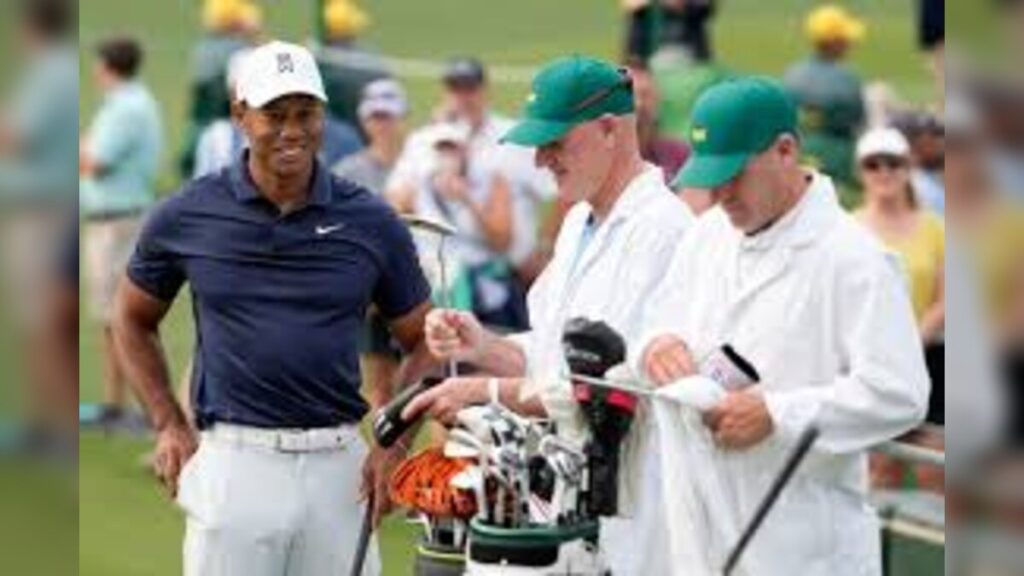
There are rounds of golf, and then there are days that feel like you’ve stepped into someone else’s dream.
This one at Augusta National belonged somewhere in between.
What started as a simple assignment quickly turned into a slow-burning journey through heat, pressure, humour, and the kind of conversations that only happen when you’ve been walking for hours under a Georgia sun.
By the time the group reached the back nine, it wasn’t just about golf anymore—it was about rhythm, persuasion, doubt, and a caddie who had clearly decided he was running the show.
Meeting Matt and the First Signs of Trouble
It began on the driving range, all polite introductions and quiet expectations.
Matt, a former college golfer from the American South, had that easy confidence of someone who has seen every possible mistake a player can make—and enjoys pointing them out before they happen.
At first, the exchange was light. By the time the group hit the 14th fairway, it had turned into a running argument.
The course itself—Augusta National—does that to people.
It has a way of making every shot feel like it has history attached to it.
Especially when you know what players like Rory McIlroy did on the same holes just a day earlier.
Matt kept reminding the player of it.
“You’re getting a four here as well,” he insisted.
The player just wanted a five iron. Matt wanted drama.
Augusta Has a Way of Changing Conversations
The further the round went, the more Augusta seemed to shape the psychology of every decision.
The setting—towering pines, elevated greens, impossibly subtle slopes—turns normal judgment into hesitation and second-guessing.
Even the smallest shot felt loaded. Matt knew it. That’s why he kept pushing.
A three-wood, he argued. A line at a distant tree.
A shape that would “bring it home like it was designed by the gods.”
The player wasn’t convinced. Not at first.
But Augusta has a way of wearing people down.
The Course That Doesn’t Forgive Hesitation
What makes Augusta National so notorious isn’t distance or difficulty alone—it’s the punishment for being slightly wrong.
Every decision carries echoes of past Masters moments, especially on holes like Amen Corner.
That pressure is what makes the course legendary, especially during tournaments tied to players like Rory McIlroy and others who’ve lived through its swings of fortune.




Matt played on that psychology. Every shot became a test not just of skill, but of trust.
And trust, as it turned out, was negotiable.
When Caddie and Player Become Something Like Opponents
As the round progressed, the relationship shifted.
What began as guidance turned into persuasion, and persuasion into a kind of stubborn back-and-forth.
Matt had reads on the greens, knowledge of the slopes, and a belief that he could “see” shots before they happened.
Sometimes he was right.
Sometimes he wasn’t.
But he never stopped talking.
By Amen Corner, the tension had become part of the experience itself.
Augusta’s Turning Points and the Moment Everything Clicked
The 12th and 13th holes delivered exactly what Augusta always does—punishment for boldness and reward for restraint.
A ball in the water here, a wrong angle there, and suddenly a round spirals.
Matt’s commentary never stopped.
“Even Tiger doesn’t go for that,” he muttered at one point, referring to the kind of decision-making associated with legends like Tiger Woods.
The player ignored him—and paid for it.
But golf, as always, gives something back if you stay long enough.
The Shot That Changed Everything on the 14th
After hours of tension, disagreement, and heat-soaked walking, something unexpected happened.
A three-wood.
Uphill.
201 yards.
The kind of shot that usually ends in regret.
Instead, it started badly… then curved… then held… then behaved exactly as Matt had described.
For once, he was right.
The ball finished just a few feet from perfection. The par putt followed.
And suddenly, the entire emotional weight of the round shifted.
That moment mattered more than the scorecard.
Impact and Consequences
The experience highlights what makes Augusta National unlike any other course: it doesn’t just test swing mechanics, it tests decision-making under psychological pressure.
Key consequences from a round like this include:
- Reinforces how elite courses shape player confidence and doubt
- Shows the influence a caddie can have on shot selection and mindset
- Demonstrates how iconic venues amplify memory and emotion over score
- Highlights why Masters-level golf is as much mental as physical
- Underscores how narrative moments often outweigh technical performance
What’s Next?
Rounds like this tend to linger more than they conclude.
For players and caddies alike, Augusta becomes a reference point—something to measure future decisions against.
Expect continued debates in professional golf about:
- Risk vs reward strategy on classic Masters holes
- Increasing reliance on data-driven caddie decisions
- How course history influences modern shot-making
And for anyone who has walked those fairways once, there’s usually only one outcome: wanting to go back.
Summary
What began as a routine round at Augusta National evolved into a deeply human experience shaped by pressure, persuasion, and one unforgettable shot.
The course, the caddie, and the history of the Masters all blended into a single long conversation played out over 18 holes.
In the end, it wasn’t about the score. It was about the feeling of hitting one shot exactly the way someone said it would happen—and believing them, just for a moment.
Bulleted Takeaways
- A round at Augusta National became a psychological battle between player and caddie
- The caddie Matt constantly influenced club selection and strategy
- Iconic figures like Rory McIlroy and Tiger Woods shaped the mental backdrop of the round
- Amen Corner proved decisive in momentum shifts and mistakes
- One successful three-wood on the 14th became the emotional peak of the day
- Augusta’s design amplifies pressure, memory, and decision-making errors
- The experience mattered more than the final scorecard outcome

