Public debate around aging, skincare, and longevity has intensified in recent years, especially as biohacking continues to gain mainstream attention.
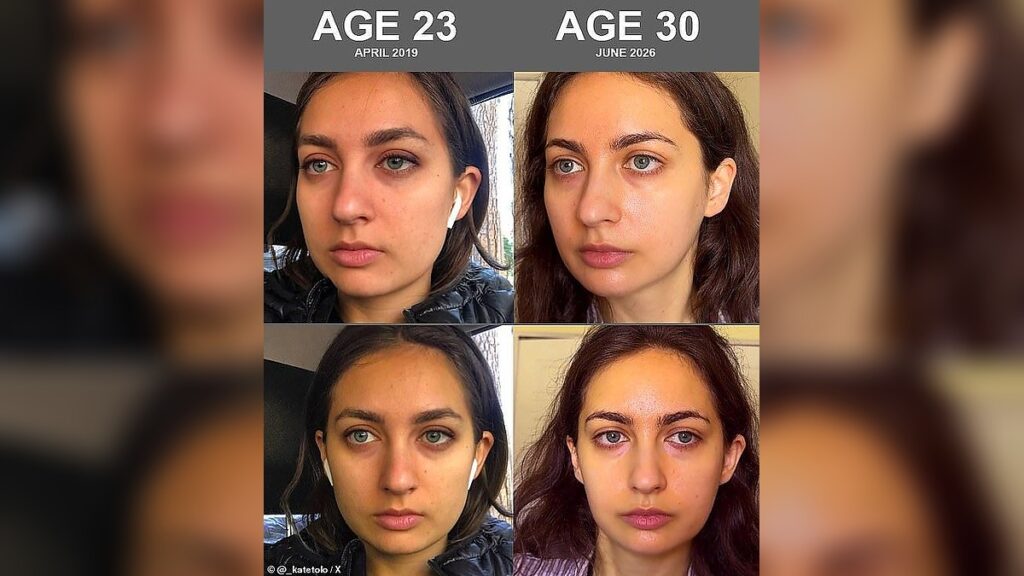
Now, Kate Tolo, the longtime partner of biohacker and entrepreneur Bryan Johnson, is making headlines after revealing what she says helped dramatically reduce her skin’s biological age.
The 30-year-old Australian recently posted a detailed explanation on X, formerly Twitter, claiming that testing shows her skin now carries the biomarkers of a 21-year-old.
According to Tolo, the result reflects years of focused efforts to improve skin health and slow visible aging.
Controversy Over Australian Sun Exposure Sparks Discussion
Tolo’s comments arrived shortly after she and Johnson returned from a trip to Australia, where they visited her family.
During the visit, Johnson attracted criticism online after suggesting that Australia’s intense sunlight contributes to accelerated skin aging.
Writing on social media, the 48-year-old said the Australian sun increased his skin aging by five percent through UV damage and pigmentation changes.
He also referenced research from Monash University that examined differences in skin aging between Australian and American women.
The remarks generated strong reactions, with many Australians pushing back against the suggestion that residents generally appear older because of sun exposure.
Skin Age Measurements Show Unexpected Results
While Johnson’s comments focused on environmental factors, Tolo’s post centered on her personal skincare journey.
She explained that when she first underwent facial scanning at age 27, the assessment estimated her skin age at 26.
Three years later, she says a follow-up analysis indicated her skin age had dropped to 21.
Tolo stressed that the findings do not mean she physically looks 21 years old.
Instead, she said the results refer to specific skin biomarkers measured through advanced imaging technology.
According to her explanation, the scans use multispectral imaging that combines polarized and ultraviolet light to evaluate both surface-level and deeper skin characteristics.
She said repeated scans allowed her to track changes over time.




From Fast Food Habits to a Structured Anti-Aging Routine
Reflecting on her lifestyle before beginning her longevity-focused approach, Tolo revealed that five years ago she paid little attention to skincare and frequently ate fast food, including daily McDonald’s meals.
Today, she follows a far more structured regimen designed to support skin health and overall wellness.
Her first recommendation was addressing underlying skin concerns such as acne before investing in more advanced treatments.
She also encouraged people to establish basic habits such as consistent sun protection and skin assessments before targeting specific cosmetic concerns.
Tolo noted that aging affects far more than wrinkles, pointing to changes in collagen production, hydration, elasticity, fat distribution, tissue placement, and bone structure.
The Treatments and Supplements Behind Her Routine
Tolo outlined a lengthy list of practices she credits for her reported improvements.
Among them are regular sunscreen use, improved sleep habits, healthier nutrition, and red light therapy.
She also disclosed that she has microdosed Accutane and uses several supplements, including hyaluronic acid, vitamin C, omega-3, copper, and vitamin D.
Additional staples in her routine include collagen products, extra virgin olive oil, antioxidants, and several products associated with Johnson’s Blueprint longevity program, including supplements and skincare items.
She also clarified that she initially achieved her results without Botox or dermal fillers.
However, she later chose to use both for what she described as facial balancing purposes.
Expert Says Healthy Aging Does Not Need an Expensive Protocol
Not everyone agrees that extensive anti-aging programs are necessary.
Rene Torres, an esthetician, functional nutritionist, and wellness director at OSMOSIS, said many of Tolo’s core habits can contribute positively to skin health and general well-being.
However, Torres emphasized that effective aging strategies do not necessarily require costly devices, complicated treatment plans, or large numbers of supplements.
Instead, she advocated for a more balanced approach that focuses on understanding the body’s needs and supporting its natural repair mechanisms.
Torres also cautioned against viewing sunlight solely as a threat.
While excessive UV exposure can damage skin over time, she noted that appropriate sun exposure plays an important role in vitamin D production, sleep regulation, cardiovascular health, and other biological functions.
Bryan Johnson Remains a Central Figure in the Longevity Movement
Tolo’s skincare revelations come as interest in Johnson’s anti-aging philosophy continues to grow worldwide.
The California-based entrepreneur has become one of the most recognizable figures in the longevity movement through his Blueprint program, a highly publicized effort to slow and potentially reverse biological aging.
Reports have suggested that he spends roughly $2 million annually on medical testing, treatments, and lifestyle interventions designed to extend health and lifespan.
The couple, who have an 18-year age difference, first met when Tolo joined Johnson’s Blueprint venture as chief marketing officer.
Nearly five years later, both remain closely associated with the growing biohacking community and its pursuit of longer, healthier lives.
Growing Debate Over Anti-Aging Culture
Tolo’s claims have reignited a broader conversation about modern anti-aging practices.
Supporters view detailed longevity routines as an investment in long-term health, while critics argue that some approaches may promote unrealistic expectations about aging and appearance.
As biohacking gains popularity, the discussion continues to center on a key question: how much of healthy aging comes from science-backed lifestyle choices, and how much is driven by increasingly ambitious—and expensive—attempts to turn back the clock?
