
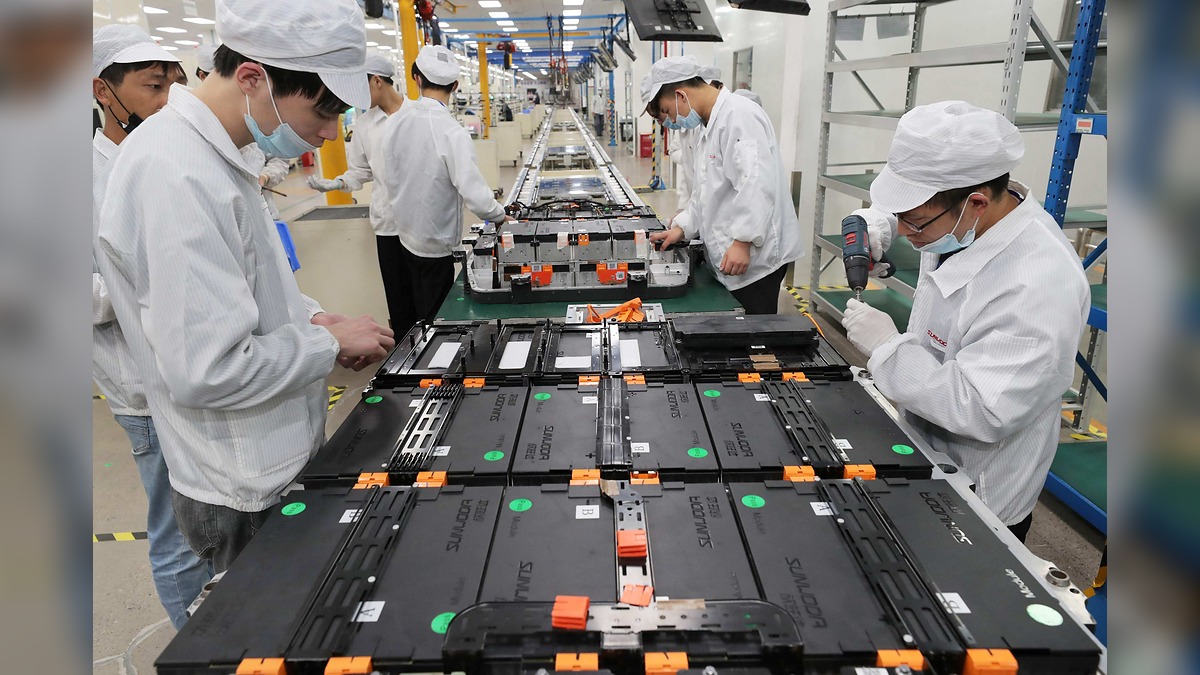
China is introducing a tougher approach to electric-vehicle battery safety, moving the emphasis from detecting dangerous failures to physically preventing those failures from developing into fires.
The new traction-battery requirements place greater responsibility on the battery’s construction, including the materials and structures separating individual cells. Instead of relying primarily on sensors and software to identify a problem and warn occupants, manufacturers must demonstrate that a battery can contain a fault before it spreads.
The change reflects a basic limitation of electronic safety systems: they can detect and respond to a problem, but they cannot eliminate the time it takes for a chemical reaction inside a damaged battery to develop.
Preventing Thermal Runaway at Cell Level
Battery packs contain large numbers of tightly packed cells designed to deliver greater driving range and faster charging. But the concentration of energy also creates a potential safety challenge.
If one cell begins generating excessive heat, the temperature can spread to surrounding cells. Without sufficient physical separation, that process can develop into a chain reaction known as thermal runaway.
Under the new requirements, manufacturers must demonstrate that their battery designs can prevent such propagation. Insulation and the physical arrangement of cells therefore become critical parts of the safety system.
The approach effectively places greater emphasis on engineering the battery to contain a failure rather than depending entirely on software to identify it after it has begun.
Battery Packs Face Tougher Physical Testing
The regulations also introduce mandatory tests designed to replicate conditions an electric vehicle can encounter on the road.
One of these tests focuses on impacts to the underside of the vehicle. Battery packs are positioned beneath many EVs, leaving them potentially exposed to objects such as rocks, raised surfaces and uneven roads.
The test is intended to determine whether the battery casing can absorb or withstand mechanical damage without compromising the cells inside.




This creates a safety requirement that cannot be satisfied simply by improving sensors or software. The physical structure itself must withstand the stress.
Fast Charging Becomes a Long-Term Safety Test
Another requirement examines what happens to batteries subjected repeatedly to demanding fast-charging cycles.
Frequent high-power charging can generate significant heat, making long-term thermal stability an important consideration. The new testing regime requires manufacturers to demonstrate that battery systems remain stable after hundreds of aggressive charging cycles.
That means battery safety is being assessed beyond its performance when new. The durability of the materials, chemical stability of the cells and systems responsible for controlling heat all become part of the equation.
The underlying principle is that a battery must remain safe throughout demanding real-world use, rather than simply meet performance requirements during controlled laboratory conditions.
Drivers Get a Physical Emergency Option
Perhaps the most notable change is the requirement for a manually accessible high-voltage disconnect.
Modern electric vehicles generally depend heavily on electronic systems to monitor the battery and determine when power should be interrupted. A physical disconnect provides an additional layer of control if an electronic system fails or does not respond as expected.
The requirement gives the driver a direct means of interrupting the high-voltage system without relying exclusively on the vehicle’s software.
It represents a broader engineering principle: critical safety functions should have a physical fallback when digital systems cannot be relied upon.
A Potential Global Impact on EV Design
Although the requirements are being introduced in China, their influence could extend well beyond the country’s automotive market.
Major manufacturers increasingly develop electric vehicles for multiple markets, and maintaining completely different battery architectures for different safety regimes can be expensive and complicated.
As a result, some of the physical safety measures required under the Chinese standards could eventually appear in vehicles sold internationally, particularly where manufacturers seek to standardise battery designs across markets.
From Warning Drivers to Preventing Fires
The significance of the new approach lies in where responsibility for battery safety is placed.
A warning system can alert occupants that something has gone wrong, but it cannot change the physical processes already taking place inside a battery cell. By requiring stronger barriers, impact resistance, long-term charging durability and a manual high-voltage disconnect, the regulations put greater emphasis on preventing a dangerous event from escalating.
For EV manufacturers, that means battery safety increasingly becomes a question of materials, mechanical design and physical control — not simply the intelligence of the software monitoring the system.
The shift could mark a broader change in electric-vehicle engineering: rather than relying on technology to recognise danger quickly, the vehicle itself must be designed so that a single failure is less capable of becoming a much larger one.

