
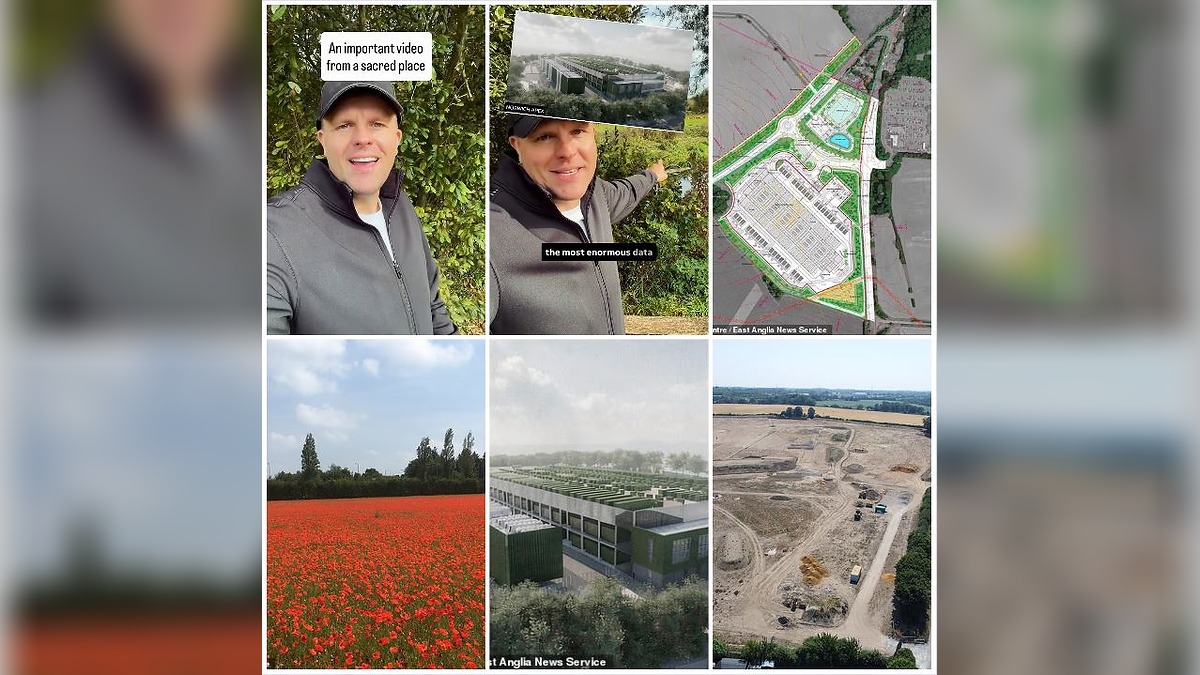
Television presenter and podcaster Jake Humphrey has criticised plans for a large artificial intelligence data centre near a nature reserve in Keswick, Norfolk, warning that local residents could face the long-term consequences of a development he believes is unsuitable for the area.
The former BBC Formula One presenter, who lives near the proposed site, has described the plans as absurd and urged decision-makers to consider the environmental and community impact before granting permission.
Humphrey, 48, stressed that his objection was not directed at technological progress or the need for data centres. Instead, he argued that developments of this scale must be located in appropriate places, with safeguards agreed before construction begins.
In a video shared on Instagram, he warned that ordinary communities should not be expected to bear the cost of economic and technological growth without sufficient consideration of the consequences.
Proposed Data Centre Would Require Substantial Power
The proposed Norwich Apex Data Centre would occupy a 32-acre site in Keswick, near Norwich. The planned two-storey facility would have a power capacity of 150 megawatts and feature 72 cooling units on its roof.
The scale of the proposed electricity demand has become a point of concern, with the facility’s power capacity compared in the report to the energy required to operate 50,000 kettles simultaneously.
The site was previously known for its summer display of poppies and is close to Marston Marshes, a nature reserve covering 64 acres of floodplains, woodland and grassland.
The reserve supports a range of wildlife, including the endangered Desmoulin’s whorl snail, whose survival is threatened by habitat loss.
South Norfolk Council received the planning application on October 2. Although the land already has permission for an industrial park, opponents argue that the proposed data centre would bring a different scale and character of development to the surrounding countryside.
Humphrey Says Technology Must Not Come at Any Cost
Humphrey has made clear that he recognises the importance of data centres to Britain’s technological development, including the growing use of artificial intelligence.
However, he believes that the need for digital infrastructure should not override concerns about location, scale and environmental protection.
The presenter said he wanted more people to understand what was being proposed before a final decision was made, arguing that once a development of this size has been built, residents cannot simply reverse the outcome.
He has also warned that the project could permanently change the atmosphere of the area, which he describes as a landscape shaped by open fields, rural lanes, historic churches, marshland and wildlife.
In his view, the proposed facility would introduce a more industrial character into an area valued for its quiet surroundings and open countryside.




Humphrey has previously said the development could affect the identity of the wider area, raising concerns about noise, lighting, fencing, substations, generators and additional traffic.
He maintains that opposing this particular location does not amount to opposition to technological progress. Rather, he argues that the country must balance infrastructure needs against the protection of sensitive landscapes and residential communities.
Residents Raise Concerns Over Noise, Lighting and Wildlife
Local objections have focused on the potential effects of the development on the surrounding environment and nearby homes.
Residents have raised concerns about continuous operational noise, light pollution and the possible loss of the area’s rural character. Some have also questioned whether a facility with such substantial power requirements is appropriate so close to a nature reserve.
One objector argued that the countryside and wildlife were being damaged, recalling when the proposed site was covered in poppies and alive with natural activity.
Another questioned the environmental implications of the scheme, arguing that any necessary data centre should be located where its impact on wildlife and residential communities would be lower.
A total of 29 objections had been lodged against the planning application at the time of the report.
Local Political Leaders Oppose the Development
The proposal has also attracted opposition from local political figures.
Ben Goldsborough, the Labour MP for South Norfolk, and Daniel Elmer, the Conservative leader of South Norfolk Council, have both said they will fight the plans.
The planning route is another important aspect of the dispute. The scheme has not been designated as a nationally significant infrastructure project, according to the report, and the developer has submitted its application through the district council.
This means the decision is expected to rest with council decision-makers rather than being determined through the national approval process used for designated major infrastructure projects.
The debate therefore places local planning authorities at the centre of a decision involving technological development, economic needs, environmental protection and the concerns of nearby residents.
Developer Says Measures Will Control Noise
Norwich Apex Ltd has defended its proposal, stating that the data centre would incorporate several measures designed to limit noise and reduce its visual impact on nearby communities.
A company spokesperson said the plans included acoustic enclosures around all chillers, natural screening and acoustic barriers at selected points around the site. The company also intends to use a free-cooling system at night, which it says would further reduce noise output.
According to the developer, the proposed screening and barriers would help conceal the facility from surrounding villages.
The company also referred to an acoustic assessment submitted with the planning application. It said the assessment predicted that, provided the proposed mitigation measures were implemented, the facility would not exceed existing daytime and nighttime background sound levels at key sound receptors.
These assurances form part of the debate over whether the development can operate without causing unacceptable disruption to residents and the surrounding environment.
Public Consultation Remains Open Until October 28
The planning consultation is scheduled to remain open until October 28, giving interested parties an opportunity to submit their views before the application proceeds.
The dispute reflects a broader challenge facing communities as demand grows for infrastructure supporting artificial intelligence and other digital services. While such facilities can play a role in technological development, their location can raise questions about electricity demand, environmental safeguards and the long-term effects on nearby communities.
For Humphrey and other opponents, the central issue is whether a project of this size belongs beside a sensitive natural landscape and established rural communities.
The developer, meanwhile, says its proposed noise-control and screening measures would address key concerns. The planning decision will determine whether the project can proceed at the proposed site.
