
The BBC’s The Celebrity Traitors has reportedly been rocked by a behind-the-scenes dispute after an unnamed contestant allegedly compared the show’s production team to “human traffickers” over restrictions on contacting family and friends.
According to a report by The Sun, the celebrity became angry after being told they could not make personal calls between filming scenes. The reported confrontation is said to have left producers and fellow contestants surprised, particularly because the rules had allegedly been explained before the participant agreed to join the programme.
A source quoted by the publication said the contestant struggled to understand why they could not simply call home, despite having been informed of the restrictions at the beginning of the process.
The source alleged that the celebrity launched into an angry outburst and compared members of the production team to human traffickers.
The contestant has not been publicly identified, and the reported remarks have not been independently confirmed. The programme’s phone restrictions are understood to be intended to protect the integrity of the game by limiting outside communication.
The BBC was approached for comment, according to the report.
Why Contestants Are Restricted From Contacting the Outside World
The reported disagreement comes as the reality competition continues to generate interest through its secret alliances, strategic decisions and tense eliminations.
In a format where contestants must decide whom to trust, unrestricted communication with friends and family could potentially expose players to outside information or influence their decisions.
The reported restrictions are therefore presented as part of the show’s efforts to preserve the competition’s rules.
However, the alleged confrontation highlights the pressure that can develop when participants are separated from their normal routines and are unable to communicate freely with people outside the production.
It remains unclear how the disagreement was resolved or whether the unnamed celebrity faced any consequences.
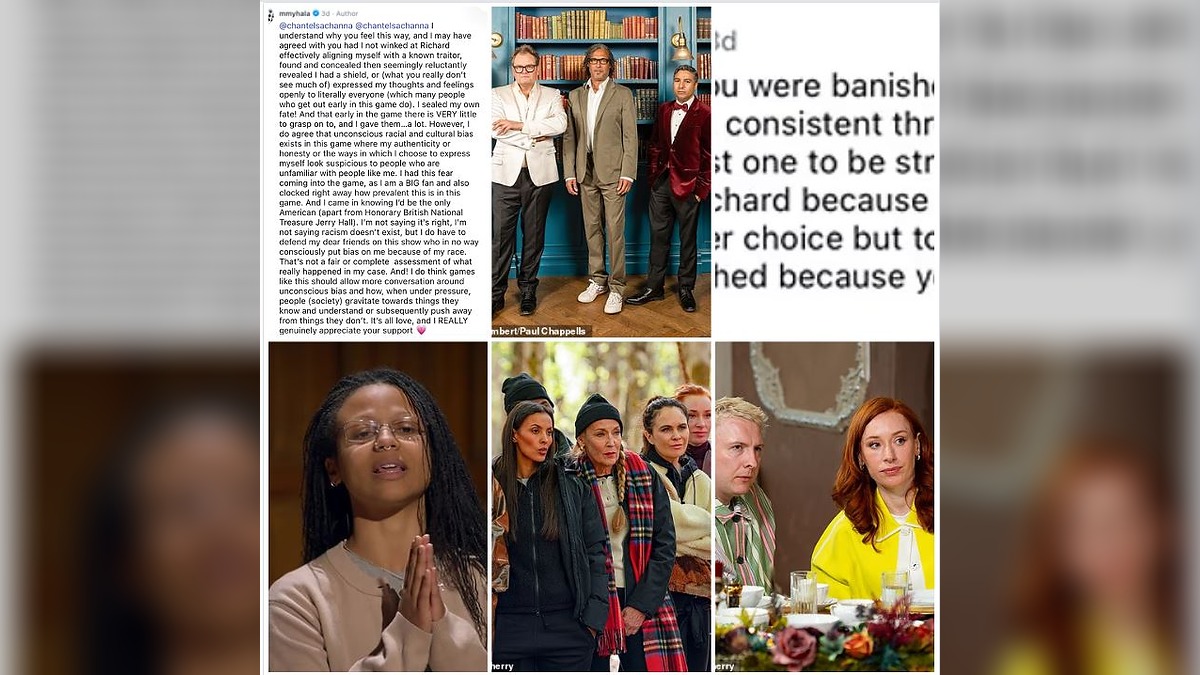
Myha’la Raises Concerns About Unconscious Racial Bias
The reported clash with producers is not the only controversy surrounding The Celebrity Traitors. The programme has also faced questions about whether unconscious racial and cultural bias can influence the way contestants judge one another.
Actress Myha’la, known for her role in the BBC drama Industry, raised the issue after being eliminated from the competition.
The American actress was the second contestant to be banished and later addressed her experience on Instagram. Her comments followed a response from entrepreneur Chantel Sachanna, who suggested that Myha’la had been eliminated because she was Black.
Myha’la said she recognised that unconscious bias could affect the game, particularly when contestants had limited information and were forced to make quick judgements about other people’s trustworthiness.
She explained that behaviours or expressions that seemed authentic to one person might appear suspicious to someone unfamiliar with their cultural background.
The actress also said she had anticipated the possibility of such difficulties before entering the competition, noting that she was the only American contestant apart from Jerry Hall, whom she described as an honorary British national treasure.
Actress Defends Her Co-Stars Despite Concerns About Bias
Although Myha’la acknowledged the possibility of unconscious bias, she was careful not to accuse her fellow contestants of deliberately targeting her because of her race.



She said she wanted to defend the friends she had made on the programme, stressing that she did not believe they had consciously discriminated against her.
Myha’la also argued that describing her elimination solely in racial terms would not provide a complete explanation of what happened during the game.
Instead, she called for more discussion about how unconscious bias can influence decisions, especially when people are under pressure and tend to gravitate towards those they understand or regard as familiar.
Her comments added nuance to the debate, distinguishing between deliberate discrimination and the possibility that social assumptions can shape people’s judgements without their awareness.
The BBC was also approached for comment regarding the controversy surrounding her remarks.
Richard E Grant Alliance Ends in Myha’la’s Elimination
Myha’la’s departure followed a tense roundtable discussion in which her defence of fellow contestant Richard E Grant raised suspicions before she ultimately voted for him to be banished.
The actress had appeared close to Grant during the competition, but her decision to vote against him at the last moment, accompanied by a wink, became a talking point among viewers.
During her exit, Myha’la told her fellow celebrities that she had enjoyed getting to know them. She also warned the Faithfuls not to underestimate the Traitors, arguing that they were more calculating than some contestants appeared to believe.
In a subsequent interview, she reflected on her early connection with Grant, describing them as “twin flames” and acknowledging that trusting him may have contributed to her downfall.
Her elimination prompted an outpouring of support on social media, with some viewers arguing that she had been treated unfairly.
Little Mix singer Leigh-Anne Pinnock also expressed support, while Grant shared affectionate messages in response to the actress’s departure.
Debate Extends Beyond the Celebrity Edition
Questions about racial bias have also emerged in discussions surrounding the civilian version of The Traitors.
The supplied report notes comparisons with the fourth series, in which three of the first Faithfuls eliminated were from minority ethnic backgrounds. Online discussions subsequently questioned whether unconscious bias could influence the way players identify people they consider suspicious.
Television presenter Scarlette Douglas has previously spoken about the possibility of unconscious bias in reality television, arguing that patterns in contestant eliminations deserve scrutiny rather than dismissal.
Cat Burns, who reached the final of the first Celebrity Traitors series alongside historian David Olusoga and actor Nick Mohammed, also reacted publicly to another contestant’s elimination.
These reactions have contributed to a broader discussion about representation, social perceptions and how contestants are assessed in competition formats built around trust and suspicion.
Research Adds Context to Reality Television Debate
The discussion has also drawn attention to previous research into how minority ethnic participants are treated on reality television.
A Guardian investigation cited in the report found that non-white dancers on Strictly Come Dancing were 71 per cent more likely to be placed in the bottom two.
The finding has been referenced in debates about whether unconscious assumptions can affect audience responses and decisions in entertainment programmes.
Journalist Micha Frazer-Carroll has similarly argued that The Traitors depends heavily on social judgements, with contestants often assessing abstract qualities such as honesty and trustworthiness based on limited evidence.
Her analysis suggested that wider social stereotypes can influence perceptions of who appears suspicious, even when individuals do not consciously intend to discriminate.
Such arguments do not establish that any particular elimination was motivated by racism, but they have helped frame questions about how social bias may operate within competitive reality formats.
Reports of Tension Continue Behind the Cameras
The latest allegations have also been accompanied by claims that tensions among contestants have continued after filming stops.
People described as insiders reportedly said the cast remained at odds behind the scenes, with paranoia and disagreements spilling beyond the formal competition.
The alleged atmosphere was linked to contentious roundtable decisions that resulted in two Faithfuls being eliminated, intensifying mistrust among the remaining players.
While the claims have not been independently verified, they suggest that the pressure of the game may have affected relationships beyond the moments shown on television.
With the reported dispute over phone access and the debate about unconscious bias adding to the scrutiny, The Celebrity Traitors is facing questions about both its production environment and the social dynamics at the heart of its format.

