
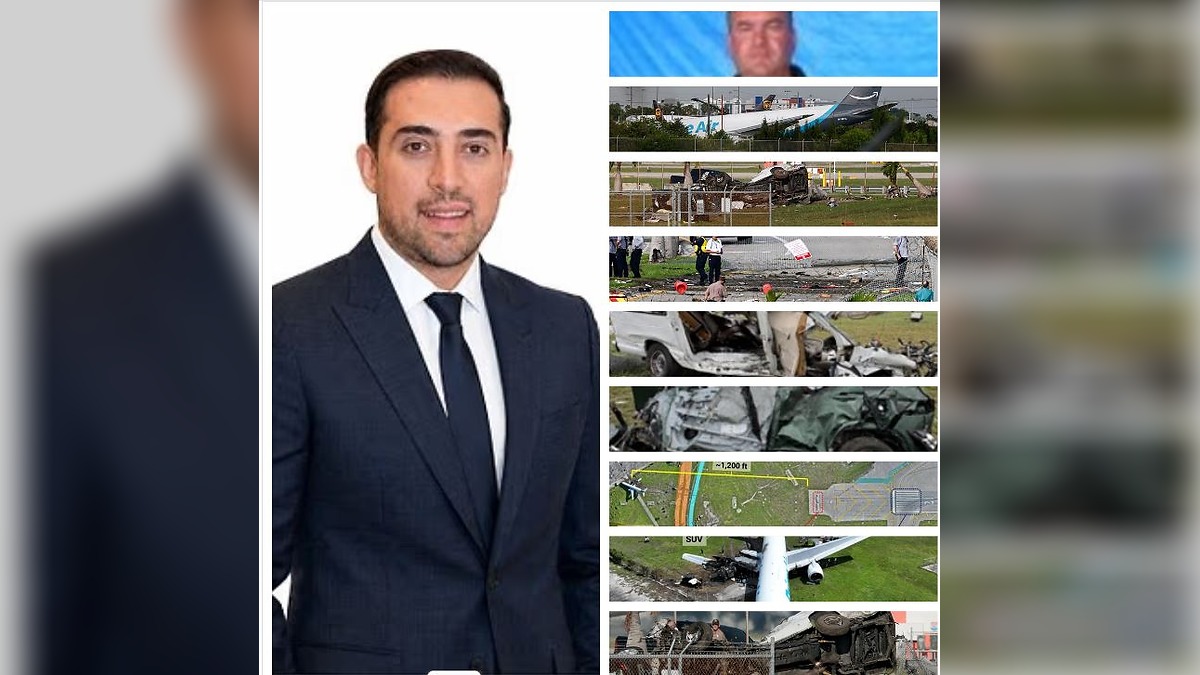
Pilots flying an Amazon-operated cargo plane that overran a runway at Miami International Airport were warned repeatedly that the aircraft was travelling too fast shortly before the deadly crash, according to a preliminary report from the National Transportation Safety Board.
The September 6 accident involved 21 Air Flight 7598, a Boeing 767-33A operating on behalf of Amazon. The aircraft left the runway after landing, struck two vehicles on the ground and ultimately caused five fatalities and three serious injuries. The two crew members aboard the plane suffered minor injuries.
The NTSB stressed that its findings remain preliminary and could change as the investigation continues.
First Officer Repeatedly Raised Speed Concerns
Details from the cockpit voice recorder provide a picture of the final moments before the accident.
According to the NTSB, a pilot called for the flaps to be set to 20 degrees about 1 minute and 42 seconds before the end of the recording. The other pilot then cautioned that the aircraft was travelling too fast.
The first officer subsequently made further comments about the excessive speed during the remainder of the recording. The NTSB said there was no consistent verbal response to those warnings.
The report also recorded an apparent autopilot disconnect shortly afterward.
Plane Landed Far Beyond the Intended Touchdown Area
The aircraft ultimately touched down approximately 3,750 feet beyond the designated landing zone, according to the preliminary findings.
Investigators said the Boeing 767 was travelling at about 184 mph when it touched down. It then overran Runway 30, crossed an airport perimeter area and struck a Ford Econoline passenger van travelling along a road beside the airport.
The aircraft subsequently hit a Toyota Corolla Cross before coming to rest approximately 1,200 feet beyond the runway. A post-crash fire caused substantial damage to the aircraft, particularly around the right wing.
Five People Killed in Van
The Ford van was carrying seven people when it was struck by the cargo plane.
Five occupants died, while the other two suffered serious injuries. The Toyota SUV was also occupied, and its driver sustained serious injuries.




The two crew members aboard the aircraft survived with minor injuries.
The victims were identified as Rolando Aleman, Yoel Rodriguez Naranjo, Julio C. Pineda, Carlos Acosta Fajardo and Javierkys Reyes Quevedo.
Speed Brakes and Thrust Reversers Were Not Deployed
The NTSB’s examination of the aircraft’s recorded data also found no indication that the plane’s speed brakes or thrust reversers were deployed during the landing.
The agency’s earlier investigative update said the throttles were reduced to idle and the brakes remained applied near the end of the recording. The final recorded groundspeed was 65 knots, while investigators noted significant changes in acceleration shortly before the recording ended.
These findings are part of the ongoing investigation and do not, by themselves, establish why the crew did not deploy the aircraft’s other braking systems.
Wind Information Was Not Passed Directly to the Crew
Investigators are also examining the weather and air-traffic-control circumstances surrounding the landing.
About four minutes before the accident, an air traffic controller informed another aircraft of a wind gust of approximately 22 mph. The cargo flight was not on the same frequency and did not receive that information directly, according to the preliminary account.
The NTSB is examining air traffic control, aircraft performance, meteorology, human performance and other factors as part of its investigation.
Pilots Had Never Flown Together Before
The accident also occurred on the first day the two pilots had worked together.
The captain was identified as Joseph Carroll, 55, while the first officer was Jaime Felipe Silva Molina, 37. Both were taken to hospital after the crash and were later released.
Carroll had approximately 7,627 hours of total flight experience and had joined 21 Air earlier in 2026. Silva Molina had approximately 2,800 flight hours and had joined the airline in February 2025.
The NTSB’s preliminary report does not establish whether the pilots’ experience or their first-time pairing contributed to the accident.
Investigation Has Not Determined the Cause
Despite the extensive information contained in the preliminary report, investigators have not yet reached a conclusion about what caused the crash.
The NTSB has been examining evidence from the cockpit voice recorder and flight data recorder, along with the aircraft, runway, weather, air traffic control and operational circumstances.
The agency has repeatedly cautioned that the information released so far is preliminary and subject to change.
Amazon Paused Operations With 21 Air
Following the crash, Amazon announced that it would pause its operations with 21 Air while the circumstances surrounding the accident were reviewed.
Amazon said it was supporting the investigation and expressed condolences to the families of those killed and injured in the crash.
The NTSB’s investigation remains ongoing, meaning additional findings could provide further information about the sequence of events and the factors that contributed to the runway overrun.

