
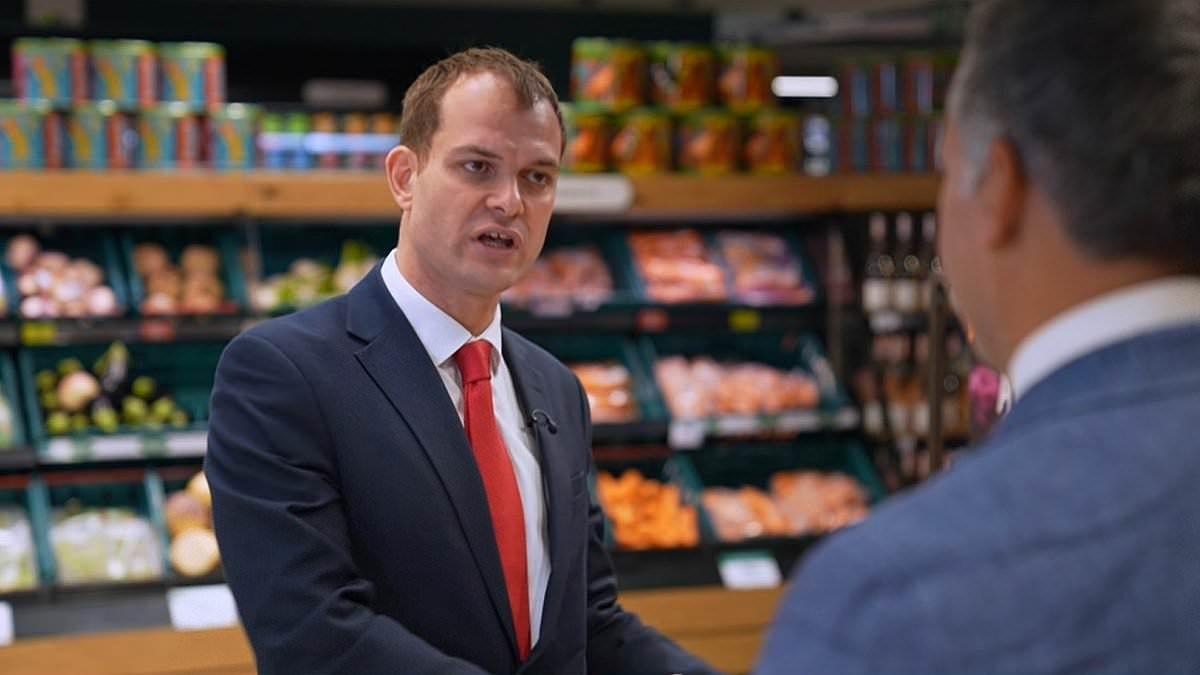
Labour minister Hamish Falconer has moved to reassure British consumers that a proposed agreement with the European Union will not force manufacturers to change the flavours of popular crisps, despite repeatedly misnaming one of the country’s best-known snacks.
Speaking to the BBC on Monday morning, Mr Falconer twice referred to Frazzles as ‘Razzles’ while addressing concerns about potential changes to British food products under the proposed EU deal.
Aides later confirmed that the minister had misspoken and was referring to Frazzles, the smoky bacon-flavoured crisps first introduced by Smiths in 1975. The brand is now owned by Walkers.
Mr Falconer, the son of former Lord Chancellor Lord Falconer, said he wanted to challenge what he described as misinformation surrounding proposed European regulations and their potential impact on smoky bacon crisps.
Falconer Says Manufacturers Have Already Adapted to EU Rules
During the interview, the minister identified Walkers and ‘Razzles’ as examples of manufacturers that had already adjusted their ingredients to comply with EU requirements.
“Two particular flavours which I’m a fan of, Walkers and Razzles,” he said.
“Both of whom changed their ingredients ages ago to accommodate to the EU.”
He rejected suggestions that manufacturers would be required to make further changes to their products under the proposed agreement.
“All this stuff that they are going to have to change again is just not true,” Mr Falconer added.
He maintained that British businesses seeking to export food and drink to European markets would generally need to comply with EU regulations.
“Lots of people like the good people at Walkers and Razzles have made these changes already,” he said.




The minister also sought to reassure consumers who enjoy smoky bacon crisps, saying: “So I would like to assure people, particularly smoky bacon fans – it’s okay.”
EU Food Agreement Could Change Trading Arrangements
The food and farming agreement is one of three proposed deals expected to be signed by Andy Burnham at a summit in Brussels.
Under the arrangement, the UK is expected to accept EU regulations covering plant, animal and food trade standards.
The agreement is intended to remove post-Brexit checks on exports, making it easier for British businesses to trade food and agricultural products with European markets.
However, concerns have emerged over proposed EU restrictions on the use of meat-related descriptions for vegetarian food.
Critics have warned that manufacturers could be required to reconsider certain product names if they fall foul of the planned rules.
The possibility has raised questions about whether familiar British food brands could be affected by changes to European labelling requirements.
Minister Acknowledges UK Will Have No Formal Say on EU Food Rules
Speaking during a visit to a Marks & Spencer food court in central London, Mr Falconer acknowledged that the UK would not have a formal role in making decisions about the food regulations it would be required to follow.
However, he argued that aligning with EU standards would reduce costs for British supermarkets and businesses.
“This will mean less cost for supermarkets, and I hope that less cost then turns into cheaper produce on the shelves,” he said.
The Government has presented the agreement as a way to reduce administrative costs and improve access to European markets.
Conservatives Warn Against Giving Brussels Control
The proposed arrangement has attracted criticism from the Conservative Party, which has raised concerns about the extent of EU influence over British food regulations.
The Tories have accused the Government of “signing away control of our food laws to the EU”, arguing that Britain would have no influence or veto over the rules established by Brussels.
Their criticism centres on the possibility that the UK could be required to adopt regulations without having a direct role in determining them.
Government Says Deal Could Deliver £5.1 Billion Annually
A Government spokesman previously defended the proposed agreement, insisting that popular products such as smoky bacon crisps would remain available to British consumers.
“Smoky bacon crisps will be available under our deal, which will deliver up to £5.1billion a year for the UK economy, slashing the costly red tape that only helps drive up supermarket prices and stifle trade,” the spokesman said last week.
The Government maintains that the agreement will reduce trade barriers, lower costs for businesses and potentially ease pressure on supermarket prices.
