
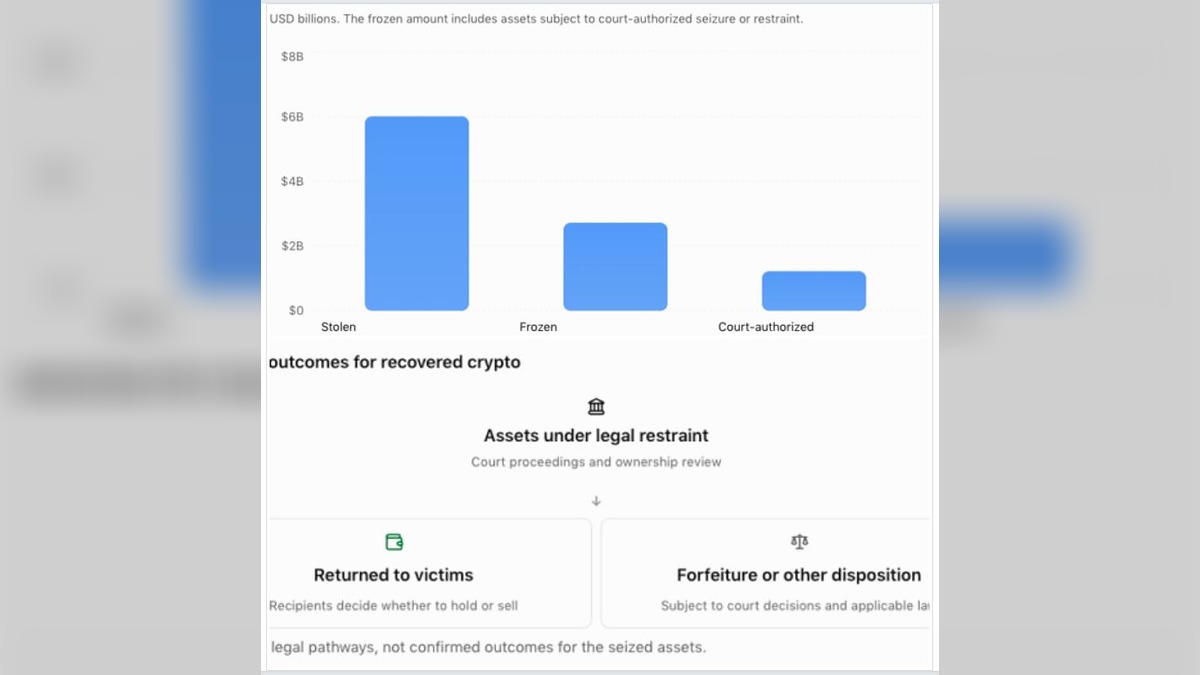
The United States Department of Justice has secured court authorisation to seize or restrain more than $1.2 billion in cryptocurrency linked to a major cyberattack attributed to North Korean hackers.
The announcement, made on November 12, follows an investigation into an October 29 attack involving more than $6 billion in stolen digital assets.
The Justice Department said government agencies and private-sector partners have collectively frozen more than $2.7 billion in cryptocurrency connected to the theft.
Investigators Trace Funds Linked to North Korean Hacking Group
US authorities have attributed the cyberattack to TraderTraitor, a hacking group linked to North Korea’s military and accused of stealing more than $6 billion in virtual assets.
The recovery operation involves cooperation between the FBI, the Department of Justice, cryptocurrency service providers and other federal agencies.
M. Scott Proctor, a senior Justice Department national security official, said the government would use available legal measures to seize illicit proceeds and return them to their rightful owners.
Investigators are continuing to follow the movement of funds through cryptocurrency bridges, mixers and exchanges, which have been used to move assets across different blockchain networks.
Separate Action Targets North Korean FaceStealer Operation
The Justice Department also announced action against another alleged North Korean operation known as FaceStealer.
The operation is accused of using deceptive video meetings and artificial intelligence-generated impersonations to steal more than $400 million over an 18-month period.
The cases form part of wider US efforts to investigate cryptocurrency theft and disrupt operations linked to North Korean cyber actors.




Recovered Cryptocurrency Does Not Mean an Immediate Bitcoin Sale
The latest enforcement action has raised questions about whether the recovered assets could eventually affect cryptocurrency markets, particularly Bitcoin.
However, court authorisation to freeze, restrain or seize digital assets does not automatically mean the government intends to sell them.
Frozen cryptocurrency cannot necessarily be transferred by its current holder, while seized assets may still be subject to forfeiture proceedings. Courts must determine ownership and how the funds should be handled.
The Justice Department’s announcement also covers virtual assets generally and does not establish that the entire $1.2 billion consists of Bitcoin.
Any direct effect on Bitcoin prices would depend on whether the recovered holdings include BTC, the amount involved and whether any of the coins are eventually transferred to exchanges.
Victims Could Influence the Future Movement of Recovered Assets
If the authorities return recovered cryptocurrency to victims, those recipients would determine whether to retain, transfer or sell the funds.
Consequently, the government’s recovery operation does not automatically increase the amount of Bitcoin available in the market or create immediate selling pressure.
Further developments in the case, including additional freezes and forfeiture proceedings, will help establish how the recovered assets are eventually distributed or disposed of.
Recovery Operation Highlights Cooperation on Cryptocurrency Security
The operation also demonstrates how blockchain investigations and cooperation between law enforcement agencies, cryptocurrency exchanges and private-sector investigators can help trace and restrict the movement of stolen funds.
The ability to identify transactions and coordinate asset freezes is relevant to financial institutions and investors seeking stronger digital asset security.
Institutional investors generally require reliable custody arrangements, risk-management systems and effective responses to financial crime when dealing with cryptocurrencies.
Although improved recovery procedures cannot eliminate the risk of digital asset theft, they may help address security concerns associated with the sector.
The final outcome of the US investigation remains uncertain, with authorities continuing to trace the stolen funds and pursue legal action.
For now, the court-authorised measures represent a major step in the recovery effort, but do not amount to confirmation that the government plans to sell $1.2 billion in cryptocurrency.

