
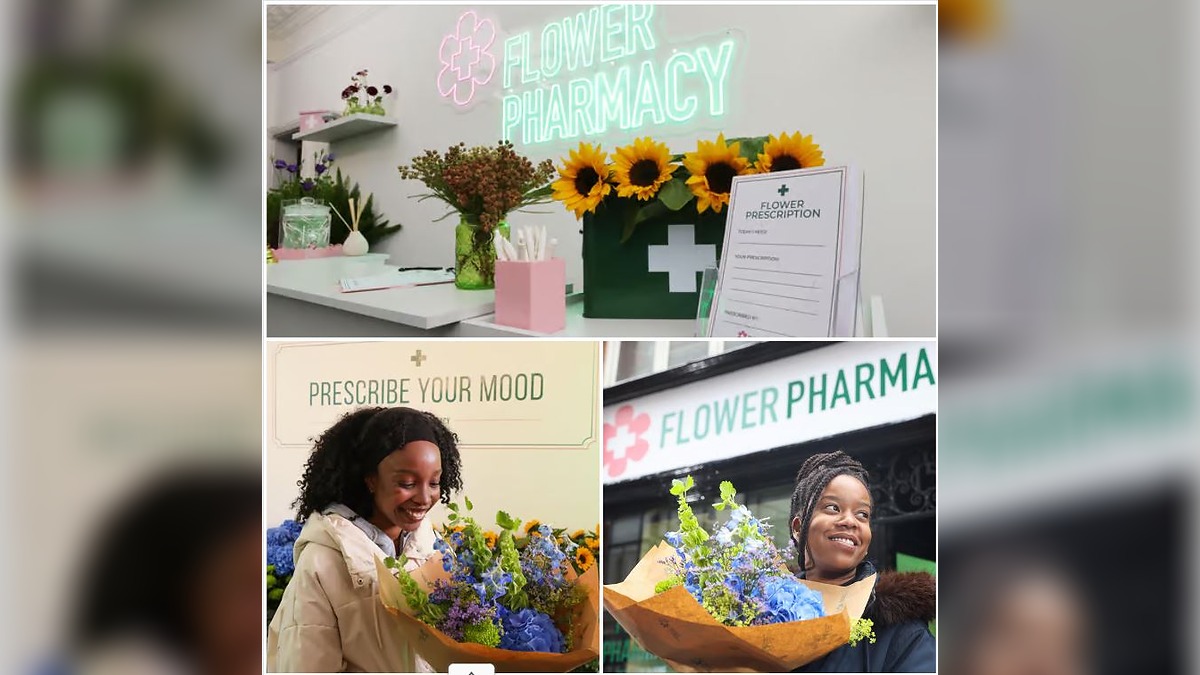
The UK’s first “Flower Pharmacy” is opening in London to offer visitors bouquets selected to match their moods, with arrangements designed to promote happiness, calmness or energy.
The one-day pop-up will operate on Thursday, October 22, at 15 Bateman Street, London, W1D 4AQ. The initiative has been developed in partnership with Plants & Flowers Foundation Holland and chartered horticulturist, television gardener and author David Domoney.
Visitors will be matched with flowers according to how they feel and receive a bouquet intended to provide a mood boost.
The project aims to encourage people to buy and enjoy flowers throughout the year rather than reserving them for birthdays, anniversaries and other special occasions.
Different Flower Colours Linked to Different Moods
The Flower Pharmacy will recommend particular colours and varieties based on the emotional effect each arrangement is intended to provide.
Yellow flowers, including sunflowers, roses, freesias and snapdragons, will be recommended for visitors seeking a boost in happiness.
Blue and green flowers, including hydrangeas, delphiniums and chrysanthemums, will feature in bouquets designed to promote calmness.
For those looking for an energising arrangement, the pharmacy will use brighter orange, red and pink blooms.
Domoney said flowers could have a positive effect on mood and emotional wellbeing, adding that colour could influence how people experience their surroundings.
He also encouraged people to incorporate flowers into everyday life instead of associating them exclusively with special events.
Research Highlights Impact of Clock Changes on Mood
The launch follows a poll of 2,000 adults examining how people respond to the end of British Summer Time and the return of darker evenings.
The research found that 37 per cent of respondents struggle when the clocks go back, while 29 per cent said the end of British Summer Time leaves them feeling glum.
A further 31 per cent reported spending more time indoors following the clock change. Meanwhile, 28 per cent said they found the darker evenings difficult, and 22 per cent experienced lower energy levels.
Among those affected, 86 per cent said they used different methods to improve their mood.




Listening to music was the most popular option, selected by 32 per cent, followed by reading a book at 28 per cent and exercising at 25 per cent.
Nature also featured in the findings, with 23 per cent turning to it for a mood boost. Another 22 per cent said they went for country walks, while 12 per cent spent time gardening.
Many People Still Reserve Flowers for Special Occasions
Despite the reported emotional benefits associated with flowers, 38 per cent of respondents said they had never considered buying themselves a bunch.
The survey found that flowers were most commonly associated with Mother’s Day, cited by 20 per cent of participants. Valentine’s Day followed at 18 per cent, while weddings accounted for 15 per cent and birthdays 13 per cent.
However, many respondents reported positive feelings when receiving flowers.
Half said they felt happy after being given flowers, while 45 per cent felt grateful and 34 per cent reported feeling joyful. Another 24 per cent said receiving flowers made them feel comforted.
More than half of those surveyed, at 53 per cent, said fresh flowers made them happier than everyday treats such as coffee, sweets or takeaway food. The figure rose to 70 per cent among people aged 25 to 34.
Few People Regularly Buy Flowers for Themselves
The findings also showed that flowers remain an occasional purchase for many consumers.
Only nine per cent of respondents said they regularly bought flowers for themselves, although 21 per cent wanted to purchase them more often. Another 16 per cent regarded flowers as an occasional treat.
Instead, chocolate was the most popular winter pick-me-up, chosen by 45 per cent of respondents. Coffee followed at 27 per cent, while 26 per cent selected takeaway food.
Books and new clothes were each chosen by 23 per cent.
Among people who bought themselves winter treats, 34 per cent said they did so to cheer themselves up on a grey day. A further 33 per cent sought comfort, while 26 per cent wanted to relax and unwind.
The figures were provided by OnePoll.com.
Plants and Flowers Foundation Holland Encourages Everyday Use
Monique Kemperman, a horticulture expert at Plants & Flowers Foundation Holland, said flowers could provide a simple way for people to introduce colour and positivity into their daily routines as the days became shorter.
She said the research highlighted the emotional impact of flowers, while showing that many people continued to reserve them for other people or special occasions.
Kemperman said the Flower Pharmacy was intended to encourage people to view flowers as an everyday wellbeing boost rather than a purchase limited to celebrations.
Brightening Homes and Feeling Appreciated Among Top Reasons for Enjoying Flowers
The survey also identified the main reasons people enjoy receiving flowers.
Brightening the home ranked first, followed by the beauty of the blooms and the feeling of being appreciated.
Other reasons included knowing someone had been thinking about them, improving their mood, enjoying the colours and scent, and feeling that the flowers were a treat.
Respondents also cited the lasting smile that flowers could bring and their ability to help people relax.
The Flower Pharmacy will be open for one day only on October 22 in central London, giving visitors an opportunity to receive bouquets selected around their desired mood.

