
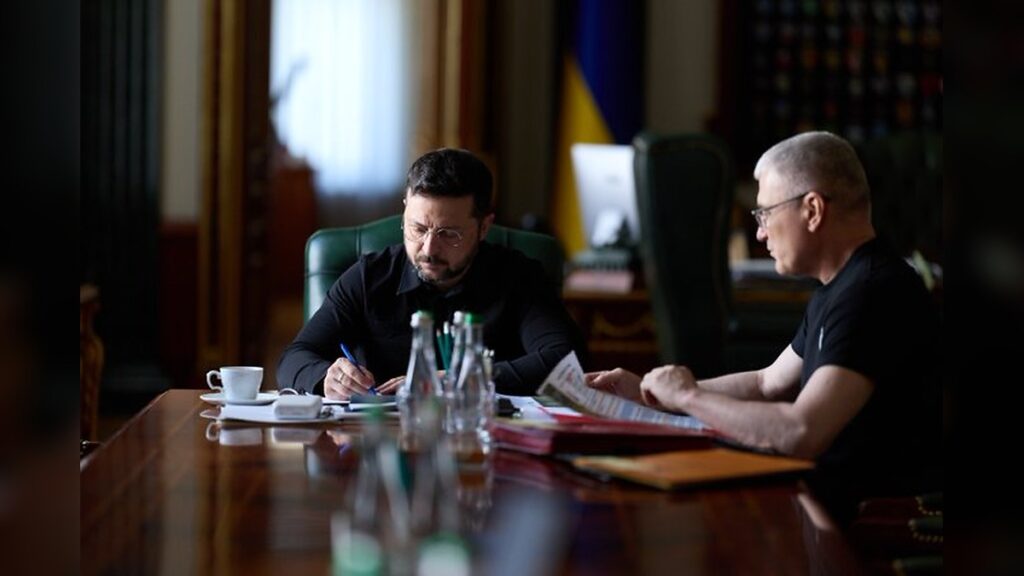
Ukrainian President Volodymyr Zelenskyy has revealed new details from a briefing by the country’s military intelligence leadership, outlining recent operations against Russian military assets and discussing broader efforts to increase pressure on Moscow.
According to Zelenskyy, the report was delivered by Chief of Defense Intelligence Oleh Ivashchenko and focused on the effectiveness of Ukraine’s long-range strategy aimed at weakening Russia’s military capabilities while supporting efforts to bring an end to the war.
Ukraine Reports Major Strike on Ammunition Arsenal
Among the developments highlighted by the president was the reported destruction of a large Russian ammunition stockpile.
Zelenskyy said Ukrainian operations successfully targeted an arsenal belonging to Russia’s Baltic Fleet near St. Petersburg, resulting in the destruction of more than 60,000 tons of ammunition.
The strike was presented as one of several recent operations intended to disrupt Russia’s military logistics and reduce its ability to sustain combat operations.
Military Production Facilities Also Reportedly Hit
The Ukrainian leader stated that intelligence assessments confirmed successful attacks on facilities involved in Russia’s defense industry.
According to the report, Ukrainian forces struck enterprises responsible for producing radio-electronic systems and other components considered essential to Russia’s military operations.
Officials said the attacks were aimed at weakening Russia’s capacity to manufacture equipment needed for ongoing military activities.
Intelligence Documents Reveal Russian Concerns
Zelenskyy also claimed that Ukrainian intelligence services obtained internal Russian documents evaluating the impact of what Kyiv describes as its long-range pressure campaign.




According to the president, the documents contain assessments of the challenges created by Ukrainian strikes and detail measures Russian authorities have taken in response.
He suggested the intelligence provided insight into how Moscow is adapting its defensive strategy as attacks on military infrastructure continue.
Russia Allegedly Repositions Air Defenses
One of the key findings outlined by Zelenskyy involved the reported redeployment of Russian air defense systems.
The Ukrainian president said intelligence indicated that Russia had shifted air defense assets from various regions to strengthen protection around Moscow and the Kerch Bridge.
According to Zelenskyy, this move reflects Russian efforts to prioritize the defense of what he described as two strategically important areas, even if it means reducing protection elsewhere.
He added that Ukrainian officials would analyze the implications of those deployments when planning future actions.
Focus Turns to Missile Production and Aviation
The intelligence briefing also included an assessment of Russia’s missile manufacturing capabilities and strategic aviation forces.
While Zelenskyy did not disclose specific details from that portion of the report, he indicated that Ukraine is considering additional responses to continued Russian military operations and strikes on Ukrainian territory.
Ukraine Signals Further Actions While Calling for Diplomacy
Zelenskyy emphasized that Ukraine remains committed to pursuing diplomatic solutions to the conflict but argued that progress has been hindered by Russia’s unwillingness to engage constructively.
He said Kyiv has already put forward proposals aimed at advancing peace efforts and reiterated his view that the continuation of the war is tied to decisions made by Russia’s leadership.
At the same time, the president signaled that Ukraine is preparing further measures in response to ongoing attacks, while expressing gratitude to members of the country’s defense forces and all those involved in protecting Ukraine.
Conflict Continues Amid Military and Diplomatic Pressure
The latest remarks reflect Ukraine’s dual-track approach of pursuing military operations against strategic targets while continuing to advocate for diplomatic initiatives.
As the war continues, both sides remain engaged in efforts to gain military advantages, with intelligence assessments and long-range strikes increasingly playing a significant role in shaping the course of the conflict.
