
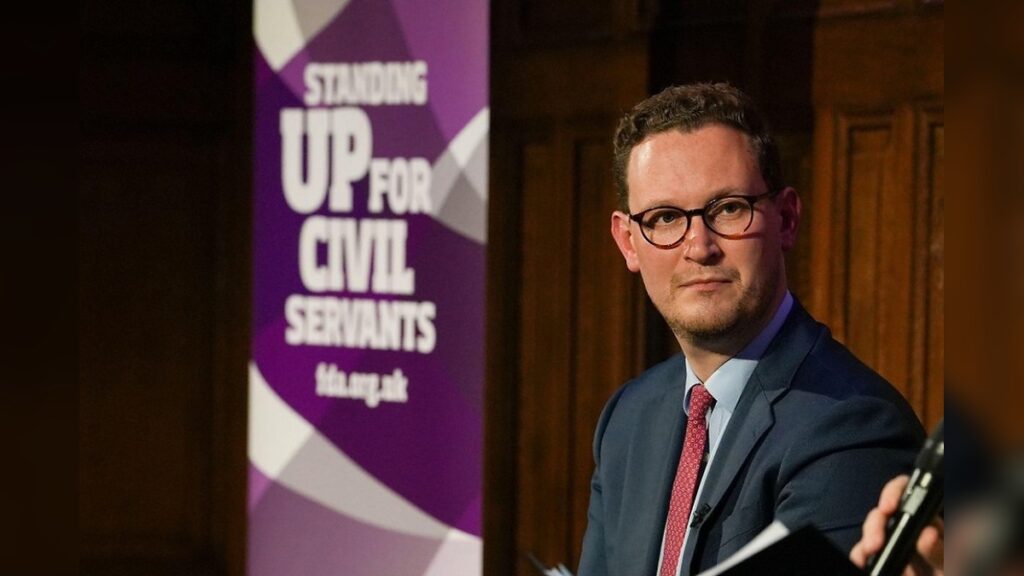
The Chief Secretary to the Prime Minister used a major address to the FDA union to outline a sweeping plan aimed at reshaping how government departments operate, arguing that public trust in politics and institutions depends on delivering visible improvements in people’s daily lives.
Speaking to civil servants, the minister said the government must move beyond policy announcements and focus more heavily on practical delivery that citizens can directly experience in areas such as healthcare, policing, employment, and the cost of living.
The speech painted a picture of a government increasingly concerned that while progress has been made in several sectors, many voters still feel disconnected from the outcomes being promised in Westminster.
Government Highlights Achievements but Admits Public Frustration Remains
During the address, the Chief Secretary pointed to a series of achievements the government believes demonstrate progress over the last two years.
These included the removal of the two-child benefit limit, measures introduced under the Employment Rights Act, reductions in NHS waiting lists in England, and the accelerated rollout of thousands of additional neighbourhood police officers.
Despite those accomplishments, the minister acknowledged that many people still believe the political system is failing to produce meaningful change quickly enough.
According to the speech, the gap between policymaking in Whitehall and the lived experiences of ordinary citizens has become a growing concern.
The minister argued that official targets and strategy papers often feel too distant from the everyday realities people face when dealing with healthcare, community safety, or household finances.
Bureaucracy and Slow Decision-Making Identified as Key Problems
A major focus of the address was the criticism of excessive bureaucracy within government structures.
The Chief Secretary said too many approval stages and management layers continue to slow decision-making across departments, frustrating both ministers and civil servants alike.
The minister revealed that one of the government’s central reform efforts has been reducing administrative barriers between frontline staff, senior officials, ministers, and departments.
A streamlined decision-making system introduced last month is intended to give officials closer to frontline operations greater authority and flexibility while increasing accountability for results.
The speech also described efforts to strengthen coordination between Downing Street and the Cabinet Office in an attempt to improve communication and accelerate implementation of government priorities.
New Delivery Units to Be Rolled Out Across Whitehall
One of the most significant announcements from the speech was the creation of dedicated delivery teams in every Whitehall department.
These units, led by senior civil servants, will focus on identifying obstacles to implementation and escalating issues that require ministerial intervention.
The Chief Secretary said the goal is to create a more consistent delivery culture across government, reducing dependence on expensive external consultants and building stronger in-house expertise within the Civil Service.
The minister also confirmed that No10 has established a new central delivery unit designed to work closely with departments and help resolve operational bottlenecks preventing projects from moving forward.
Officials stressed that the purpose of these units is not simply oversight or inspection, but active support aimed at helping departments complete priority projects more effectively.
Technology and Artificial Intelligence Placed at the Heart of Reforms
Technology reform featured heavily throughout the address, with artificial intelligence described as a major opportunity to modernise public services.
The Chief Secretary announced that all civil servants will receive AI training through the newly created National School of Government and Public Services.




Departments will also be assigned AI adoption targets monitored at Permanent Secretary level.
The speech highlighted the work of No10 Innovation Fellows, highly selective recruits from fields such as data science and artificial intelligence who have been deployed across government departments.
One example involved an AI specialist working alongside prison officers to develop tools capable of automating administrative tasks, allowing frontline staff to focus more on safety and rehabilitation duties.
The minister insisted that the use of AI is intended to improve productivity rather than replace jobs, arguing that governments willing to embrace emerging technologies will be better equipped to meet modern demands.
Pilot Taskforces to Test Faster Government Models
The government also confirmed the launch of two pilot taskforces inspired by the vaccine rollout model used during the pandemic.
The first initiative will focus on improving data sharing within the criminal justice system, particularly between probation services, the Ministry of Justice, and the Home Office.
The second taskforce aims to tackle violence against women and girls by accelerating the procurement and delivery of community support services.
According to the minister, these taskforces are designed to bypass traditional slow-moving structures by allowing quicker hiring, faster spending approvals, and stronger ministerial backing for urgent projects.
Ministers Seek Stronger Alignment Between Politics and Civil Service
Throughout the speech, the Chief Secretary repeatedly emphasised the need for closer cooperation between ministers and civil servants.
The government plans to introduce performance indicators for Permanent Secretaries tied directly to ministerial and Prime Ministerial priorities.
Officials say this forms part of a wider attempt to create a culture that rewards delivery, innovation, and measurable outcomes.
The minister also revealed plans to bring individuals with frontline public service and business experience into ministerial private offices to review the pace and effectiveness of departmental delivery strategies.
Meanwhile, legislative changes are being explored to encourage greater collaboration across government departments while preserving Civil Service neutrality and accountability.
Concerns Raised About Trust in Democratic Institutions
Beyond operational reforms, the speech carried a broader warning about declining faith in public institutions.
The Chief Secretary argued that failure to deliver meaningful improvements risks weakening confidence not only in governments, but in democratic systems themselves.
The minister described Britain’s institutions as the foundation of national stability for generations but warned that citizens must see evidence those systems are capable of responding to modern challenges.
The speech framed Civil Service reform as part of a larger effort to restore confidence in governance by making public services more responsive, visible, and effective.
Impact and Consequences
The proposals outlined in the speech could significantly alter how the UK Civil Service operates in the coming years.
If implemented successfully, the reforms may lead to faster project delivery, stronger cooperation between departments, and wider use of digital technology in government operations.
The expansion of AI tools and delivery-focused management structures could also reshape recruitment, training, and performance expectations across Whitehall.
However, the reforms may also face scrutiny from unions, opposition figures, and governance experts concerned about balancing efficiency with accountability, transparency, and Civil Service impartiality.
The government’s push for stronger ministerial oversight and performance-driven structures could become a major political debate as reforms progress.
What’s Next?
The government is expected to continue rolling out departmental delivery units while expanding the use of AI training and digital innovation programmes.
Further details on senior Civil Service pay reforms and performance systems are expected later this month following the government’s response to recommendations from the Senior Salary Review Body.
The pilot taskforces focusing on criminal justice data sharing and violence against women and girls will likely serve as test cases for broader reforms across the public sector.
Meanwhile, the proposed review into legislative changes affecting Civil Service governance may pave the way for future reforms designed to strengthen cross-department collaboration and accelerate implementation of government priorities.
Summary
The Chief Secretary to the Prime Minister used the FDA union address to present a bold case for transforming how government delivers results to the public.
The speech acknowledged frustrations over bureaucracy and slow progress while outlining reforms intended to modernise Whitehall, improve accountability, and increase the use of technology and AI across government departments.
At the centre of the message was a warning that public confidence in democratic institutions depends on whether citizens can see real improvements in their daily lives.
Bulleted Takeaways
- Government says public trust depends on faster and more visible delivery of services.
- New delivery teams will be established across all Whitehall departments.
- Ministers want to reduce bureaucracy and speed up decision-making.
- Artificial intelligence training will be offered to all civil servants.
- AI adoption targets will be introduced for government departments.
- Pilot taskforces will focus on criminal justice data sharing and violence against women and girls.
- Permanent Secretaries will be measured using new performance indicators tied to government priorities.
- Government is considering legislative reforms to improve cross-department collaboration.
- Officials say the reforms aim to modernise the Civil Service and rebuild confidence in democratic institutions.
