
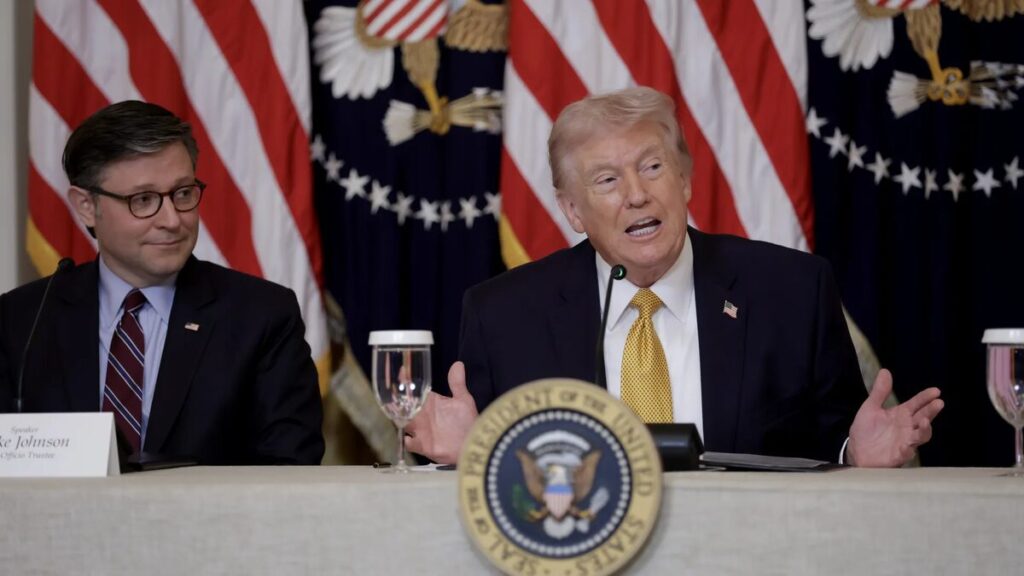
Former President Donald Trump ignited a new round of debate after making remarks about Republican Rep. Neal Dunn, appearing to disclose sensitive information regarding Dunn’s health.
The comments came during a public discussion and have drawn criticism for the potential breach of privacy.
The Exchange That Raised Eyebrows
During the exchange, Trump asked about Dunn’s health status, following a statement from an aide.
-
Aide: “He had a pretty grim diagnosis…”
-
Trump: “What was the diagnosis?… He would be dead by June.”
-
Aide: “Ok, that wasn’t public, but yeah…”
-
Trump: “He’s a great Congressman. Incredible.”
The remark referred to a previously reported terminal diagnosis of Rep. Neal Dunn, revealed publicly in February.
While Trump praised Dunn’s service and character, the focus quickly shifted to the disclosure of personal medical information.
Background on Rep. Neal Dunn
Rep. Dunn, a Republican representing Florida’s 2nd Congressional District, was diagnosed with a serious illness earlier this year.
His condition had already been reported in February, but details about its progression and prognosis were considered private.
The lawmaker is known for his work on healthcare policy and veterans’ issues.




Public and Political Reactions
The comments provoked concern among both political allies and privacy advocates.
Some argued that discussing another individual’s medical condition in public forums violates ethical norms, while others suggested that Trump may not have fully understood the sensitivity of the information.
Media outlets and social platforms quickly circulated video clips of the exchange, fueling widespread discussion.
Legal and Ethical Considerations
Medical privacy in the United States is protected under HIPAA for certain contexts, but elected officials’ health can sometimes become public due to transparency expectations.
Nonetheless, commentators highlighted the ethical responsibility of public figures to handle private health information carefully, especially regarding colleagues.
Impact and Consequences
-
The remarks may damage public perception of Trump’s discretion and judgment.
-
Could lead to increased scrutiny of personal disclosures by politicians in public settings.
-
May affect public discussions around Rep. Dunn, including sympathy and political narrative.
-
Highlights the importance of privacy norms in political discourse.
What’s Next
Legal experts and political analysts expect debates about privacy and public information to continue.
Rep. Dunn and his office have not indicated whether they view the remarks as harmful or invasive, but the episode could prompt more cautious communication strategies among elected officials and aides.
Summary
President Trump sparked controversy by referring to Rep. Neal Dunn’s terminal health diagnosis in a public setting.
While offering praise for the congressman’s service, the disclosure of private medical information has raised questions about ethics, discretion, and the handling of sensitive personal details in political discourse.
Bulleted Takeaways
-
Trump mentioned Rep. Neal Dunn’s terminal diagnosis publicly, drawing controversy.
-
The conversation was caught on video and widely circulated online.
-
Dunn represents Florida’s 2nd Congressional District and has been involved in healthcare and veterans’ policy.
-
Critics argue the remarks could violate ethical norms regarding privacy.
-
The exchange underscores the need for discretion when discussing colleagues’ personal health.
-
Public reaction may influence future communications and media coverage of politicians’ health.

