
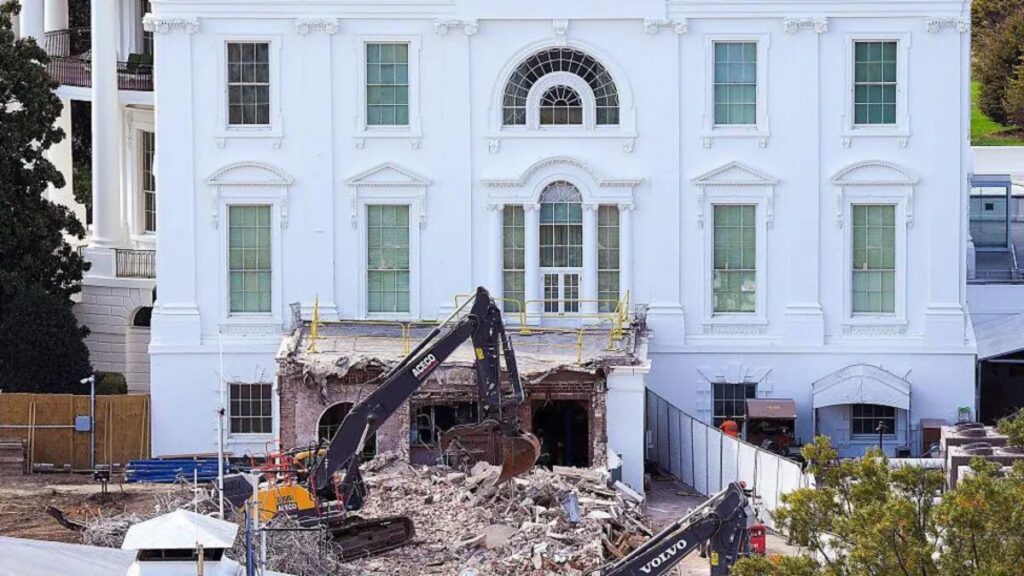
Construction work on a controversial ballroom project at the White House has been given the green light to resume after a US appeals court stepped in.
The decision allows both underground and above-ground development tied to Donald Trump’s plan to move forward—at least for now.
Legal Tug-of-War Over the Project
The US Court of Appeals for the District of Columbia Circuit issued an administrative stay after the Trump administration challenged a lower court ruling that had paused construction.
That earlier decision came from Richard Leon, who blocked above-ground work and raised legal concerns about how the project was approved.
The appeals court’s move means construction can continue until a scheduled hearing on June 5, where the dispute will be examined in more detail.
Why the Project Was Stopped Initially
Judge Leon had previously halted the project in March, arguing that proper procedures may not have been followed.
He questioned whether congressional approval was required and criticized the administration’s claim that the ballroom was essential for national security.
In his ruling, Leon made it clear that labeling the project as a security necessity does not automatically override legal requirements.
Trump Defends Ballroom as Security Priority
Following the latest decision, Trump strongly defended the project, arguing that the new facility is critical for hosting world leaders safely.
He described the development as part of a larger, interconnected complex designed to enhance national security.




According to Trump, the underground portion of the project will include protective features such as bomb shelters and medical facilities.
He also insisted the ballroom is urgently needed and should not be delayed by court interventions.
Lawsuit from Preservation Group Sparks Battle
The legal fight began after the National Trust for Historic Preservation filed a lawsuit accusing the administration of bypassing required approvals.
The group claims the government failed to consult the National Capital Planning Commission and did not seek authorization from Congress before starting construction.
These allegations led to the initial court order that paused the project.
Major Changes Already Underway
Work on the site is already well advanced. The East Wing—originally built in 1902—was demolished in October to make room for the new development.
The planned ballroom is expected to accommodate up to 1,350 guests and is part of a larger redesign of the historic complex.
Officials say the project carries a price tag of about $400 million and is being funded entirely by private donors.
Impact and Consequences
The court’s decision highlights an ongoing clash between executive power and legal oversight.
Supporters argue the project modernizes the White House and strengthens security, while critics warn it could set a precedent for bypassing established planning and preservation laws.
There are also concerns about the long-term impact on the historical integrity of one of the most iconic government buildings in the world.
What’s Next?
Attention now turns to the June 5 hearing, where the appeals court will take a closer look at the legal arguments from both sides. The outcome could determine whether construction continues uninterrupted or faces another halt.
Depending on the ruling, the case could escalate further, potentially reaching higher courts if disagreements persist.
Summary
A federal appeals court has temporarily allowed construction of Trump’s White House ballroom to continue, reversing a lower court pause.
The project remains highly contested, with legal, political, and historical concerns all playing a role in the unfolding dispute.
Bulleted Takeaways
- Appeals court allows White House ballroom construction to resume temporarily
- Project linked to Donald Trump’s redesign plans for the White House
- Lower court had halted work over legal and procedural concerns
- Lawsuit filed by National Trust for Historic Preservation triggered the dispute
- East Wing already demolished to make way for the new ballroom
- Project estimated to cost $400 million and funded privately
- Key court hearing scheduled for June 5 will decide next steps
