
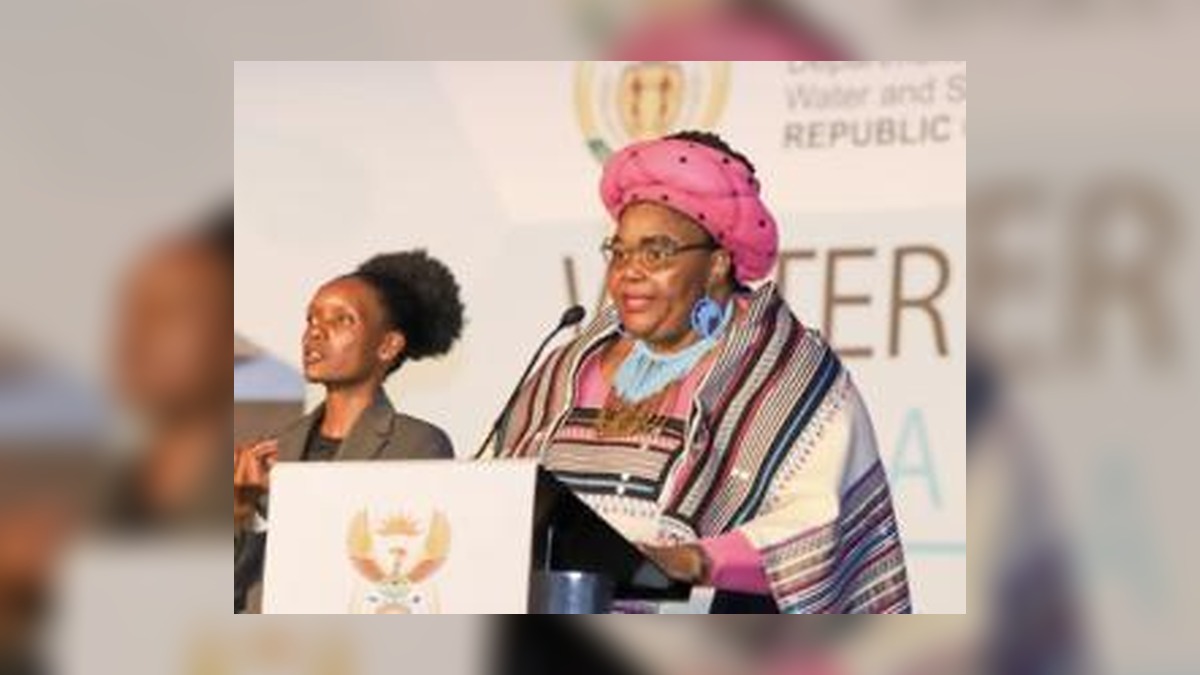
Water users across the Western Cape will face precautionary reductions in their allocations as the government moves to protect the province’s water supply amid declining dam levels and forecasts of a strong to extreme El Niño event.
Water and Sanitation Minister Pemmy Majodina announced that domestic and industrial water allocations will be reduced by 7%, while irrigation allocations will be cut by 15%.
The measures follow the Department of Water and Sanitation’s Annual Operating Analysis of the Western Cape Water Supply System (WCWSS) for the 2026/27 water year.
The reductions are expected to save approximately 56.8 million cubic metres of water annually. Domestic and industrial users will account for 27.2 million cubic metres of the savings, while irrigation reductions are expected to contribute another 29.6 million cubic metres.
Dam Storage Falls Below Preferred Operational Level
The WCWSS supplies Cape Town, the West Coast, several towns and agricultural users through six interconnected dams with a combined storage capacity of approximately 898.2 million cubic metres.
As of 2 November 2026, the system held 646.5 million cubic metres of water, representing 72.5% of its total capacity.
This compares with 694 million cubic metres, or 84.4%, recorded during the same period in 2025. The latest level is also below the system’s preferred operational threshold of 80% and approximately 11.9 percentage points below the 10-year average of 84.49%.
Majodina said the decline was mainly linked to below-normal rainfall during the 2026 winter rainfall season.
Below-Average Rainfall Raises Water Security Concerns
The Minister said rainfall recorded during the 2024/25 and 2025/26 rainfall periods measured 722.7mm and 752.8mm respectively, compared with the long-term average of 964mm.
Although current dam storage remains considerably higher than levels experienced during the severe 2016/17 drought, the latest assessment indicates increasing pressure on the water supply system.




Majodina said the annual analysis found that the system remained operationally stable and could meet current water requirements. However, she said emerging risks required early intervention to protect available supplies.
The assessment considered water consumption, projected demand, dam storage, rainfall patterns, infrastructure limitations and the long-term reliability of the system.
El Niño Forecast Could Increase Pressure on Dams
Climate forecasts point to a strong to extreme El Niño event, which could bring higher temperatures, increased evaporation and reduced runoff into dams.
Water resource specialists have modelled the potential effects of maintaining full water allocations without intervention. Their findings indicate that doing so could significantly increase the risk of shortages and mandatory water restrictions from 2027 onwards.
The allocation reductions are intended to preserve strategic water reserves and strengthen the system’s ability to withstand future drought conditions.
The government also aims to maintain sufficient supplies for households, economic activities and essential environmental requirements.
Minister Urges Water Users to Maintain Conservation Efforts
Majodina thanked water users for managing their consumption responsibly and for not using their full allocations.
She urged residents, municipalities, businesses, industries and agricultural users to continue conserving water and strengthen their demand-management measures.
The Minister said water conservation needed to become a permanent part of water management rather than a response introduced only during droughts.
Residents were also encouraged to follow municipal water-use restrictions, report water wastage and alert authorities to breaches of municipal by-laws.
Municipalities were called on to enforce their water regulations.
Department to Monitor Conditions and Consider Further Measures
The Department of Water and Sanitation will continue tracking dam storage, climatic conditions and water demand throughout the 2026/27 water year.
Majodina said additional measures could be introduced if conditions deteriorate.
She urged communities and water users to work together to protect supplies for households, the economy and future generations.

