
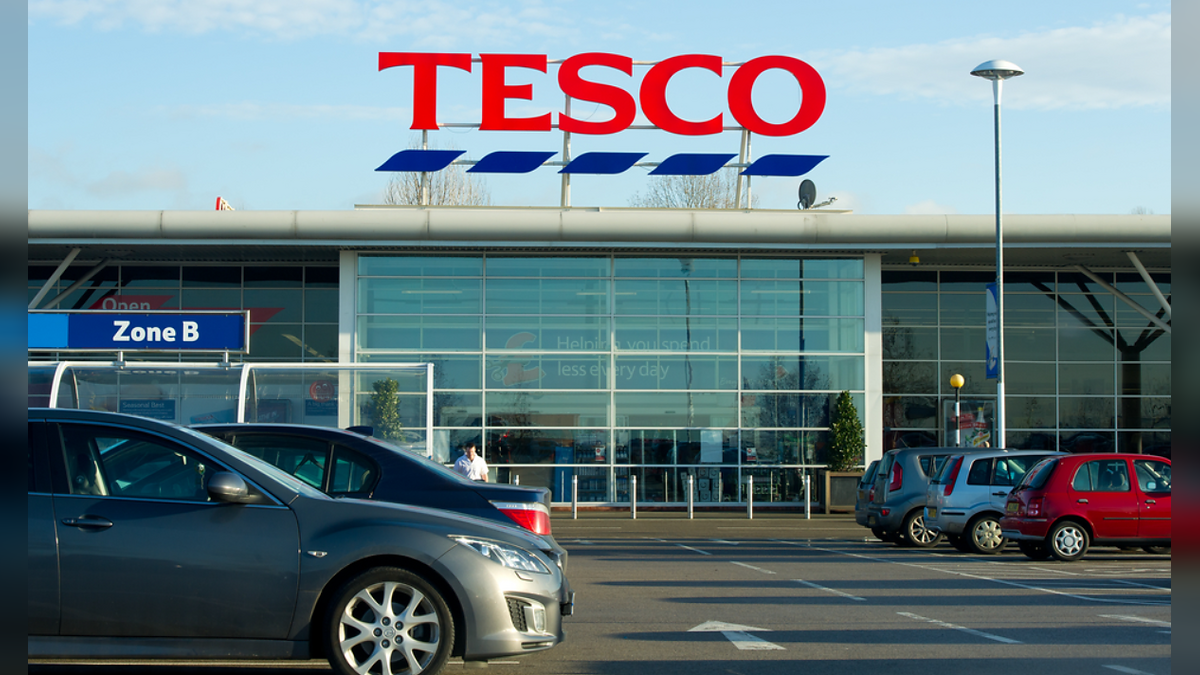
Tesco has lifted the lower end of its annual profit guidance after reporting stronger-than-expected resilience among shoppers despite economic uncertainty linked to geopolitical tensions in the Middle East.
Britain’s biggest supermarket group said adjusted operating profit increased by 6.3 per cent to £1.783 billion in the six months to August 29.
Group sales also climbed 1.6 per cent to £33.7 billion, although unusually hot weather affected sales volumes.
Grocer Tightens Full-Year Profit Forecast
Tesco had previously set a broad adjusted operating profit range of £3 billion to £3.3 billion for the current financial year, citing uncertainty surrounding the Middle East conflict.
The company has now raised the lower end of that range to £3.15 billion while keeping the upper target unchanged at £3.3 billion.
The revised guidance reflects what Tesco described as relatively resilient consumer confidence during the first half of the year.
“While consumer confidence has remained relatively resilient in the first half of the year, ongoing geopolitical tensions continue to create uncertainty,” the company said, adding that it remained focused on helping customers secure value from their weekly shopping.
Ken Murphy Takes Positive View Into Christmas
Chief executive Ken Murphy struck an upbeat tone as Tesco prepares for the key Christmas trading period.
Murphy said he was “really optimistic and positive” about the business, arguing that shoppers had become accustomed to navigating repeated economic and geopolitical disruptions.
He said consumers had learned to deal with a succession of external shocks and uncertainty while continuing with their everyday lives.
Tesco’s efforts to maintain competitive prices had also contributed to shoppers’ resilience, he said.
Tesco Expands Share Buyback
Tesco also announced an increase in the size of its share buyback programme for the current financial year.
The grocer now expects to return £950 million through the programme, up from its previous plan of £750 million.
The announcement came alongside the improved profit outlook and first-half financial results.
Premium Food Sales Continue to Grow
Tesco said shoppers were increasingly choosing premium food ranges, with higher restaurant prices encouraging some customers to recreate restaurant-style meals at home.
Sales of its Finest range increased by 8.9 per cent during the period.
The supermarket has introduced more than 350 new products across the range, including changes to its bakery offering and new deli products.
Tesco expects annual sales from Finest to exceed £3 billion this year.




Tesco Keeps Focus on Its Own Strategy
The results were released shortly after reports that Sainsbury’s and Morrisons had ended discussions over a potential billion-pound merger.
A combination of the two supermarkets would have created a group with an estimated 23.6 per cent share of the UK grocery market, according to Worldpanel, putting it closer to Tesco’s 27.8 per cent share.
Asked about the reported talks, Murphy said Tesco did not spend much time focusing on consolidation within the supermarket sector.
“We’re very focused on delivering our strategic plan,” he said.
“Whatever happens in the market, we’ll respond to it.”
He added that Tesco’s approach was to remain ahead by continuing to invest in the business.
Healthier Choices Shape Tesco’s Christmas Plans
Tesco is also seeing changes in consumer preferences around food and alcohol.
Murphy pointed to the growing use of GLP-1 weight-loss medications alongside what he described as a broader movement towards healthier lifestyles.
Customers are showing greater interest in protein and fibre, prompting Tesco to expand its selection of nutritious ready meals and high-fibre bakery products.
The supermarket has also increased its range of no- and low-alcohol drinks.
Murphy said Christmas could be “marginally healthier” this year, although he acknowledged that customers would still want to indulge during the festive period.
He expects lower-alcohol and alcohol-free products to perform strongly, while cocktails and ready-to-drink or premixed beverages could also prove popular.
Traditional Christmas Favourites Remain on the Menu
Despite the shift towards healthier choices, Tesco expects familiar festive products to remain popular.
Murphy highlighted cheesecake desserts and party foods such as prawn toast among the products he described as the “usual suspects” likely to perform well over Christmas.
The supermarket has therefore planned for both changing health preferences and traditional festive indulgence.
Tesco Continues to Challenge Aldi and Lidl
Tesco has continued to defend its position against discount supermarkets Aldi and Lidl, which have gained market share from traditional supermarket groups in recent years.
The company has expanded the number of products covered by its Aldi Price Match initiative while using personalised Clubcard offers to give shoppers targeted discounts.
Tesco has an ambition to rebuild its market share to 30 per cent, a level it last reached around 2013.
Murphy said the company remained determined to keep expanding its share.
He pointed to Tesco’s performance over the past four years, during which the supermarket has increased its market share by 113 basis points, despite earlier predictions that its growth had reached its limit.
Tesco’s Market Share Has Changed Over Time
Tesco once held an even larger position in the UK grocery market.
At its peak in 2007, the supermarket accounted for almost £1 of every £3 spent at checkout tills.
Its market share subsequently fell, reaching 25.6 per cent in 2020.
The company has since been rebuilding its position under Murphy, with its latest target centred on reaching the 30 per cent threshold again.
Murphy Renews Business Rates Appeal
The Tesco chief also repeated his call for changes to the business rates system ahead of this month’s Budget.
Murphy described the current system as “antiquated and unfair”, arguing that retailers pay disproportionately high rates compared with other businesses.
His principal request to the Government is for retailers to be exempted from a higher tax band applied to commercial properties with a rateable value of at least £500,000.
He said retailers, on average, pay four times what he considers their fair share of business rates.
