
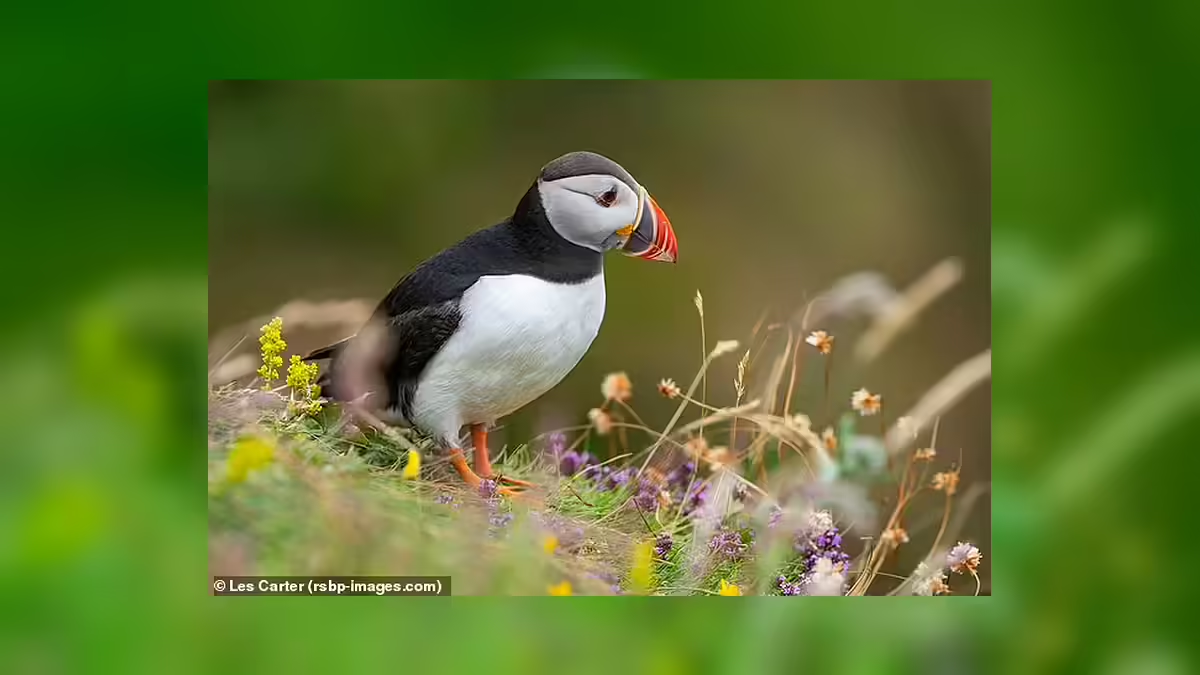
Puffins, owls, bumblebees and hedgehogs are set to feature on the Bank of England’s next generation of banknotes, replacing the historical figures currently depicted on Britain’s paper currency.
The decision follows a public consultation that attracted almost half a million responses, making it the most widely participated banknote consultation conducted by the Bank.
Public Consultation Attracted 478,531 Responses
The month-long consultation generated 478,531 responses from members of the public.
Participants made a total of 2,549,003 selections from a shortlist of 18 animals that had been announced earlier in the year.
The buff-tailed bumblebee received the highest number of selections, with 360,399 votes. The European hedgehog followed with 256,665, while the barn owl received 270,596.
Puffin Chosen Despite Lower Vote Total
The Atlantic puffin finished sixth in the public vote, receiving 183,137 selections.
Despite ranking below several other animals, it was included in the final four after Bank officials decided that a marine species would provide greater variety across the banknote series.
The Bank also said the puffin would offer an opportunity to celebrate Britain’s coastline.
The red fox, which received 244,651 selections, and the common kingfisher, with 211,277, were among the animals that did not make the final selection.
Animals Will Replace Famous Historical Figures
The new wildlife imagery will eventually replace the current designs featuring prominent figures from British history.
Winston Churchill appears on the £5 note, Jane Austen on the £10, artist JMW Turner on the £20 and mathematician Alan Turing on the £50.
The Bank has not yet decided which animals will appear on each denomination.
It has also indicated that other animals could feature in the eventual designs.




Monarch’s Portrait Will Remain
Although the wildlife imagery represents a significant change to the notes, the new series will continue to carry a portrait of the monarch.
The Bank said the redesign process would take several years, with extensive work required to create, test and print the notes.
The process is intended to ensure the finished banknotes meet standards for durability, quality, accessibility and security.
Bank Defends the Wildlife Theme
Victoria Cleland, the Bank’s chief cashier, welcomed the strong public response to the consultation.
She said the participation demonstrated that cash remains important to people despite the growth of electronic payments.
Cleland said the four selected animals represented the diversity of British wildlife and would also contribute to the security features incorporated into the new notes.
Political Criticism Follows Decision
The decision to move away from a long-standing tradition of depicting historical figures has attracted criticism.
The change has been described by some opponents as unnecessary, while Conservative Party leader Kemi Badenoch criticised the decision and argued that it amounted to “erasing our history”.
The move ends a tradition of featuring historical figures on British banknotes that dates back to 1970, when William Shakespeare became the first historical figure to appear in the series.
Cash Remains Important Despite Digital Payments
The Bank of England acknowledged that the use of cash for everyday transactions has declined over the past decade.
However, it said cash remains the preferred payment method for roughly one in seven people and continues to be used by many others.
The amount of physical currency in circulation has also continued to rise, reaching £91.5 billion at the end of February 2026.
Banknotes Have Faced Controversy Before
Debates over who and what should appear on British banknotes are not new.
Campaigners previously criticised the Bank over the representation of women on its notes, with Jane Austen eventually being introduced on the £10 note in 2017.
The institution has also faced scrutiny over its historical connections to slavery.
In 2021, the Bank removed several paintings and busts of former governors and directors from public display after concerns were raised about links between some of those figures and the slave trade during the 18th and 19th centuries.
New Notes Will Take Years to Arrive
The four animals will eventually become part of Britain’s banknote designs, but the public will not see the finished notes immediately.
The Bank must first complete the design, testing and production process before the new currency enters circulation.
The change will therefore take place gradually over the coming years, marking a significant shift in the visual identity of Britain’s paper money while retaining the monarch’s portrait and the notes’ existing denominations.

