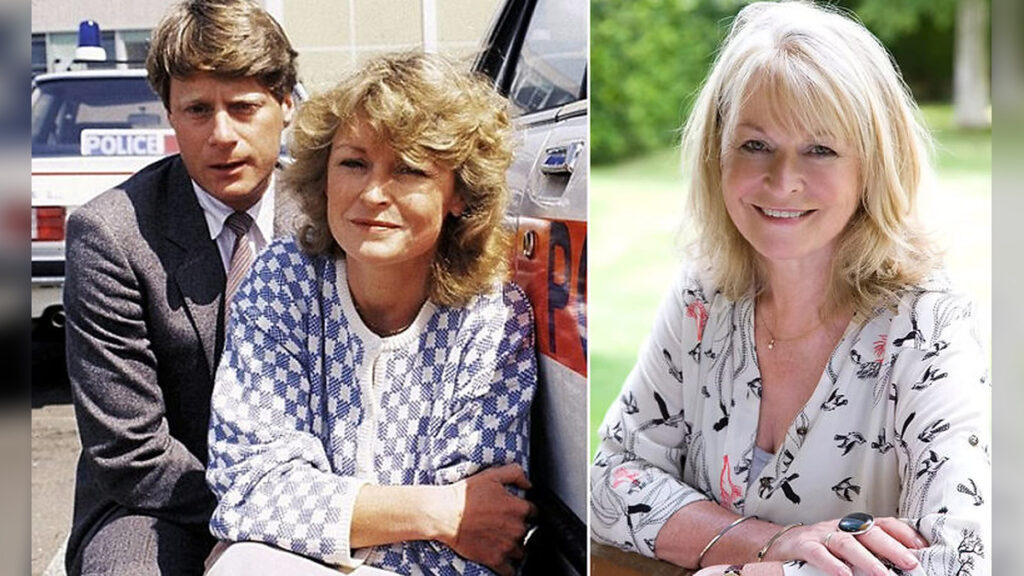
Former BBC presenter Sue Cook has said she believes she would be unlikely to begin a television career in today’s broadcasting environment, arguing that her background as a white, middle-class woman would work against her.
Cook, now 77, made the remarks during an appearance on The Peter Purves Podcast, where she reflected on her decades-long career and the evolution of the media industry.
She said she considers herself fortunate to have entered television during a different era, when opportunities for female presenters were expanding and public scrutiny was far less intense than it is today.
Career Defined by Some of the BBC’s Biggest Programmes
Cook became one of Britain’s most recognisable television personalities during the 1980s and 1990s.
She presented several flagship BBC programmes, including Crimewatch, Breakfast Time, Nationwide and Children In Need, earning a reputation as one of the corporation’s leading broadcasters.
Her prominence in British television even led to regular references in Steve Coogan’s comedy series I’m Alan Partridge, highlighting her status as a household name during the height of her career.
Looking back, Cook said she doubts she would receive the same opportunities if she were entering the industry today, describing herself as fitting a profile she believes is no longer favoured in television recruitment.
Praise for an Era Before Social Media
Beyond changes in television hiring, Cook also expressed relief that most of her broadcasting career unfolded before the rise of social media.
She described modern online platforms as increasingly hostile, suggesting that even harmless comments can attract harsh criticism.
According to Cook, today’s digital environment creates a level of public scrutiny that presenters of her generation largely avoided, leaving her grateful that she worked during a period when broadcasters were judged primarily on their television work rather than constant online commentary.
Remembering Her Years on Crimewatch
Cook is perhaps best known for serving as the original co-presenter of Crimewatch alongside Nick Ross.
She joined the BBC crime reconstruction programme when it launched in 1984 and remained with the series for 11 years.
During her tenure, the programme became one of Britain’s most influential crime-fighting television shows, using reconstructions and public appeals to help police investigate serious offences across the country.
She was succeeded in 1995 by Jill Dando, who continued presenting the programme until her fatal shooting outside her London home in Fulham on April 26, 1999.




Views on Jill Dando’s Unsolved Murder
More than two decades after Dando’s death, Cook said she does not believe the murder was connected to the investigations featured on Crimewatch, despite longstanding public speculation.
Instead, she suggested her personal view is that Dando may have been targeted by someone seeking recognition within a major criminal organisation, choosing such a well-known television personality to demonstrate their willingness to carry out a high-profile killing.
Cook acknowledged that her theory is only personal opinion but said she has never been convinced that Dando’s work on Crimewatch was the motive behind the attack.
Dando’s murder remains one of Britain’s most enduring unsolved criminal cases.
Barry George was convicted of the killing in 2001 and sentenced to life imprisonment, but his conviction was overturned in 2007.
Following a retrial, he was acquitted in 2008 after spending eight years in prison.
Security Concerns During Her Time on the Programme
Although Crimewatch regularly featured dangerous criminals, Cook said she rarely feared for her own safety while presenting the programme.
She recalled receiving occasional abusive letters but said she never felt seriously threatened.
She joked that programme producers may have quietly discarded any more alarming correspondence before it reached her.
Cook did, however, remember one neighbour expressing concern that criminals might mistake their address for hers because of her association with the programme.
She admitted feeling more uneasy when Crimewatch revisited offenders who had been imprisoned following appeals on the show and who were later being released from custody, saying she became uncomfortable with appearing overly triumphant about individuals being sent to prison.
Crimewatch’s Lasting Impact on Criminal Investigations
Throughout its three-decade run, Crimewatch played a significant role in assisting police investigations across the United Kingdom.
Among its most notable successes was the identification of Jon Venables and Robert Thompson in 1993 after CCTV footage linked them to the abduction and murder of two-year-old James Bulger.
The programme also helped generate information that contributed to the arrest of Michael Stone following the murders of Lin and Megan Russell in Kent.
By its 30th anniversary in 2014, producers revealed that the programme had featured more than 4,000 investigations.
Statistics released at the time showed approximately one-third of featured cases resulted in arrests, while around one in five ultimately led to convictions, cementing Crimewatch as one of the BBC’s most influential public service programmes.
What’s Next?
Cook has largely stepped away from television and now focuses on writing as a novelist while occasionally reflecting on her broadcasting career through interviews and podcast appearances.
Her recent comments have reignited discussion about diversity, representation and changing recruitment practices in the television industry, while also drawing renewed attention to the enduring legacy of Crimewatch and the unresolved murder of Jill Dando.
Summary
Former BBC presenter Sue Cook says she believes she would struggle to begin a television career in today’s media industry because she is a white, middle-class woman.
Speaking on a podcast, she also criticised the impact of social media on public life, reflected on her years presenting Crimewatch, dismissed theories linking Jill Dando’s murder to the programme, and looked back on the crime show’s long record of helping police solve thousands of cases.
