
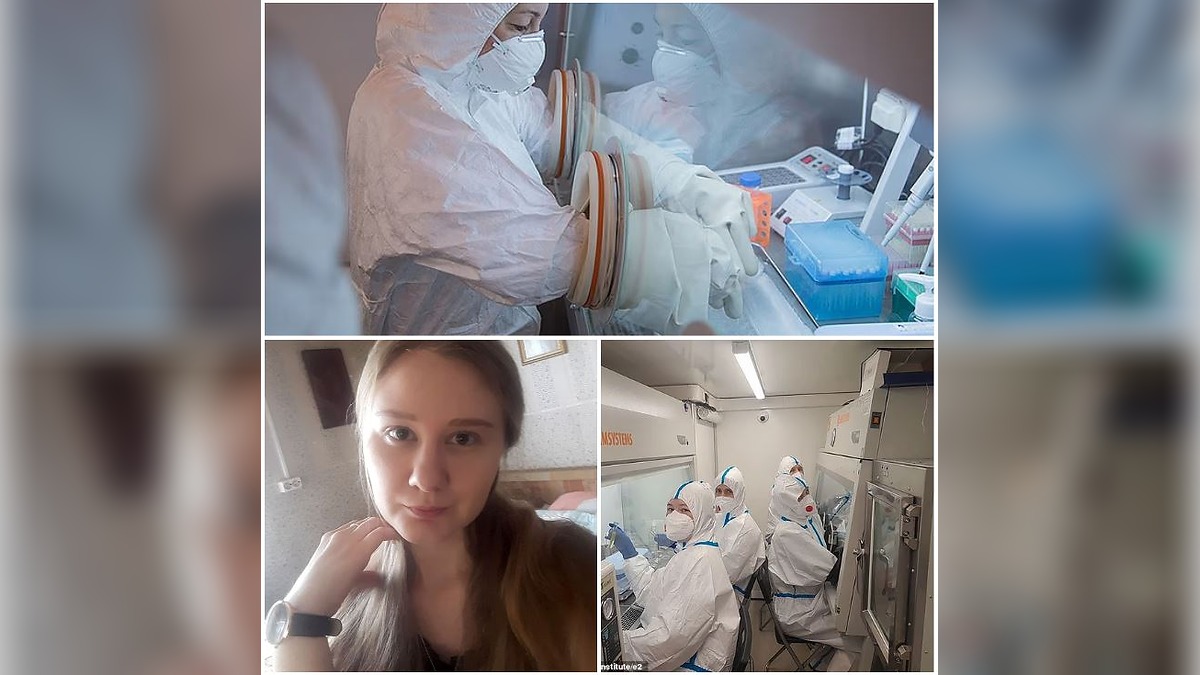
The unexplained death of a worker at a Russian anti-plague research institute has renewed attention on the Soviet Union’s secret biological weapons programme and the history of official denials surrounding it.
Darya Shipilova, 28, who worked at the Irkutsk Anti-Plague Research Institute in Siberia, died on October 2 after Russian authorities described her illness as pneumonia of unknown origin.
The circumstances have prompted questions among biosecurity experts because of the institute’s work with infectious diseases and the Soviet Union’s documented history of conducting secret biological weapons research.
Nearly 200 Contacts Placed Under Observation
Almost 200 people who were identified as contacts of Shipilova were reportedly placed under medical observation and tested following her death.
Russian health authorities subsequently informed the World Health Organization that no cases of plague had been recorded in the Irkutsk region.
Officials have also said that preventive measures were implemented, including contact tracing, medical monitoring and laboratory testing.
Reports of a Broken Test Tube
Russian media reports have added another element to the case.
According to the outlet Lyudi Baikala, Shipilova reportedly told medical personnel in late September that she had accidentally broken a test tube containing live bacteria.
Russian authorities have not confirmed that plague caused her death, and the reported laboratory incident has not been publicly established as the cause of her illness.
There is also no evidence that the incident involved a biological weapon.
Experts Point to the Institute’s Broader Work
The institute’s connection to plague research has drawn particular attention because anti-plague facilities in the Soviet Union were involved in a much broader biological research system.
Amesh Adalja, a senior scholar at the Johns Hopkins Center for Health Security, told Newsweek that some Soviet anti-plague institutes were part of the country’s offensive biological weapons programme.
He also cautioned that the presence of plague-related research does not mean plague is necessarily the only biological agent being studied at such facilities.
The possibility that other pathogens could be handled at the institute has therefore become part of the broader discussion among biosecurity specialists.
Soviet Documents Confirm Secret Weapons Programme
Declassified Soviet documents provide evidence that the country’s biological weapons programme existed despite official statements denying it.
A report sent to Soviet leader Mikhail Gorbachev in May 1990 acknowledged that biological weapons had been developed, produced and stored by Soviet organisations.
According to the document, Soviet authorities had begun developing biological weapons during the 1950s through three organisations under the USSR Defence Ministry. By 1971, another 12 organisations had reportedly joined the programme.
Weapons Were Developed and Stockpiled
The report, written by Politburo member Lev Zaikov, stated that Soviet organisations had developed 12 formulations and methods of using biological weapons by 1985.




It said the materials were produced in quantities considered appropriate for the programme, stored and subsequently destroyed after their useful life expired.
The document said the average useful life of the materials was approximately six months.
The revelations were significant because the Soviet Union had signed the Biological Weapons Convention in 1972.
Soviet Union Had Joined Biological Weapons Convention
The Biological Weapons Convention, which entered into force in 1975, prohibited countries from developing, producing or stockpiling biological weapons, as well as acquiring or transferring them.
The Soviet report attempted to place the country’s programme within the context of what it described as weaknesses in the treaty.
Zaikov argued that the convention did not provide sufficiently effective inspection mechanisms and did not clearly distinguish between offensive weapons development and defensive biological research.
Moscow’s Claims About Ending the Programme
The 1990 report said Soviet authorities had moved toward defensive biological research following an October 1989 Central Committee decree.
It also claimed that biological weapons stockpiles had been destroyed in 1988, industrial production had ended and equipment used to process biological agents and manufacture related munitions had been dismantled.
The report presented the changes as part of an effort to bring Soviet activities into compliance with international obligations.
However, the National Security Archive later described the document as presenting a highly selective account of the programme and noted that Soviet officials had also concealed important information from Gorbachev.
Defense Minister Opposed Disclosure
Other documents illustrate how Soviet officials sought to preserve the government’s public denials.
In a January 1990 memorandum, Soviet Defence Minister Dmitry Yazov opposed a Foreign Ministry proposal to confidentially provide the United States with information about biological weapons stockpiles and production facilities that had existed before the Biological Weapons Convention came into force.
Yazov warned that revealing the information would conflict with Moscow’s longstanding public position that the Soviet Union had never developed, produced or possessed biological weapons.
He recommended withdrawing the proposal and maintaining the existing official position.
Sverdlovsk Anthrax Outbreak Remains a Key Example
The same memorandum also rejected a proposal to acknowledge a laboratory accident connected to the 1979 anthrax outbreak in Sverdlovsk.
At the time, Soviet authorities maintained that the outbreak was caused by contaminated food and resisted outside scrutiny of the military facility involved.
A scientific investigation conducted in 1994 concluded that the outbreak had instead resulted from airborne anthrax released from the military facility.
The findings directly contradicted the earlier Soviet explanation and became another important piece of evidence concerning the secrecy surrounding the country’s biological weapons activities.
Defector Exposed Details of Soviet Programme
The Soviet programme also came under international scrutiny after Vladimir Pasechnik, who headed a scientific organisation in Leningrad, defected to Britain in October 1989.
Pasechnik subsequently disclosed information about the secret biological research programme and the facilities involved.
The report to Gorbachev acknowledged that Pasechnik had knowledge of the programme, while also assessing the potential consequences of his disclosures.
Officials were particularly concerned that information revealed by the defector could lead Western governments to question whether the Soviet Union was complying with the Biological Weapons Convention.
Historical Record Fuels Current Concerns
The historical record has become relevant again because of the unanswered questions surrounding Shipilova’s death.
Experts have stressed that there is currently no evidence connecting the incident in Irkutsk to a biological weapons programme.
However, the Soviet Union’s documented history of secret biological weapons research and its efforts to conceal aspects of that programme have contributed to scrutiny of how Russia handles unexplained incidents at facilities involved in infectious disease research.
For now, Russian authorities have reported no plague cases linked to the incident, while the precise cause of Shipilova’s death remains unclear.

