
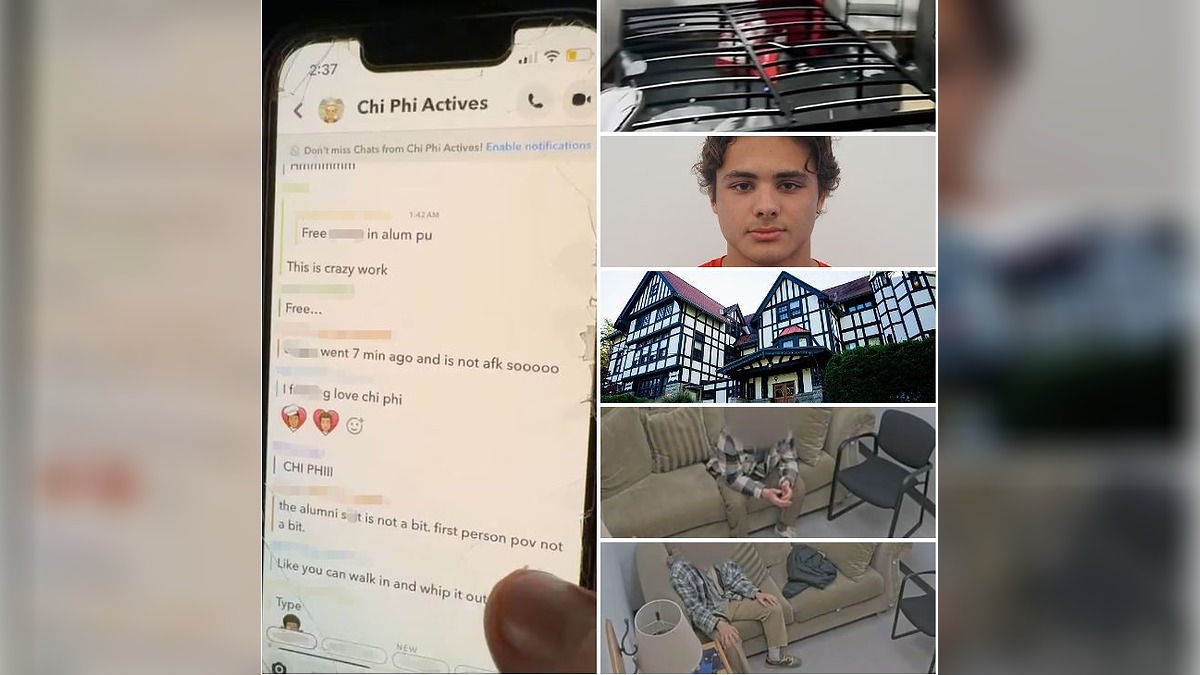
Newly unearthed police interview footage has shed additional light on the investigation into allegations of sexual assault involving members of Cornell University’s former Chi Phi fraternity.
In the recorded interviews, two fraternity members told investigators that they understood the sexual activity involving an alleged victim to have been consensual.
The men were not named in the civil lawsuit brought by the alleged victim, identified in court documents as Jane Doe, and neither has been accused of wrongdoing.
Brothers Tell Police They Believed the Encounter Was Consensual
In footage obtained by ABC News, one of the fraternity members told investigators that he had heard there were multiple consenting adults in the room where the alleged incident took place.
A second brother similarly told police that a consensual sexual act had occurred.
However, the investigating officer questioned how the men could be certain that everyone involved had consented to sexual activity.
The second man acknowledged during the interview that he could not remember precisely what had been said, but indicated that he understood people had told him they had sex with Doe.
Police Question Basis for Their Understanding
The exchange highlighted the distinction between what the fraternity members had personally observed and what they had reportedly heard from others.
The investigating officer pressed the men on how they had determined that the sexual activity was consensual rather than relying on assumptions or information from other students.
The two individuals interviewed were not identified as participants in the alleged sexual encounter and have not been accused of misconduct in connection with the case.
Jane Doe Alleges She Was Incapacitated
Doe filed a civil lawsuit in September alleging that she was sexually assaulted by multiple members of Chi Phi at the fraternity’s former house on October 19, 2024.
According to her lawsuit, she was 20 years old and a Cornell sophomore at the time.
She alleges that seven men engaged in sexual acts with her while she was completely incapacitated and unable to consent. She further claims that the incident continued until approximately 5.45am, when she lost consciousness.
Doe also alleges that she was pressured into consuming alcohol and taking ketamine during the evening.
The men named in her lawsuit have denied the allegations or maintained that the sexual activity was consensual.
Police Investigation Did Not Initially Lead to Criminal Charges
Doe reported the alleged assault to Cornell police in November 2024, several weeks after the incident.



Campus police investigated the complaint and provided a summary of their findings to the Tompkins County District Attorney’s Office.
The district attorney’s office ultimately decided not to pursue criminal charges at that stage, citing what it determined was insufficient evidence.
No criminal charges have been filed against the men in connection with the allegations.
Cornell Conducted a Separate Disciplinary Investigation
The criminal investigation was separate from Cornell University’s Title IX proceedings.
The university subsequently took disciplinary action against several students connected to the case.
Matthew Ingalls and Jonathan Newell were expelled. Records also indicate that Winston Lee and Gillio Lopes received suspensions and disciplinary probation, along with restrictions on contacting Doe and educational requirements relating to sexual harassment.
Diego Sarabia was barred from campus for three years, although he had already graduated by the time the disciplinary panel reached its decision in March 2025.
Scott Norris and Scott Kretzschmar were also ordered not to contact Doe and were required to complete educational work covering sexual harassment, social media use and bystander intervention.
Not All Students Disciplined Were Accused of Sexual Assault
The disciplinary proceedings also involved allegations concerning students who were not accused of participating directly in the alleged sexual assault.
According to the lawsuit and disciplinary records, Norris and Kretzschmar allegedly entered the room after Newell posted a message in a fraternity Snapchat group referring to “free p***y” upstairs.
Their disciplinary measures therefore related to their alleged conduct surrounding the incident rather than an allegation that they participated in the reported sexual acts.
Ingalls Disputed the Allegations
Ingalls has previously disputed Doe’s account and presented a different version of events during Cornell’s proceedings.
In communications with the university’s Title IX investigator, he claimed that he himself had been sexually assaulted and argued that he had consumed enough alcohol to be unable to consent to sexual intercourse.
In February 2025, Ingalls also accused Cornell of entrapment and indicated that he was considering filing his own complaint against Doe.
Case Has Since Been Reopened
Although the initial criminal investigation did not result in charges, the case has since returned to the spotlight.
The Tompkins County District Attorney’s Office has reopened the investigation, while New York Governor Kathy Hochul appointed Attorney General Letitia James as a special prosecutor.
The renewed investigation means the allegations remain subject to further examination by law enforcement.
Cornell Brings in Sally Yates to Review Its Response
Cornell University has also announced an independent review of how it handled the case and its wider approach to sexual assault.
The university said it had hired former Deputy Attorney General Sally Yates to conduct the review.
Her examination will cover Cornell’s policies, practices and resources relating to prevention and response, including how reports are received and investigated.
The review will also consider disciplinary hearings and decisions, the role of campus police, cooperation with external law enforcement and prosecutors, and Cornell’s oversight of fraternities and sororities.
Video Adds Another Element to a Continuing Case
The newly surfaced interview footage provides investigators’ earlier conversations with two fraternity members who said they understood the sexual activity to have been consensual.
Their accounts, however, are only one part of a case involving competing accounts, university disciplinary proceedings and renewed criminal scrutiny.
With the criminal investigation reopened and Cornell conducting its own review, the circumstances surrounding the October 2024 incident remain under examination.

