
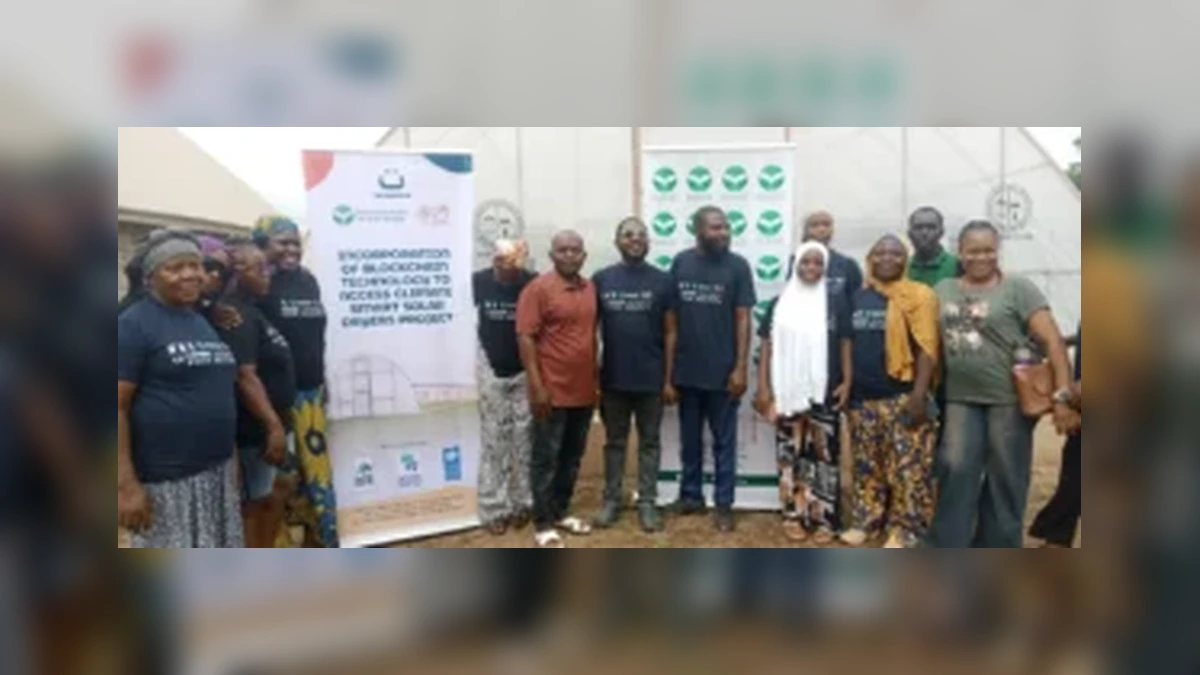
Community Action for Food Security in Africa (CAFS) has called for blockchain technology to be incorporated into parabolic solar dryers as part of efforts to improve transparency, traceability and efficiency in Nigeria’s agricultural processing sector.
CAFS founder, Mr Azeez Salawu, made the call during a dissemination workshop held at Kuchibiyi community in Bwari Area Council of the Federal Capital Territory.
The workshop focused on the integration of blockchain technology into climate-smart solar drying systems.
Project Targets Post-Harvest Losses
The initiative is being implemented with support from the United Nations Development Programme (UNDP) through the Tadamon Accelerator for Food Security.
According to Salawu, the project is being piloted in Ilorin and the FCT and combines climate-smart infrastructure with digital technology to tackle post-harvest losses.
The approach is designed to improve food preservation while giving farmers and agripreneurs better access to shared processing facilities.
Blockchain Could Improve Transparency
Salawu said linking solar-powered dryers with blockchain technology would provide a system through which the use and movement of agricultural produce could be documented.
He said the technology could help build greater trust, ownership and transparency around shared solar-drying infrastructure while supporting more sustainable food-processing practices.
CAFS is implementing the project in collaboration with the Nigerian Stored Products Research Institute (NSPRI), with support from UNDP, the Islamic Development Bank (IsDB) and the Islamic Solidarity Fund for Development (IsFD).
QR Codes to Track Agricultural Produce
One of the proposed features of the system is the use of batch numbers and QR codes for agricultural products processed through the dryers.
Salawu said such records could contain information including the location of the produce, its weight, moisture content and dry content.
The information could then be verified, potentially making it easier for buyers to assess products while providing farmers with more accurate production and processing records.



Technology Could Improve Food Safety
The CAFS founder also said the initiative could reduce the practice of drying agricultural produce directly on bare ground or tiled roads.
Produce dried in such environments can come into contact with stones, dirt and other contaminants, while exposure to rain and animals can further affect its quality.
By providing a dedicated drying facility and a system for recording production information, the project aims to improve food safety while helping farmers increase productivity and income.
Workshop Introduces Communities to New System
The Kuchibiyi workshop was organised to familiarise community members with the technology, explain its potential economic benefits and introduce a training manual covering its use.
Salawu said the blockchain component would also allow users to maintain clearer records of who was using the facility and how the equipment was being utilised.
Such records could support more transparent management of shared agricultural infrastructure.
NSPRI Plans Wider Expansion
Prof. Lateef Sanni, Executive Director of NSPRI, welcomed the initiative and described the integration of blockchain technology into climate-smart solar dryers as part of efforts to digitalise post-harvest management.
Sanni said NSPRI planned to map 100 locations where digital dryers are available across the country and integrate the blockchain system into the facilities.
He added that farmers, processors and other participants in agricultural value chains would receive training to enable them to use the technology effectively.
Focus on Weighing and Traceability
According to Sanni, the system could also help address some of the weight-related challenges that arise during the trading and drying of agricultural commodities.
He said strengthening digital records and traceability would form part of the wider capacity-building effort involving farmers, processors and other agricultural actors.
Kuchibiyi Residents Welcome Solar Dryer
Residents of Kuchibiyi said the solar dryer had already changed how agricultural produce was handled within the community.
Speaking on behalf of the community’s Chief, Mr Shaibu Kuchibiyi said farmers previously dried produce directly on the ground, leaving it exposed to sand, animals and unpredictable weather.
He said the solar dryer had reduced those problems and allowed produce to be dried more reliably, regardless of weather conditions.
Community Seeks More Processing Equipment
Kuchibiyi called for additional agricultural processing equipment, including corn peelers and groundnut shellers, to complement the solar dryer.
He said community members had also introduced measures to protect the facility from vandalism and ensure that it receives regular maintenance.
Cooperative Members Already Using Facility
Mrs Ijeoma Enome, President of the Agribusiness Women Cooperative, said the facility was being used by cooperative members and other farmers in the area.
She explained that members were purchasing, drying and processing agricultural commodities for different value chains through the facility.
Enome added that CAFS was collaborating with the cooperative on maintenance and on using blockchain technology to promote transparency in the facility’s operations.

