
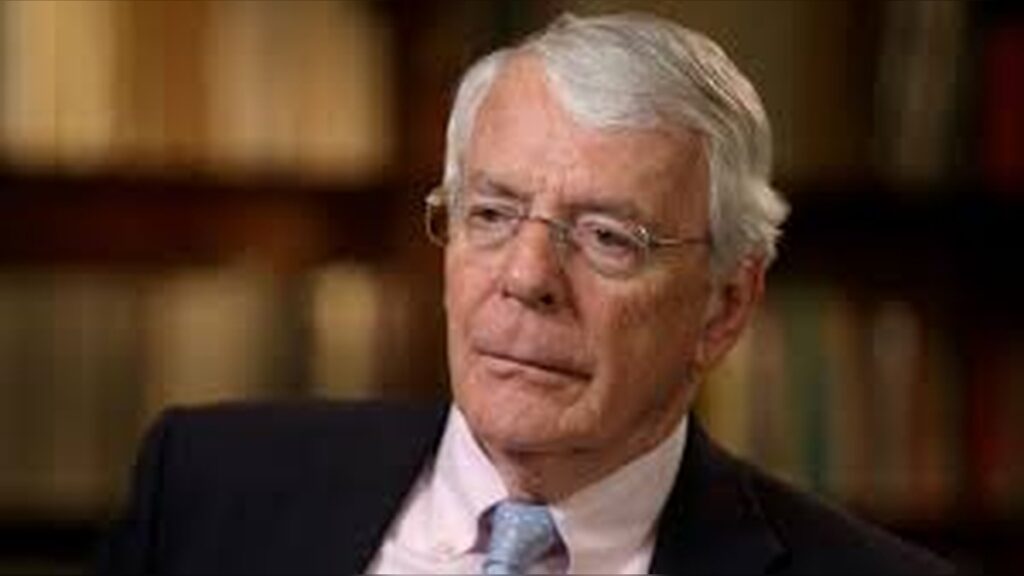
Former UK Prime Minister Sir John Major has weighed in on a familiar tension in modern democracy: voters often want fast, simple answers to problems that are anything but simple.
Speaking during a discussion on Matt Chorley’s programme on BBC Radio 5 Live, Major agreed that the public tends to prefer quick fixes.
His point was blunt but reflective—people want solutions that feel immediate, even when the underlying issues are deeply complex.
What stood out in his comments was not just agreement, but resignation.
He suggested that this expectation isn’t accidental—it’s been shaped over time by political culture itself.
“Nobody is Telling Us No” – A Warning About Political Honesty
Major argued that one of the core problems in today’s political environment is the reluctance of leaders to be honest about limits.
In his view, governments have gradually lost the confidence to tell voters when something simply cannot be done in the way they hope.
That, he suggested, has weakened political accountability rather than strengthened it.
His framing was straightforward: part of governing is saying “no,” even when it is unpopular.
But in a climate where messaging is tightly controlled and political survival depends on approval, that kind of honesty has become rarer.
The Pressure of Modern Politics and Instant Solutions
The former prime minister’s comments reflect a broader shift seen across many democracies, including the UK.
Politics today is shaped heavily by fast media cycles, social media reaction, and constant polling.
That environment rewards short, emotionally satisfying answers rather than long-term planning.
Historically, Major led the UK through difficult periods in the early 1990s, including economic turbulence and debates over Europe.




That experience often informs his caution about oversimplifying governance.
Political analysts frequently note that this “instant solution culture” can make it harder for governments to communicate trade-offs—such as higher taxes for better services or reduced spending for fiscal stability.
Wider Context: A Longstanding Debate in British Governance
The tension Major highlighted is not new. UK political history is filled with leaders warning about unrealistic public expectations.
From post-war austerity decisions to modern debates about healthcare funding and immigration, governments have repeatedly faced pressure to promise more than they can realistically deliver.
What has changed, however, is the speed and intensity of public feedback.
Where past governments could shape narratives over weeks or months, today’s leaders often have hours before a policy becomes a political flashpoint online.
Impact and Consequences
Major’s remarks add weight to an ongoing debate about trust in politics.
When leaders avoid saying “no,” they risk building expectations that later collapse into disappointment.
That cycle can weaken public confidence in institutions over time.
Voters may become more cynical, assuming that promises are always overstated or temporary.
At the same time, politicians who do speak honestly about limits often face short-term backlash, even if their assessments prove accurate later.
This creates a difficult incentive structure: honesty can be politically costly, while optimism is rewarded in the moment.
What’s Next?
The challenge Major describes is unlikely to disappear.
If anything, it may intensify as economic pressures, global instability, and domestic policy demands increase.
Future governments may need to find better ways to communicate complexity without losing public attention.
That could mean more transparent policy trade-offs, clearer long-term planning, or new approaches to public engagement.
Political communication is also likely to evolve further under the influence of digital platforms, where simplified messaging spreads faster than detailed explanation.
Summary
Sir John Major has warned that modern voters often expect quick and easy answers to complex political problems, a trend he believes is reinforced by political leaders themselves.
Speaking with Matt Chorley on BBC Radio 5 Live, he argued that governments must regain the confidence to say “no” when necessary, even if it is unpopular.
His comments highlight a broader struggle in modern politics: balancing honesty, public expectation, and the pressure for instant solutions.
Bulleted Takeaways
- Sir John Major says voters often expect overly simple answers to complex issues.
- He made the comments during an interview on BBC Radio 5 Live with Matt Chorley.
- Major argues governments have become reluctant to tell the public “no.”
- He believes honesty about limits is a key part of responsible leadership.
- Modern politics is shaped by fast media cycles and instant reactions.
- The issue reflects a long-standing challenge in British governance and public policy.
- Avoiding difficult truths can increase public disappointment over time.
- Political communication is becoming harder in an age of rapid online discourse.

