
The season finale of Saturday Night Live wasted no time diving into controversy, opening with one of the darkest political sketches the show has aired in recent years.
Hosted by Will Ferrell, the episode imagined disgraced financier Jeffrey Epstein returning from the dead to haunt President Donald Trump.
The sketch immediately sparked fierce reactions online, with viewers split between calling it bold satire and condemning it as insensitive due to Epstein’s crimes and the suffering of his victims.
Will Ferrell Appears as Epstein’s Ghost
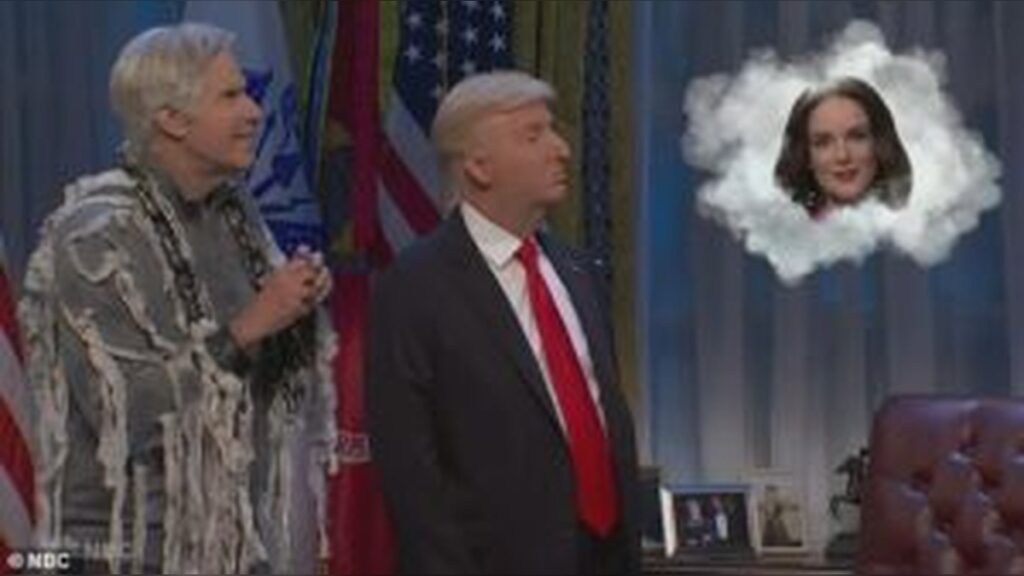
The cold open began inside the Oval Office, where cast member James Austin Johnson reprised his now-famous Trump impersonation.
After drifting asleep in his chair, Trump was startled awake by the appearance of Ferrell’s ghostly Epstein.
Ferrell entered wearing gray hair and chains, joking that he had returned to visit his “best friend.”
The sketch leaned heavily into uncomfortable humor, repeatedly referencing the public scrutiny surrounding Trump’s past social connections with Epstein during the 1990s and early 2000s in New York social circles.
Johnson’s Trump complained that his approval ratings had slipped into the 30s, prompting Ferrell’s Epstein to fire back with a grim joke: “Call me when it hits 17.”
The exchange set the tone for the rest of the sketch — awkward, provocative, and intentionally designed to shock viewers.
The Sketch Pushed Into Increasingly Dark Territory
The comedy escalated when Trump asked Epstein how heaven was treating him.
Epstein replied that it was “really, really hot,” a line clearly aimed at generating uncomfortable laughs.
The skit also mocked Trump’s fictional summer plans, including attending UFC fights on the White House lawn and hosting bizarre “Patriot Games” events tied to the World Cup.
One of the most controversial punchlines arrived when Trump attempted to give Epstein a high five.
Epstein refused, saying, “This time, I’m going to leave you hanging,” referencing the convicted offender’s 2019 death in jail.
That joke alone became one of the night’s most debated moments on social media.
Fake Future Visions Took Aim at Trump Officials
The sketch then shifted into surreal “visions of the future” for the Trump administration.
Cast member Ashley Padilla portrayed former Homeland Security Secretary Kristi Noem as an over-the-top Home Shopping Network host.
Meanwhile, Colin Jost returned as Defense Secretary Pete Hegseth, depicting him as a reckless frat-boy personality drinking alcohol and promoting a fake beverage called “Poland Sprung.”
Aziz Ansari appeared as FBI Director Kash Patel in a chaotic podcast scene involving marijuana use and wild political banter.
The sketch even referenced tabloid headlines involving Kristi Noem’s husband, using the controversy as another setup for jokes about dysfunction inside the administration.
Ferrell’s Final Message to Trump Drew Loud Reactions
Near the end of the sketch, Ferrell’s Epstein delivered the segment’s harshest line.




He warned Trump that no matter how many wars he started or how much damage happened to the economy, people would always connect the president to Epstein.
The two then bizarrely transitioned into a duet performance of Just the Two of Us, turning the already surreal sketch into full absurdist satire.
The musical ending left audiences stunned and quickly became one of the most replayed moments from the finale online.
Viewers Were Deeply Divided
Reaction online was immediate and intense.
Some viewers praised the sketch for refusing to pull punches and for directly referencing Trump’s past interactions with Epstein.
Others argued the comedy crossed a line by using Epstein-related material as entertainment.
Critics on social media said there was “nothing funny about Epstein,” pointing out the real victims tied to the sex trafficking case.
Supporters of Trump accused SNL of relying on political attacks and “woke outrage” instead of comedy, while other viewers celebrated the sketch for provoking uncomfortable conversations.
The debate reflects a larger issue surrounding modern political comedy: audiences increasingly disagree on where satire should stop, especially when real crimes and victims are involved.
Trump and Epstein’s History Continues to Follow Political Debate
Trump and Epstein were photographed together multiple times during the 1990s and early 2000s while moving in elite social circles across New York and Palm Beach.
Although Trump has denied wrongdoing and has publicly distanced himself from Epstein for years, the relationship continues to resurface in political discussions, documentaries, court filings, and media coverage.
Epstein’s criminal case remains one of the most infamous scandals involving wealthy and politically connected figures in recent American history.
The continued public fascination explains why entertainment shows like SNL repeatedly revisit the subject despite backlash.
SNL’s Political Humor Has Become More Aggressive
For decades, SNL has built its identity around political satire, targeting presidents from both parties.
But in recent years, the tone of the show has become noticeably sharper and more polarizing.
Season 51 frequently mocked Trump administration figures, conservative media personalities, and Republican officials.
The finale appeared designed to close the season with maximum controversy and viral attention.
Will Ferrell’s return also carried nostalgia value for longtime viewers, as the former cast member remains one of the show’s most recognizable comedy stars.
Impact and Consequences
The sketch immediately reignited debates about political comedy, media ethics, and the boundaries of satire.
For supporters of SNL, the cold open demonstrated the show’s willingness to confront controversial subjects head-on.
Critics, however, argued that using Epstein jokes risks trivializing real abuse cases and retraumatizing victims.
The controversy also fueled another wave of political division online, with conservatives accusing Hollywood and late-night television of targeting Trump unfairly while liberals praised the sketch’s boldness.
From a ratings and publicity perspective, the backlash likely benefits SNL.
Controversial sketches often dominate news cycles and social media conversations long after episodes air.
What’s Next?
SNL now heads into its off-season after concluding its 51st year on television, but the reaction to the finale is unlikely to disappear quickly.
The show will probably continue leaning heavily into Trump-centered satire during the next election cycle and future political developments.
Meanwhile, clips from the Epstein sketch are expected to keep circulating online as critics and supporters continue debating whether the humor went too far.
There is also growing pressure on comedy shows generally to balance edgy material with sensitivity toward real-world trauma and victims.
Summary
Saturday Night Live ended its 51st season with a highly controversial cold open featuring Will Ferrell as the ghost of Jeffrey Epstein confronting Donald Trump in the Oval Office.
The sketch mixed political satire, dark humor, and musical parody while taking shots at members of the Trump administration.
While some viewers praised the bold comedy, others condemned the episode as insensitive and exploitative.
The reaction once again highlighted how deeply divided audiences remain over political satire and the use of real-life scandals in entertainment.
Bulleted Takeaways
- Saturday Night Live opened its season finale with a controversial Trump-Epstein sketch.
- Will Ferrell portrayed the ghost of Jeffrey Epstein.
- James Austin Johnson reprised his role as Donald Trump.
- The sketch included jokes about Epstein’s death, Trump’s approval ratings, and future administration chaos.
- Colin Jost and Aziz Ansari appeared in parody roles as Pete Hegseth and Kash Patel.
- Social media reactions were sharply divided between praise and outrage.
- Critics argued the humor was insensitive to Epstein’s victims.
- Supporters claimed the sketch represented aggressive political satire at its sharpest.
- The finale capped off a season filled with anti-Trump political comedy.
- Debate over the limits of satire and dark humor continues to grow in modern entertainment.

