
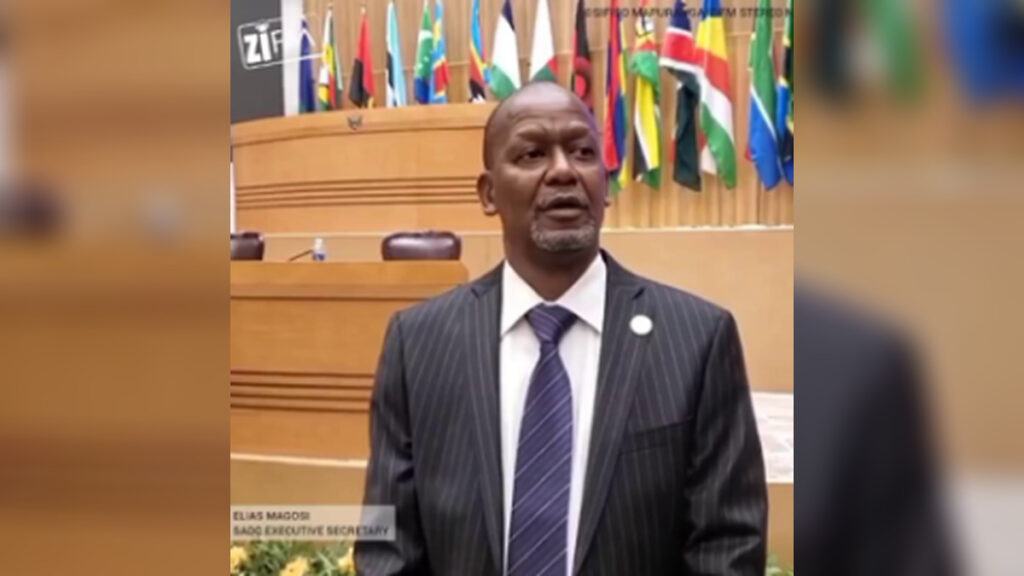
The Southern African Development Community (SADC) has reaffirmed the importance of regional peace, security and democratic governance as essential foundations for economic development and shared prosperity.
SADC Executive Secretary Elias Magosi made the remarks in Durban during a meeting of the bloc’s Organ Troika for Politics, Defence and Security Cooperation, held ahead of the 46th Ordinary Summit of SADC Heads of State and Government.
Magosi said the region’s efforts to protect peace, strengthen democratic institutions and promote sustainable development remain closely tied to the aspirations of people across Southern Africa.
Troika Reviews Political and Security Challenges
The Organ Troika, currently comprising Malawi, Eswatini and Tanzania, is among SADC’s key decision-making structures on political, defence and security matters.
Its latest meeting is focused on reviewing the political and security situation across the 16-member bloc, including progress recorded over the past year and challenges that continue to demand regional attention.
Magosi said Southern Africa remains generally stable and free from interstate conflict, but warned that unresolved political, security and humanitarian challenges require sustained collective action.
SADC Relies on Dialogue and Preventive Diplomacy
According to Magosi, SADC has continued using preventive diplomacy, dialogue, mediation and conflict-prevention initiatives to address political and security developments across the region.
He said these efforts are guided by the SADC Protocol on Politics, Defence and Security Cooperation and are designed to strengthen institutions capable of maintaining peace, democracy and regional integration.
The executive secretary stressed that peaceful solutions remain central to the bloc’s approach to regional disputes.
Eastern DRC Remains a Major Concern
The security situation in the eastern Democratic Republic of Congo remains one of SADC’s most pressing challenges, particularly amid continued fighting between the M23 group and government forces.
Magosi acknowledged that some progress had been made but said the humanitarian and security situation in the region remained deeply troubling.




He reaffirmed SADC’s backing for efforts aimed at achieving a durable political settlement capable of restoring stability, protecting civilians and creating conditions for long-term development.
Madagascar Dialogue Also Remains a Priority
SADC is also maintaining its involvement in Madagascar following the political upheaval that resulted in the removal of President Andry Rajoelina from office in October last year.
Magosi said the regional bloc has supported dialogue and national reconciliation through diplomatic engagement, mediation and the work of its Panel of Elders.
He said these initiatives have contributed to efforts surrounding constitutional reform, democratic governance and political stability.
The planned creation of a SADC Liaison Office in Madagascar, he added, will further demonstrate the bloc’s commitment to supporting the country’s political process.
Electoral Democracy Under Regional Watch
Democratic governance has remained another major focus for SADC, with the organisation deploying Electoral Observation Missions to several member states during the past year.
Missions were sent to Malawi, Seychelles, Tanzania and, more recently, Zambia to assess electoral processes and provide recommendations for strengthening democratic institutions.
Magosi said the deployments demonstrated SADC’s commitment to elections that are credible, transparent and peaceful while creating opportunities to improve electoral systems across the region.
Standby Force Infrastructure Advances
SADC is also moving forward with plans to establish a Regional Logistics Depot for its Standby Force in Botswana.
Magosi said the facility, once operational, will improve the bloc’s ability to respond quickly to peace-support operations, humanitarian emergencies and natural disasters.
He described the project as a significant investment in regional preparedness, resilience and collective security.
Magosi Calls for Unity Across the Bloc
The Troika meeting, according to Magosi, provides an opportunity for member states to assess achievements, establish priorities and improve their collective response to emerging challenges and opportunities.
Despite the difficulties confronting the region, he expressed confidence in SADC’s ability to address them through cooperation and solidarity.
Magosi argued that the bloc’s experience has repeatedly shown that unity and a shared sense of purpose can help Southern African countries overcome adversity and strengthen resilience.
SADC Leadership Recognised
As the region reviewed the work undertaken during the previous year, Magosi also called for recognition of the leaders and officials who have guided the Organ’s activities.
He said their commitment had contributed to SADC’s continued efforts to maintain peace, strengthen democratic governance and create a more secure environment for regional development.
The discussions in Durban are expected to feed into the wider deliberations of SADC leaders at the bloc’s 46th Ordinary Summit.

