
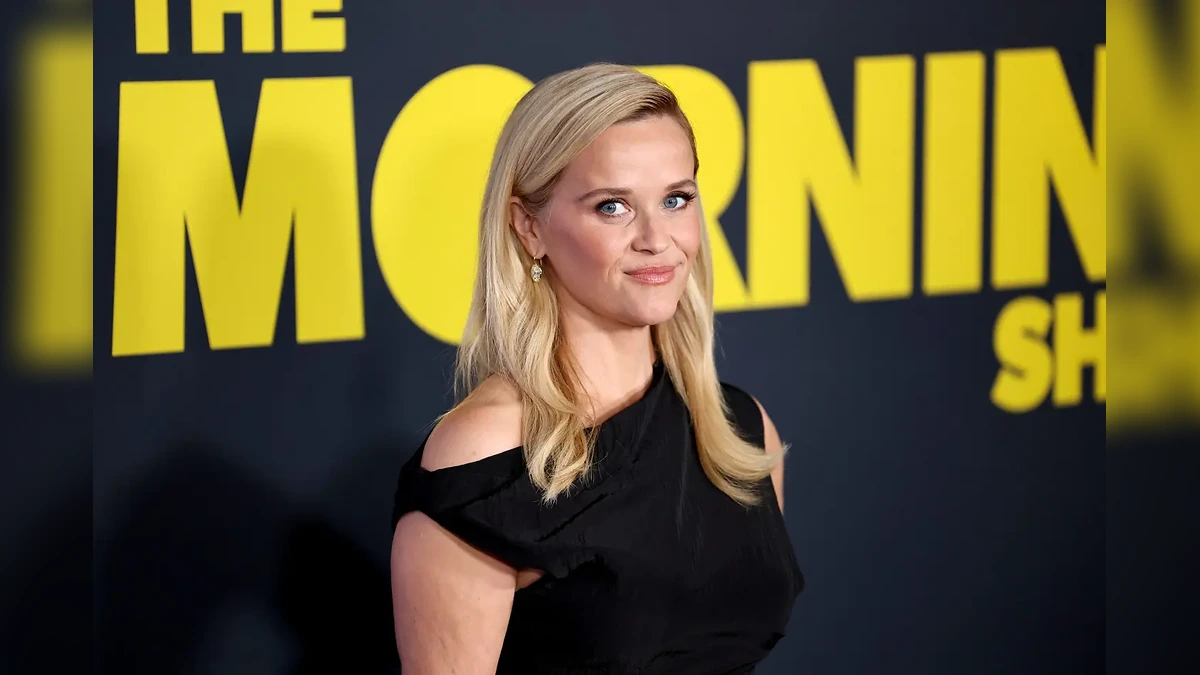
Hollywood actress and entrepreneur Reese Witherspoon is returning to a company she helped transform into a major force in entertainment, acquiring back control of Hello Sunshine alongside European studio Mediawan.
The deal, announced on October 13, involves the acquisition of Candle Media’s majority stake in the production and media company. Neither party disclosed the financial terms, although Axios reported, citing sources, that the transaction was valued in the low- to mid-eight figures — substantially below Hello Sunshine’s approximately $900 million valuation in 2021.
For Witherspoon, the agreement represents more than a business transaction. She described the move as “a homecoming” and said she believed the company still had significant opportunities ahead.
Hello Sunshine will become part of Mediawan’s wider entertainment portfolio, which also includes Chernin Entertainment and Plan B Entertainment. Witherspoon is investing alongside Mediawan, while co-founder Seth Rodsky is expected to join the company’s board with Witherspoon and Mediawan representatives.
The move marks a significant new chapter for the business she established to give women greater influence over the stories told across film, television, books and other media.
A Lack of Female-Led Stories Prompted Her Business Move
Witherspoon’s decision to become a media entrepreneur grew out of frustration with the roles available to women in Hollywood.
By 2011, she had spent approximately two decades working in the film industry. Yet the scripts reaching her desk often left her dissatisfied, with some containing what she described as demeaning portrayals of women.
During an appearance on Harvard Business School’s Founder Mindset podcast, hosted by Reza Satchu, Witherspoon recalled rejecting a project built around a man and two women competing for his affection. She objected to its crude jokes and scatological humour.
When she told her agent she was not interested in auditioning, the response was that actresses across Hollywood were competing for those roles because there were so few alternatives.
Rather than accepting the situation, Witherspoon began investigating the scale of the problem.
She visited the heads of all seven major studios on what she called a “listening tour”, asking how many films they were developing with female protagonists. She said the answer was generally none. One executive reportedly told her the studio had already released a film centred on a woman that year and could not make another.
The experience changed her perspective.
“First I got mad, and then I was like, Wait—this is a huge white space,” she recalled.
Witherspoon saw an opportunity to build a business around stories that the existing studio system was overlooking. That idea eventually became Hello Sunshine, a company designed to put women at the centre of entertainment and create content for audiences seeking different perspectives.
Financial Hardship Helped Shape Her Entrepreneurial Mindset
Witherspoon has attributed much of her determination to experiences during her teenage years, when financial problems affected her family.
She said her father’s spending issues created difficult circumstances at home and that, at around 16 or 17, she was drawn into helping with the situation.
Although she described her parents as loving and kind, she said they did not have the financial means to pay for her college education. She consequently developed a strong sense that she would need to provide for herself.
“I was always had this idea that no one’s coming to save me,” she said during the podcast interview, describing how the absence of a financial safety net influenced her decisions.
That experience also informed her departure from Stanford University after roughly a year. Witherspoon said the decision was not the result of some grand entrepreneurial vision, but a practical financial reality.
She recalled that tuition cost about $33,000 a year and that acting provided an income she could not ignore.




“I think people try to paint my dropout story like, I’m some sort of wunderkind that had some great business,” she said. “But it was literally just I couldn’t pay for—I couldn’t afford tuition.”
The same independent mindset later shaped her approach to Hollywood. If the industry was not producing enough opportunities for women, she concluded that she would have to help create those opportunities herself.
Pacific Standard Delivered Success but Struggled Financially
Before launching Hello Sunshine, Witherspoon attempted to address the shortage of female-centred stories through Pacific Standard, a production company she operated with Australian producer Bruna Papandrea.
The company’s early projects included the film adaptations of Cheryl Strayed’s Wild and Gillian Flynn’s Gone Girl. Both books reached No. 1 on the New York Times bestseller lists, and their screen adaptations helped establish the company’s reputation.
Pacific Standard also co-produced HBO’s Big Little Lies. Witherspoon said the projects collectively generated more than $600 million at the box office and earned three Oscar nominations.
Despite the creative success, the business model proved difficult to sustain.
Witherspoon explained that she relied on producer fees while supporting a team of four employees. After covering operating expenses, the company was barely breaking even.
“I was only working for producer fees. I had four employees, and I was only breaking even,” she said. “The overhead was eating me alive. That’s not a real business.”
Witherspoon retained control of Pacific Standard after separating professionally from Papandrea in 2016. However, the experience convinced her that she needed a more sustainable structure if she wanted to expand her influence across the entertainment industry.
Hello Sunshine Turned a Creative Mission Into a Major Business
Witherspoon co-founded Hello Sunshine in 2016 with Seth Rodsky, initially through a partnership involving AT&T’s Otter Media.
The company’s objective was to build a media business in which women’s experiences and perspectives were central rather than secondary to the main storyline.
Its projects soon included successful television productions such as Big Little Lies, Hulu’s Little Fires Everywhere and Apple TV+’s The Morning Show. Witherspoon also developed Reese’s Book Club into an influential platform for promoting books, particularly those featuring compelling stories about women.
The company expanded beyond individual productions by connecting entertainment, publishing and audience engagement under a single brand.
That approach helped turn Witherspoon’s original frustration with Hollywood into a business with substantial commercial value. Rather than relying solely on acting opportunities or individual producer fees, Hello Sunshine gave her a broader platform for developing and distributing content.
The $900 Million Deal That Changed Hello Sunshine’s Ownership
Hello Sunshine attracted major investment in August 2021, when Witherspoon sold a majority stake to a venture backed by Blackstone and led by former Disney executives Kevin Mayer and Tom Staggs.
The transaction valued the company at approximately $900 million.
Witherspoon and chief executive Sarah Harden retained significant equity interests and board positions, allowing the actress to remain involved in the business after the sale.
The investment placed Hello Sunshine within a wider media venture backed by substantial financial resources and experienced entertainment executives.
Five years later, however, Witherspoon is returning to a more direct ownership role through the new agreement with Mediawan.
The latest transaction’s undisclosed price has attracted attention because reports place it far below the company’s 2021 valuation. Axios reported that the deal was worth a low- to mid-eight-figure sum, although the companies have not confirmed that figure.
The difference between the two reported valuations does not, by itself, establish the company’s current financial performance or explain the circumstances behind the new transaction. The parties have not publicly disclosed the full terms.
Witherspoon Calls the Acquisition a Homecoming
Announcing the deal, Witherspoon described the return to Hello Sunshine as “a homecoming”.
She also acknowledged Peter Chernin and Jesse Jacobs, whose Chernin Group backed the company at its launch in 2016.
Witherspoon said she believed the company’s most important work could still lie ahead, signalling that the change in ownership is intended to support its next phase rather than simply revisit its past.
Rodsky’s planned appointment to the board will also maintain a role for the co-founder as the company enters the Mediawan portfolio.
For Mediawan, the acquisition brings Hello Sunshine into a group that already includes established production companies. For Witherspoon, it offers an opportunity to continue shaping the business she created in response to a gap she identified in Hollywood.
Why Witherspoon Wants Other Entrepreneurs to Follow Her Example
Witherspoon’s journey from rejecting limited acting roles to building a company valued at hundreds of millions of dollars has become an example of how an industry problem can inspire a commercial opportunity.
Her experience also demonstrates the distinction between creative success and a sustainable business. Pacific Standard produced commercially successful projects, but Witherspoon said its operating costs and dependence on producer fees made it difficult to grow. Hello Sunshine offered a broader model built around multiple forms of content and a clearly defined audience.
Reflecting on the company’s journey, Witherspoon said she hoped other aspiring founders would see its success and believe they could build similar businesses.
“I hope that people out here…will think ‘I’m going to have the next Hello Sunshine,’” she said. “Because it is possible.”
Witherspoon’s latest move places her back at the centre of the company she helped establish, as she and Mediawan look to develop its future in an entertainment industry where the stories being told — and who gets to tell them — remain central questions.
