
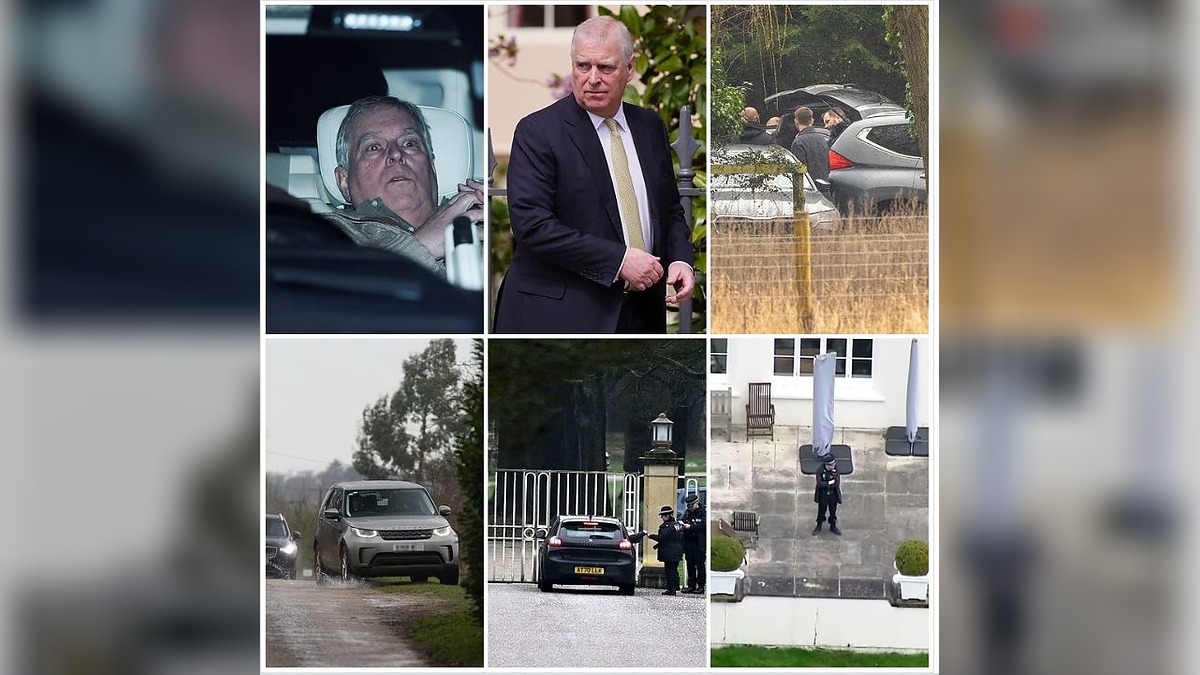
Police officers investigating Andrew Mountbatten-Windsor feared they could be denied access to his homes if he or his legal team argued that the properties belonged to his brother, King Charles III, newly released court documents reveal.
Thames Valley Police obtained search warrants before raiding properties at Windsor and Sandringham in February, concerned that officers could otherwise face resistance or be told to seek separate permission from Buckingham Palace.
According to documents obtained by the Daily Mail, investigators worried that such a delay could give people an opportunity to destroy or remove evidence relevant to the inquiry.
The High Court has agreed to release documents relating to Andrew’s successful legal challenge against Thames Valley Police and the judge who authorised the searches.
Detective Warned of Risk to Evidence and Public Confidence
The detective chief inspector leading the investigation told an Old Bailey judge that Andrew was a suspect in several serious offences and had previously failed to engage with other investigative inquiries concerning his alleged links to Jeffrey Epstein.
The officer, whose identity was not made public, said securing relevant evidence quickly was essential to the investigation.
“Failure to do so risks loss of evidence and a consequent loss of public trust and confidence in the investigation,” the detective warned.
The officer also expressed uncertainty about whether Andrew or his legal representatives would permit officers to enter the properties voluntarily, or whether they might attempt to obstruct aspects of the searches.
Investigators believed items in Andrew’s possession could be of significant value to the inquiry. They therefore sought legal authority to search the properties without depending on voluntary cooperation.
Search Warrants Approved Before February Raids
Thames Valley Police submitted its warrant applications on February 18, one day before officers began the early-morning searches.
Judge Mark Lucraft KC, the Recorder of London, approved the warrants.
The applications, extracts of which were later disclosed in court papers, stated that the detective had reasonable grounds to suspect Andrew of misconduct in public office.
The police investigation focused on allegations concerning his conduct while serving as the UK’s trade envoy, a position he held between 2001 and 2011.
According to the applications, Andrew forwarded official reports relating to government trade visits to Singapore, Vietnam, China and Hong Kong to Epstein within minutes of receiving them in 2010.
Investigators also alleged that Andrew had suggested Epstein might invest in a private investment firm during a meeting in 2011.
Police characterised the alleged disclosure of government material as potentially inappropriate and unlawful conduct by someone holding public office. These allegations formed part of the basis for the searches and had not, in themselves, established criminal guilt.




Andrew Wins Legal Challenge Over Police Searches
The legal basis for the raids was subsequently challenged by Andrew, who sought a judicial review of the police operation and the court decision authorising it.
The dispute remained largely out of public view while it progressed through the High Court.
Thames Valley Police eventually conceded that the search warrants were unlawful, and Mr Justice Hilliard formally quashed them in a ruling delivered behind closed doors on July 22.
The outcome became public on October 8, when it emerged that Andrew had won his challenge.
The ruling has raised questions about the handling of the investigation, including the process through which officers obtained permission to search his homes.
Following the disclosure, Thames Valley Police placed responsibility for the failure on the Old Bailey judge who had approved the warrants.
Andrew’s successful challenge concerns the legality of the searches, rather than amounting to a finding that the underlying allegations against him were false.
Arrest Followed by Six Days of Searches
Andrew was arrested on his 66th birthday in February and questioned for almost 12 hours at Aylsham Police Station. He was suspected of misconduct in public office in connection with his time as trade envoy and his dealings with Epstein.
The arrest was followed by six days of searches at Royal Lodge in Windsor and Wood Farm on the Sandringham Estate in Norfolk.
Royal Lodge had been Andrew’s home for more than two decades before he was forced to leave. He has since moved to nearby Marsh Farm.
The searches formed part of an investigation launched following the publication of the Epstein files, which renewed scrutiny of Andrew’s connections with the convicted sex offender.
Emails suggesting that Andrew had shared government information with Epstein were among the material that drew investigators’ attention.
Police Seek Permission to Keep Seized Documents and Devices
Despite acknowledging that the warrants were unlawful, Thames Valley Police has maintained that its investigation should continue.
The force applied on June 4 for permission to retain documents, electronic devices and other material seized during the searches.
Andrew’s legal victory means the continued possession of the material is now a separate issue requiring judicial consideration. In principle, the police could be required to return the items, a development that could significantly affect the investigation.
To retain them, the force must demonstrate that there is a legitimate legal basis for doing so.
The application will be considered by the same judge, but the hearing is not expected to take place until next year.
Investigation Remains Unresolved Despite Court Ruling
The High Court ruling has complicated the investigation into Andrew’s alleged conduct, but it has not brought the inquiry to an end.
Police have said they intend to continue investigating while seeking judicial permission to retain the seized material.
During the proceedings, Mr Justice Hilliard was asked about the likely timetable for the investigation. His response suggested that a conclusion was not imminent.
“I suspect that is quite a way off,” the judge said.
The case now centres on two separate questions: whether investigators can lawfully retain the material gathered during the raids, and whether the broader misconduct in public office investigation can proceed.
The released documents also offer a clearer picture of why police sought warrants in advance, including their concern that disputes over access to royal properties could delay searches and jeopardise evidence.
