
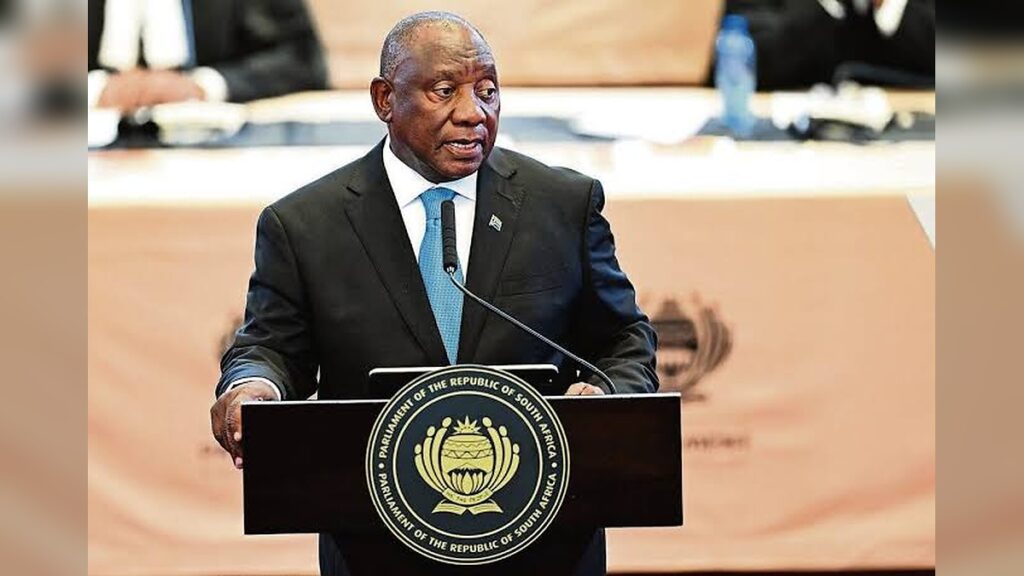
The Western Cape High Court has temporarily halted Parliament’s impeachment inquiry into President Cyril Ramaphosa, granting him interim legal protection while his challenge against the process is considered.
In a majority ruling delivered on Friday, a full bench ordered that Parliament’s Section 89 committee cannot continue with public hearings until the court has ruled on Ramaphosa’s separate review application.
The judges also postponed a decision on legal costs until the review matter is concluded.
Majority of Judges Side With the President
The ruling was not unanimous.
While one judge believed Ramaphosa had failed to satisfy the legal requirements for an interim interdict, the majority concluded that he had presented sufficient grounds to justify temporarily suspending the inquiry.
The order will remain in force only until the court reaches a decision on the review application challenging the legality of the independent panel report that set the impeachment process in motion.
Challenge Centres on Independent Panel Report
At the heart of the dispute is Ramaphosa’s argument that the independent panel, which recommended that Parliament investigate him, acted unlawfully.
The president is asking the court to review and overturn the panel’s report, arguing that it relied on an incorrect legal standard when assessing the allegations against him.
His legal team maintains that allowing Parliament’s inquiry to continue before the review is decided could undermine the purpose of the court proceedings if the report is ultimately declared invalid.
Phala Phala Scandal Remains at the Core
The impeachment process stems from the controversy surrounding the theft of approximately $538,000, reportedly stolen from Ramaphosa’s Phala Phala game farm in Limpopo in 2020.



An independent panel chaired by former Chief Justice Sandile Ngcobo concluded that there was prima facie evidence suggesting the president may have committed serious violations of the Constitution or the law, recommending that Parliament conduct a full investigation under Section 89 of the Constitution.
That recommendation ultimately led lawmakers to establish the impeachment committee now at the centre of the legal dispute.
President Warned of Serious Consequences
During the hearing, advocate Wim Trengove, representing Ramaphosa, argued that allowing the inquiry to proceed before the legality of the panel’s report is tested would inflict lasting harm on the president.
He told the court that public impeachment hearings would cause significant reputational damage and could expose Ramaphosa to irreversible consequences if the underlying report is later ruled unlawful.
Trengove also stressed that a successful impeachment under Section 89 carries severe constitutional penalties, including the loss of presidential benefits and pensions, as well as a permanent ban on holding public office.
He argued that Parliament would suffer little prejudice from a temporary delay because the review application is scheduled to be heard between September 2 and September 4.
Court Examines Claims of Irreparable Harm
Members of the three-judge bench questioned whether participating in the inquiry would necessarily amount to irreparable harm.
Judge Matthew Francis referred to former President Nelson Mandela’s appearance in court during the South African Rugby Football Union (SARFU) litigation, suggesting that giving evidence in legal proceedings is not inherently humiliating.
However, Ramaphosa’s legal team responded that the circumstances were fundamentally different, arguing that an impeachment inquiry carries unique constitutional consequences that go well beyond ordinary court proceedings.
Parliament and Opposition Parties Resist Delay
Parliament opposed the application, insisting that the impeachment process is a constitutionally mandated accountability mechanism that should not be interrupted.
Lawyers representing the Section 89 committee argued that granting the interdict would effectively suspend a Constitutional Court directive requiring Parliament to conduct the inquiry.
The application was also opposed by several political parties, including the Economic Freedom Fighters (EFF), the African Transformation Movement (ATM), the MK Party and United Africans Transformation.
Legal Battle Set to Continue
Although the court has paused the parliamentary hearings for now, the broader dispute over the impeachment process remains unresolved.
The upcoming review proceedings will determine whether the independent panel’s report that triggered Parliament’s inquiry was legally sound, a decision that could shape both the future of the Section 89 process and the ongoing political fallout from the Phala Phala controversy.

