
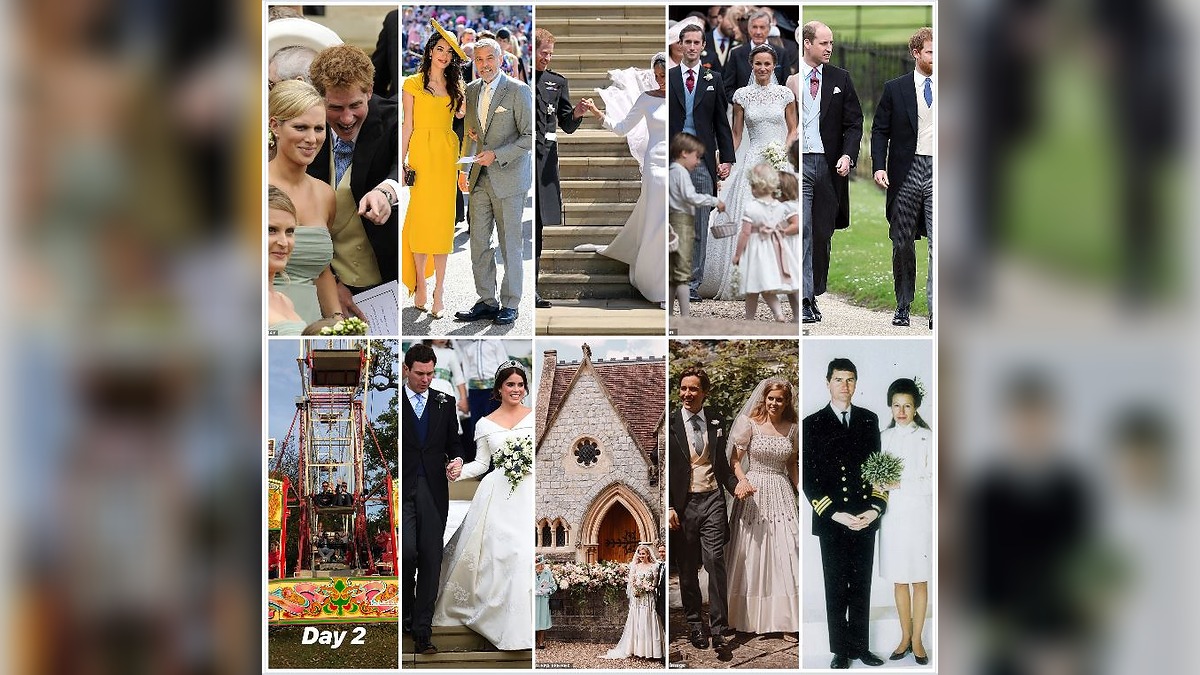
British high-society wedding etiquette is often less about extravagant spending and more about discretion, tradition and knowing when to keep things simple.
While American wedding customs have increasingly influenced ceremonies in Britain, some traditional upper-class practices remain distinct. Morning ceremonies, formal morning suits and seating arrangements that separate married couples are among the customs associated with old-fashioned British etiquette.
For those seeking a glimpse into these unwritten rules, the Royal Family provides several examples of what is considered tasteful and what critics regard as excessive.
From Princess Anne’s understated second marriage to Princess Eugenie’s carnival-themed celebrations, royal weddings have offered contrasting lessons in restraint, tradition and the pursuit of attention.
Former royal butler Julius F Smith, founder of Regal Afternoon Tea, has assessed six royal wedding traditions, highlighting the choices he believes reflect genuine upper-class values.
Princess Anne Sets the Standard for Understated Elegance
Princess Anne’s second marriage to Tim Laurence in 1992 has been held up as an example of how a wedding can be meaningful without becoming an elaborate spectacle.
The ceremony took place at Crathie Kirk, near Balmoral, with only 30 guests attending. Anne wore a simple cream cocktail dress paired with black shoes, avoiding the grandeur often associated with royal celebrations.
Smith believes the intimate occasion demonstrated the confidence that comes with not feeling the need to advertise one’s status through extravagance.
He argued that second weddings should generally be low-key, suggesting that an event on the scale of a first wedding might raise eyebrows among traditional upper-class circles.
The limited guest list also meant the couple could share the occasion with the people closest to them.
Etiquette score: 5/5
Princess Beatrice Shows the Appeal of Family Tradition
Princess Beatrice demonstrated another longstanding principle of traditional British elegance when she married Edoardo Mapelli Mozzi in Windsor in 2020.
Rather than commissioning an entirely new wedding dress, Beatrice wore a vintage Norman Hartnell gown belonging to her grandmother, Queen Elizabeth II, who lent it to her for the occasion.
The choice placed family history at the centre of the ceremony and offered an alternative to the modern emphasis on expensive, newly purchased wedding outfits designed for social media attention.
Smith described the decision as romantic and unflashy, arguing that passing treasured possessions between generations reflects a form of thrift associated with established upper-class families.
The dress also gave the wedding a personal connection to the Royal Family’s history.
Etiquette score: 5/5
Princess Eugenie’s Second-Day Carnival Draws Criticism
Princess Eugenie and Jack Brooksbank’s wedding at St George’s Chapel in Windsor Castle appeared to follow many conventional royal traditions.
However, the celebrations continued into a second day, when the couple hosted a carnival-themed event featuring fairground entertainment and games.
Vanity Fair reported on the additional festivities, but Smith considered the approach too attention-grabbing for traditional upper-class tastes.




In his view, the main wedding should provide the grand occasion, after which guests should be allowed to relax rather than participate in another elaborate programme of entertainment.
He characterised the fairground theme as excessive, arguing that understated celebrations better reflect traditional British etiquette.
Etiquette score: 1/5
Pippa Middleton’s Wedding Followed an Old Aristocratic Rule
When Pippa Middleton married James Matthews in 2017, her wedding attracted considerable attention, partly because of her connection to Catherine, Princess of Wales.
Prince Harry attended the ceremony before Meghan Markle joined him for the reception. The seating arrangements reportedly followed an old aristocratic custom of placing couples apart at dinner.
The practice differs from the more familiar American approach of seating husbands and wives together. Its purpose, according to Smith, is to encourage guests to socialise beyond their immediate relationships.
He argued that couples who remain together throughout an event can miss opportunities to meet new people and engage in wider conversations.
Smith also praised the overall presentation of Pippa’s wedding, pointing to the church, guests’ formal attire and reception as elements of the traditional British fairytale celebration.
He acknowledged that Pippa faced high expectations because of the attention surrounding her sister Catherine’s wedding, but believed she delivered an occasion that many people would aspire to recreate.
Etiquette score: 5/5
Meghan and Harry’s Wedding Raises Questions About Celebrity Status
The wedding of Prince Harry and Meghan Markle in 2018 brought together royal ceremony and Hollywood celebrity culture.
Meghan wore a Givenchy wedding gown, while the guest list included prominent figures such as Oprah Winfrey and George and Amal Clooney. The event attracted international attention and was widely presented as a meeting of two influential worlds.
However, Smith questioned whether a high-profile guest list necessarily translates into social standing.
He argued that the presence of celebrities did not automatically establish the wedding’s lasting significance, suggesting that some guests may not have understood their place in the occasion.
Smith also speculated that Meghan may have hoped the gathering would strengthen her connections with influential figures in Hollywood. These were his interpretations of the event rather than established facts about the couple’s intentions or their guests’ motivations.
His assessment draws a distinction between a visually impressive celebration and one that reflects the discretion and established social conventions associated with traditional upper-class circles.
Etiquette score: 3/5
Peter Phillips’ Magazine Deal Raises Questions About Discretion
Royal weddings can attract substantial media interest, but Smith believes there is a difference between public attention and turning a private celebration into a commercial opportunity.
Prince William was reportedly unimpressed when his cousin Peter Phillips arranged a deal with Hello! magazine for coverage of his 2008 wedding to Autumn Kelly at St George’s Chapel.
Smith argued that inviting a magazine to document a wedding can make guests feel as though their every movement is being observed, undermining the relaxed atmosphere of a private celebration.
He also suggested that members of the extended Royal Family should recognise that their social privileges come with expectations of discretion and responsibility.
In his assessment, the issue is not simply whether a wedding is expensive, but whether the occasion appears to have been organised partly for commercial gain.
Etiquette score: 1/5
Why Restraint Remains a Hallmark of Traditional British Wedding Etiquette
The six examples illustrate competing approaches to royal wedding celebrations, from inherited family heirlooms and intimate ceremonies to elaborate entertainment and commercial media arrangements.
Smith’s assessments place particular emphasis on discretion, meaningful traditions and avoiding unnecessary displays of wealth or celebrity connections.
Princess Anne’s second wedding emerges as his clearest example of those values. Its small guest list, uncomplicated outfit and lack of elaborate spectacle reflected the principle that a marriage does not need a grand production to be significant.
Princess Beatrice’s decision to wear her grandmother’s dress similarly demonstrated how family history can provide a sense of luxury without requiring something new or extravagant.
By contrast, the criticism directed at Princess Eugenie’s carnival celebrations and Peter Phillips’ magazine deal centres on the perception that too much attention can detract from the occasion itself.
Ultimately, the article‘s central argument is that traditional British upper-class wedding etiquette places greater value on restraint and discretion than on the size of the budget. In that view, elegance is demonstrated not by how much a couple spends, but by how naturally they celebrate without appearing to show off.

