
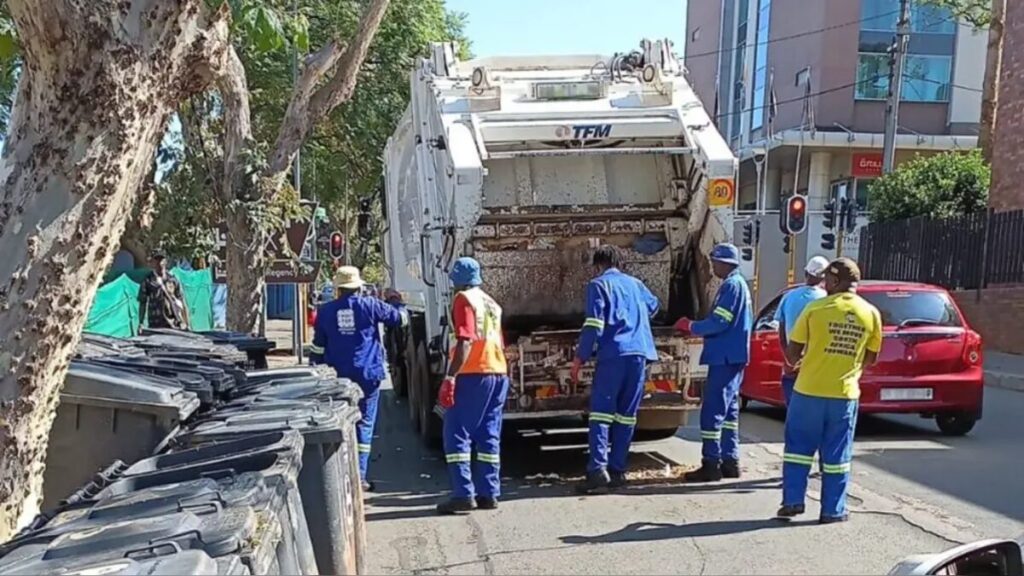
Johannesburg residents are set to see a cleaner city this weekend as the city’s waste management agency, Pikitup, rolls out an emergency weekend recovery plan.
The initiative, scheduled for 14–15 March 2026, aims to tackle the waste collection backlog that has piled up across multiple suburbs after recent operational disruptions, including protests and service delays.
Areas in Focus
The weekend clean-up will prioritize zones served by the Randburg, Midrand, Roodepoort, Central Camp, Selby, and Marlboro depots — areas where rubbish collection has lagged behind schedule.
Teams from these depots will work extended hours to clear accumulated waste and restore normal service levels.
Residents are encouraged to follow updates via Pikitup’s official website and social media to track collection schedules in their neighborhoods.
Residents Join Forces in Inner City Clean-Up
The City of Johannesburg’s High Impact Service Delivery Campaign also mobilized residents to assist with clean-up operations in the inner city on Friday.
Locals joined forces with officials, showing community solidarity while helping to remove waste scattered during protests, particularly in Cosmo City on Africa Street.
Pikitup expressed gratitude for the community’s support, emphasizing that resident participation helps accelerate the return to normal services.
Managing Waste Facilities Amid Increased Volumes
Pikitup has asked residents to make use of its Integrated Waste Management Facilities while the backlog is being cleared.
The surge in waste has temporarily increased volumes at some sites, but officials are taking steps to ensure facilities remain operational and that no long-term disruption occurs.
The agency reassured residents that they are doing everything possible to stabilize collection and maintain cleanliness across Johannesburg.




Impact and Consequences
-
Public Health: Accumulated waste poses risks of pests, disease, and foul odors, which can impact community health if left unaddressed.
-
Community Morale: Delays in collection can frustrate residents and create tension between local authorities and communities.
-
Environmental Concerns: Overflowing waste sites can harm local ecosystems, contaminate soil and water, and increase pollution.
-
Operational Pressure: Pikitup staff must work overtime and deploy additional resources, stretching the agency’s capacity to respond quickly to new incidents.
What’s Next?
Pikitup plans to continue clearing backlogs over the weekend and monitor service levels throughout the city.
Residents are advised to stay updated on collection schedules and continue participating in clean-up campaigns where possible.
Authorities may also review operational strategies to prevent similar disruptions in the future, particularly during periods of civil unrest or heavy waste accumulation.
Summary
Johannesburg’s waste management challenges are being addressed head-on as Pikitup launches a weekend recovery plan targeting backlogs in multiple depots.
Community involvement, extended operational hours, and the use of Integrated Waste Management Facilities are central to the strategy.
While the disruptions have created temporary inconvenience and environmental concerns, coordinated efforts between residents and city officials aim to restore normal waste collection services quickly.
Key Takeaways
-
Pikitup is working over the weekend to clear waste backlogs in Randburg, Midrand, Roodepoort, Central Camp, Selby, and Marlboro.
-
Residents are encouraged to check Pikitup’s website and social media for updates on collection schedules.
-
Community members assisted in inner city clean-ups, particularly after waste was scattered during protests.
-
Temporary overflow at Integrated Waste Management Facilities is being managed while collection backlogs are cleared.
-
Prompt action aims to protect public health, restore city cleanliness, and maintain environmental standards.
-
Authorities are reviewing operational plans to reduce the likelihood of future service disruptions.

