
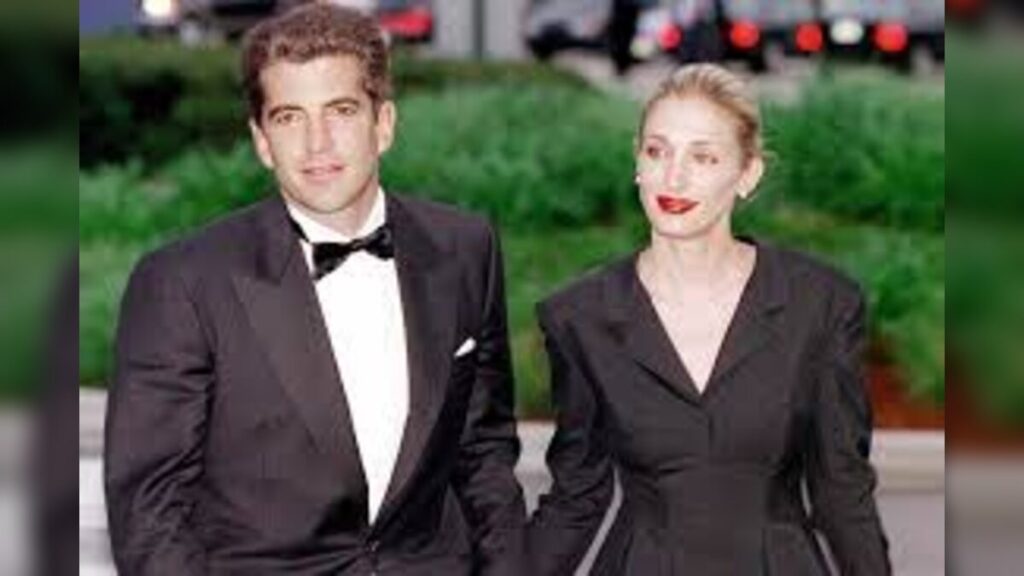
In June 1996, photographer John Barrett snapped a photo that would become iconic.
Carolyn Bessette, full of unguarded joy, leapt into the lap of John F. Kennedy Jr., who was laughing and relaxed in his tuxedo.
Barrett had sneaked into the Hilton Hotel in New York City, exploiting a rare lapse in security to capture this spontaneous moment.
The resulting image later graced the front cover of the New York Post when the couple secretly married three months later.
Life as the City’s Watchful Eye
Barrett, now 79 and retired on the Jersey Shore, first photographed Kennedy in the mid-1970s when the young American scion was just 15.
Fellow photographer Adam Scull began covering Kennedy for the New York Post in 1977.
Barrett explained that he always tried to respect Kennedy’s privacy, capturing key moments without becoming overbearing.
Kennedy, understanding the “game,” would often humorously outmaneuver the photographers in the streets of New York.
From Studio 54 to the Hilton Gala
Both Barrett and Scull recounted Kennedy’s early charm and accessibility.
In his youth, Kennedy frequented Studio 54 and other social hotspots, always approachable to the photographers.



But marriage to Bessette brought changes.
Scull recalled that Kennedy became “grouchy” and less willing to engage.
Bessette herself was visibly frustrated with the constant attention, sometimes reacting harshly toward photographers who got too close.
The Price of Fame
Barrett sold the Hilton image of the couple for $5,000, a substantial sum in the mid-1990s.
Public demand for images of Kennedy and Bessette was insatiable, surpassing even other celebrities at the time.
While Barrett and Scull earned well, Bessette felt overwhelmed, unprepared for the relentless spotlight that came with being Kennedy’s wife.
Tragedy and Lasting Impressions
The couple’s untimely deaths in 1999 deeply affected both photographers.
Scull cited Kennedy’s inexperience as a pilot and his risk-taking nature, while Barrett described the shock and grief he felt rushing to Hyannis Port upon hearing the news.
Their deaths underscored the perilous intersection of fame, personal choices, and public fascination.
Impact and Consequences
The Kennedy-Bessette story remains a cautionary tale about celebrity culture, paparazzi ethics, and the pressures faced by those in the public eye.
The intense media scrutiny shaped Bessette’s public persona and contributed to ongoing debates about privacy, consent, and the responsibilities of photojournalists.
What’s Next?
The recent dramatization of the Kennedy-Bessette relationship by Ryan Murphy has renewed public interest in their lives, showcasing historic images and intimate moments.
Archivists, historians, and fans continue to explore the legacy of the couple, analyzing their impact on American culture and celebrity journalism.
Summary
Photographers John Barrett and Adam Scull documented the highs and lows of John F. Kennedy Jr. and Carolyn Bessette’s lives, capturing moments of joy, tension, and tragedy.
The couple’s experiences reflect both the allure and the cost of fame in 1990s America, leaving a lasting imprint on photojournalism and popular memory.
Bulleted Takeaways
- John Barrett captured an iconic 1996 photo of Kennedy and Bessette at the Hilton Gala.
- Barrett and Scull balanced access with respect, avoiding overbearing paparazzi tactics.
- Bessette struggled with constant media attention and occasionally lashed out at photographers.
- Images of the couple fetched significant sums, reflecting public fascination with their lives.
- Kennedy and Bessette’s deaths highlighted risks associated with fame and media scrutiny.
- The recent dramatization by Ryan Murphy has revived interest in the couple’s private and public life.
- The story continues to influence debates on celebrity privacy and photojournalism ethics.

