
Argentina’s bid to become the first team since 1962 to retain the FIFA World Cup is once again expected to revolve around one familiar figure: Lionel Messi.
Now 38, Messi is preparing for what will be his sixth World Cup appearance, equalling the record held by Cristiano Ronaldo and Mexico’s Guillermo Ochoa.
But this version of Messi is no longer the teenage winger who first emerged at Barcelona more than two decades ago.
Football columnist Guillem Balague notes that the Argentine captain arrives at the tournament not as a declining star, but as a player who has repeatedly reinvented himself to stay ahead of the game.
From Teenage Prodigy to Tactical Constant Reinvention
When Messi made his senior debut for Barcelona in 2003, he was a right-sided forward known for acceleration, dribbling, and instinctive movement inside.
Few could have predicted how many times his role would change.
Over the years, he has shifted positions, responsibilities, and even footballing identity multiple times—evolving from a wide attacker into a central force, then into a deeper creative organiser.
Rather than fading with age, he has continually redefined how he impacts matches.
Observers often compare him with players who adapted to physical decline, but Messi’s evolution has been more radical: each stage of his career has effectively required a new version of himself.
Early Recognition and the Barcelona Breakthrough
Messi’s talent was evident long before his global breakthrough.
Former teammates and coaches recall early training sessions where even elite players quickly recognised his extraordinary ability.
His first major statement arrived in 2005 during the Joan Gamper Trophy against Juventus, when he impressed at just 18 years old.
Reports at the time suggested Juventus manager Fabio Capello was so struck by his performance that he explored the possibility of signing him.
By the time he reached his early twenties, Messi had already transitioned from prospect to central figure at Barcelona, especially as veteran Ronaldinho began to fade from prominence.
Guardiola’s Tactical Revolution and the False Nine Era
A defining transformation came under Pep Guardiola in 2008, when Messi was gradually moved from the right flank into central attacking spaces.
The adjustment was initially driven by defensive concerns, but it quickly evolved into something far more influential.
The decisive tactical shift came on 2 May 2009 at the Santiago Bernabéu, when Messi was deployed as a “false nine.”
Instead of staying high as a traditional striker, he dropped into midfield spaces, pulling defenders out of position and disrupting established defensive structures.




That night, Barcelona dismantled Real Madrid 6-2, and a tactical revolution was born.
The system, later studied across world football, created overloads that opponents struggled to solve, with Messi at its core.
Dominance, Ballon d’Ors and Tactical Education
Between 2011 and 2013, Messi produced one of the most dominant scoring periods in modern football history, registering 96 goals in 69 La Liga matches.
His success was reflected in individual awards, including multiple Ballon d’Or wins across different phases of his career.
Yet beyond statistics, Messi has often credited his development to deeper tactical understanding gained under Guardiola.
In a recent interview, he explained that he learned how to interpret space, possession, and positional structure—transforming his instinctive play into calculated dominance.
New Responsibilities After Barcelona’s Golden Core Disbanded
The departure of midfield architects Xavi Hernández in 2015 and Andrés Iniesta in 2018 forced another evolution.
Without the control provided by that legendary midfield trio, Messi was required to become both creator and finisher simultaneously.
This period saw him drop deeper into playmaking roles, often functioning as the team’s primary source of both chances and goals.
His output shifted accordingly, with assist numbers rising alongside his scoring output.
A later move to Paris Saint-Germain confirmed the transition, where he recorded more assists than goals for the first time in his club career, signalling a clear shift toward orchestration over pure finishing.
Argentina’s Captaincy and Years of International Pressure
Messi’s international career has followed a far more turbulent path.
Named Argentina captain in 2011, he endured a series of painful near-misses, including defeats in the 2014 World Cup final, followed by consecutive Copa America final losses in 2015 and 2016.
At one point, he briefly retired from international football before returning to lead the national team again.
Over time, his leadership style evolved from quiet responsibility to outspoken authority.
The breakthrough came in 2021, when Argentina defeated Brazil at the Maracanã to win the Copa America, ending a long wait for major international silverware.
World Cup Triumph and the Complete Version of Messi
By the 2022 World Cup, Messi appeared as a complete synthesis of every stage of his career.
He combined bursts of pace reminiscent of his early days, playmaking intelligence developed under Guardiola, and leadership shaped by years of international pressure.
His performances included decisive moments against Croatia and France, where he influenced games through goals, assists, and composure under pressure.
The tournament ultimately cemented his status not just as Argentina’s leader, but as one of football’s most adaptable figures across different eras of the modern game.
The Veteran Who Still Sees the Game Differently
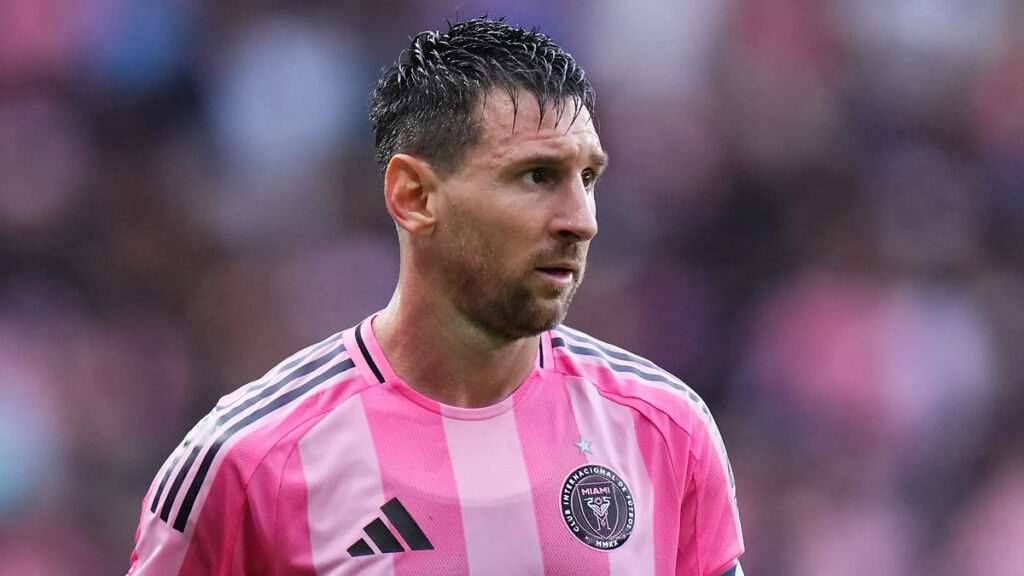
Now playing for Inter Miami, Messi operates with reduced physical intensity but heightened efficiency.
He moves less, observes more, and selects moments with precision rather than volume.
As Balague notes, this phase reflects not decline but refinement.
Each version of Messi has built upon the last, producing a player who continues to influence matches without relying on constant movement.
In a career defined by transformation, the latest version may be the most unpredictable yet—one shaped by experience, intelligence, and timing rather than speed.
A Legacy Defined by Reinvention
Messi’s story is not simply one of goals or trophies, but of constant reinvention across football’s evolving tactical eras.
From a teenage winger in Barcelona to a World Cup-winning captain, his career has repeatedly defied the normal trajectory of ageing athletes.
As Argentina prepare for another World Cup campaign, expectations once again converge on him. But this time, the question is not whether he can perform on the biggest stage—it is which version of Messi will appear when it matters most.

