
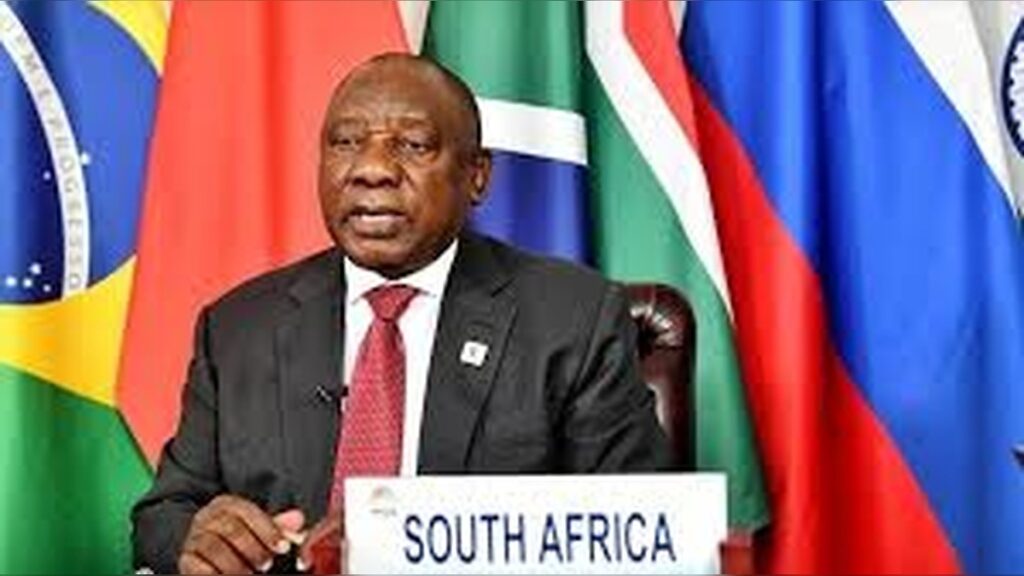
In a nationally broadcast address, the South African leadership responded to growing public anxiety over migration and illegal immigration, acknowledging widespread concern across communities, workplaces, schools, healthcare facilities, and online platforms.
The statement recognised that questions about border security, employment pressure, service delivery, and public safety have intensified in recent months, with citizens increasingly demanding clarity on government action.
Officials emphasised that the concerns are legitimate and require both acknowledgment and structured policy responses rather than dismissal.
Economic Pressure and Public Frustration Fuel National Debate
The address situated the debate within South Africa’s broader socio-economic challenges, highlighting persistently high unemployment—particularly among young people—as a key underlying factor.
It noted that widespread poverty, inequality, and limited economic opportunities have contributed to frustration in many communities, which can sometimes be redirected toward foreign nationals perceived as competition for jobs and resources.
However, the government cautioned against simplifying complex economic problems, stressing that illegal immigration is not the root cause of structural unemployment or slow growth.
Instead, it pointed to the need for expanded investment, industrial development, infrastructure growth, and job creation as long-term solutions.
Migration Framed as a Global Reality, Not an Isolated Crisis
The leadership described migration as a global phenomenon affecting all nations, including South Africa, which it noted has historically been shaped by movement across borders.
It reiterated that the country’s constitutional framework and international obligations require it to protect those fleeing conflict or persecution while maintaining regulated entry and residency systems.
The statement reaffirmed a core principle: all individuals living and working in the country must do so legally, in accordance with national laws.
Government Acknowledges Weaknesses in Immigration Enforcement
A significant portion of the address focused on admitted shortcomings in immigration management, including weak enforcement systems, corruption, and administrative gaps.
Authorities acknowledged that these failures have contributed to declining public confidence in border governance and law enforcement.
The government stated that it is now taking responsibility for correcting these issues through tighter enforcement, institutional reforms, and stronger accountability mechanisms.
Crackdown on Illegal Employment and Labour Exploitation
The address highlighted ongoing efforts to target employers who hire undocumented workers, accusing some businesses of exploiting vulnerable migrants by paying below minimum wage and ignoring labour protections.




It warned that such practices undermine fair competition, weaken labour standards, and reduce opportunities for citizens.
Authorities announced plans for intensified workplace inspections and stricter penalties, including imprisonment, for employers who violate immigration and labour laws.
A major expansion of labour inspectors was also outlined as part of strengthening enforcement capacity.
Border Security and Immigration System Overhaul
Government reaffirmed its commitment to securing national borders through increased investment in surveillance technology, infrastructure, and personnel.
Officials said border control is essential for national sovereignty and does not contradict humanitarian obligations.
Plans include improved border monitoring systems, enhanced coordination among security agencies, and relocation of refugee processing facilities closer to entry points to streamline asylum procedures.
Anti-Corruption Measures and Digital Identity Reform
The address also focused heavily on corruption within immigration services, describing it as a key enabler of illegal entry and documentation fraud.
Officials vowed to prosecute corrupt employees and eliminate systems that allow identity fraud and document manipulation.
A new biometric population registry and digital identity system is being developed, alongside plans to phase out older identification documents that are vulnerable to abuse.
Legal Reforms and Business Regulation Changes
Government announced legislative reforms aimed at closing loopholes in immigration and labour laws.
These include new frameworks for managing foreign labour quotas, tightening employer accountability, and regulating informal trading sectors.
Authorities also outlined plans to formalise small businesses and support local entrepreneurs, particularly in township economies where tensions over competition have been rising.
Regional Cooperation and Continental Strategy
The address stressed that migration cannot be addressed by one country alone, describing it as a regional and continental issue requiring coordinated solutions.
South Africa intends to deepen cooperation with African partners through regional bodies and bilateral engagement to address the economic and security drivers of migration.
Officials also confirmed plans to dispatch envoys to several countries to support dialogue on migration management and shared responsibility.
Law Enforcement Coordination and National Implementation Plan
A coordinated national structure has been established to oversee implementation, involving multiple departments, law enforcement agencies, and security clusters.
Authorities said intensified operations are already underway, including deportations of undocumented individuals and targeted inspections of workplaces and transport sectors.
New specialised courts are also expected to be introduced to expedite immigration-related cases.
Call for Unity, Rule of Law, and Social Cohesion
The address concluded with a strong appeal for national unity, warning against xenophobia, violence, and misinformation.
It rejected vigilante responses to immigration concerns and stressed that only authorised state institutions may enforce immigration laws.
Citizens were urged not to be swayed by divisive rhetoric or false narratives, particularly on social media.
The government reaffirmed that South Africa can both enforce its laws and uphold human dignity, calling for a balanced approach rooted in constitutional values, social cohesion, and respect for the rule of law.

